Hair Loss · Guide · SkinRev Lab
Receding hairline in women: causes and treatment
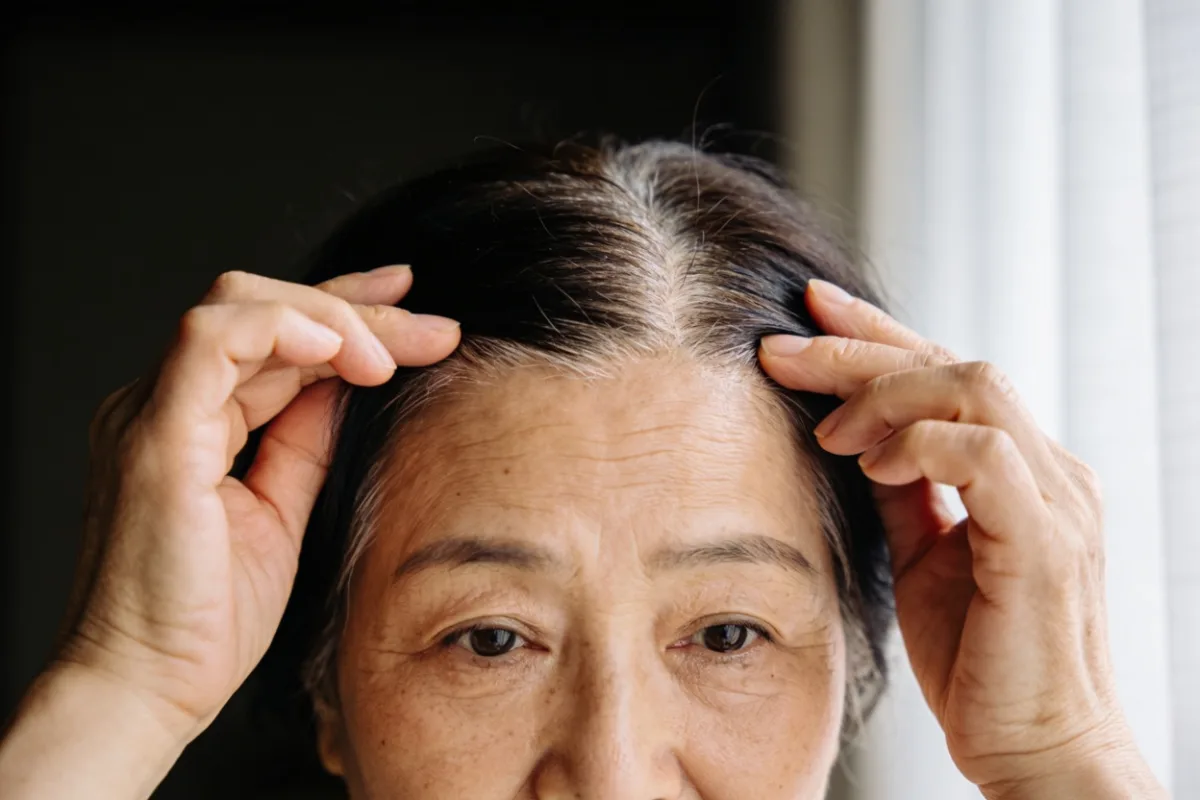
Female pattern hair loss usually thins the parting and spares the front. When a woman's hairline itself moves back, the cause is often something else, and some causes need a doctor soon.
By SkinRev Lab Editorial · Updated 28 November 2026
A receding hairline in women is most often caused by traction from tight hairstyles, by frontal fibrosing alopecia, or by temple thinning after menopause, and less often by female pattern hair loss, which usually spares the front. The cause decides the treatment. At SkinRev Lab, CityLink Mall (City Hall MRT), Dr Sin Yong, medical adviser, examines the scalp and plans treatment, priced at consultation.
In short
In women, look at where and how the hairline is changing. Thinning where hair is pulled points to traction. A smooth, pale band at the front with thinning eyebrows points to frontal fibrosing alopecia, which needs prompt care. Temple thinning around menopause points to hormonal change. Each has a different route.
Key facts
- Traction: from tight ponytails, braids, buns or extensions; can recover if caught early
- Frontal fibrosing alopecia: a scarring condition; see a doctor promptly
- Hormonal change: temple thinning after menopause or with raised androgens
- Female pattern hair loss: usually a widening parting, with the front hairline kept
- Treatment at SkinRev Lab: by Dr Sin Yong, priced at consultation
Updated
Your doctor
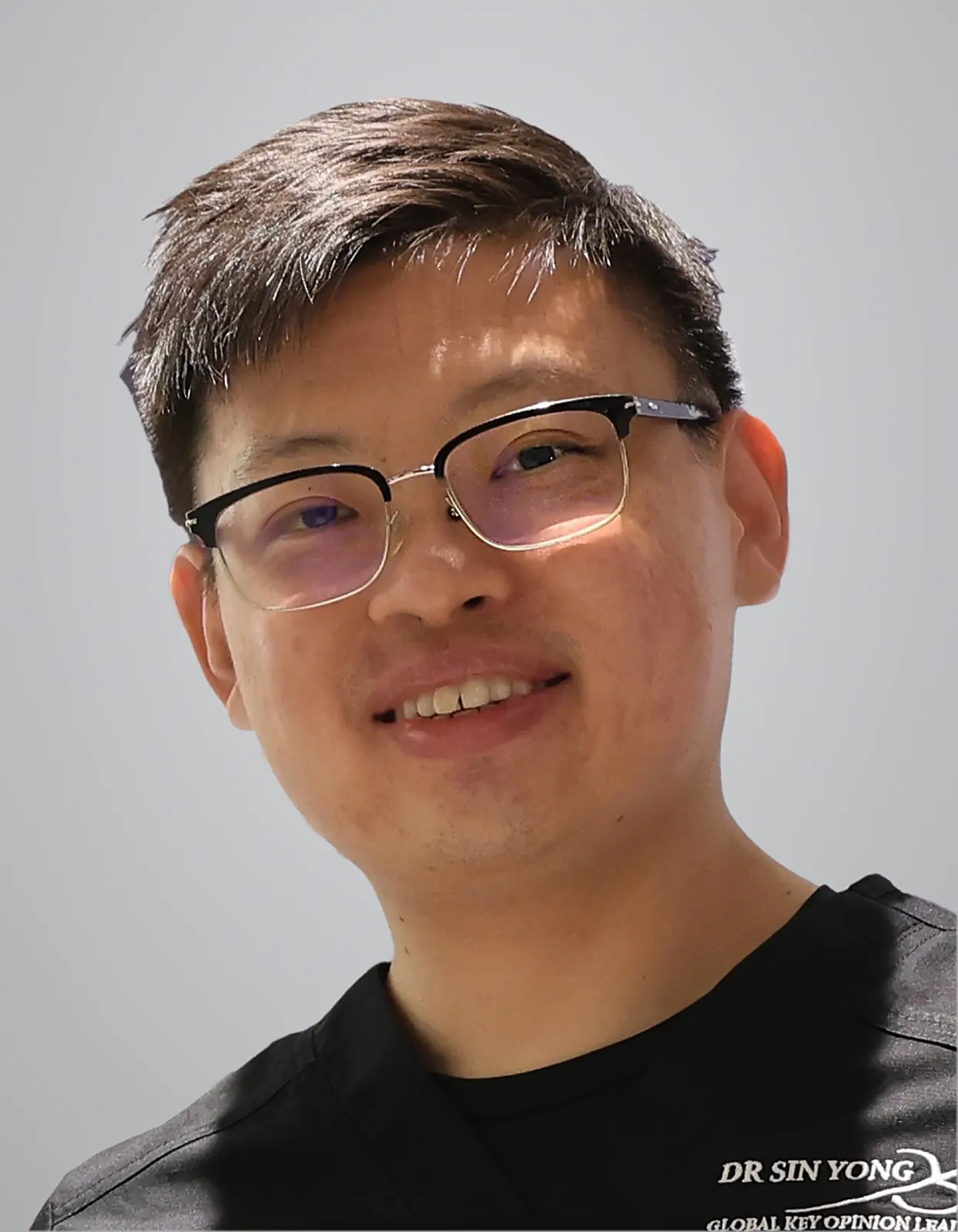
Dr Sin Yong
This treatment is performed by Dr Sin Yong, after a consultation. Dr Sin Yong is a Global Key Opinion Leader for seven device makers and has been invited to teach doctors in São Paulo, Bangkok, Seoul, Taipei, Dubai and Singapore.
Invited to present or train: DEKA Academy 2026, Florence 2026 · CLASSYS Academy, São Paulo 2026 · 7th CLASSYS APAC Symposium, Bangkok 2026
MBBS (NUS) · MRCS (Edinburgh) · MSc Aesthetic Medicine, Distinction (London) · MSc Practical Dermatology (Cardiff) · Professional Diploma in Obstetrics and Gynaecology (RCPI) · Profile · KOL brands & devices
The causes
Why a woman's hairline
moves back
| Cause | What it looks like | What to do |
|---|---|---|
| Traction | Thinning at the temples and front edge, where styles pull. Short broken hairs along the hairline. | Loosen or change the hairstyle. Early traction can recover; long-standing traction may not [1]. |
| Frontal fibrosing alopecia | The hairline moves back evenly, leaving smooth, pale skin. Eyebrows often thin. Mostly after menopause. | See a doctor promptly. In a review of 355 patients, most were women after menopause and eyebrow loss was common [2]. Lost follicles do not return, so the aim is to stop it. |
| Hormonal change | Temple thinning after menopause, or with irregular periods, acne or increased facial hair. | Assessment and, where needed, blood tests. |
| Female pattern hair loss | A widening parting and thinner crown. The front hairline is usually kept [3]. | Doctor-prescribed treatment, continued long term. |
| Shedding | More hair falling all over, months after childbirth, illness, low iron or thyroid disease. | Find and correct the trigger. See postpartum hair loss. |
When to act
Signs that need
a doctor first
- A hairline that is moving back with redness, scaling, itching or burning.
- Thinning eyebrows together with a receding hairline.
- Sudden heavy shedding.
- Hair loss with irregular periods, new acne or new facial hair.
These point to causes that are treated medically, and in scarring conditions time matters.
Treatment
What treatment
involves
Treatment follows the diagnosis. For pattern and hormonal thinning, Dr Sin Yong may prescribe treatment and add H2LT low-level laser or Regenera Activa micrografting, priced at consultation. Some prescription hair loss medicines are not used in women who are or may become pregnant, so this is discussed first.
Results are judged at around six months. Rejuran® Scalp Care by Aesthetic Therapists, from S$348 per 90-minute session before GST, supports scalp comfort and condition; it does not regrow hair. Hair loss treatment cost explains how a plan is priced.
Common questions
Your questions,
answered
Can women get a receding hairline?
Yes. In women it is more often traction from tight hairstyles, frontal fibrosing alopecia or temple thinning after menopause than female pattern hair loss, which usually thins the parting and spares the front.
What causes a receding hairline in women?
The main causes are traction, frontal fibrosing alopecia, hormonal change and, less often, female pattern hair loss. Shedding after childbirth or illness can also thin the temples for a time.
Can a woman's receding hairline grow back?
It depends on the cause. Early traction and shedding can recover once the cause is removed. Pattern and hormonal thinning can improve with continued treatment. Hair lost to a scarring condition does not return.
When should a woman see a doctor about a receding hairline?
Promptly if the hairline is receding with redness, scaling or itching, if the eyebrows are thinning, or if shedding is sudden and heavy.
Is the treatment different for women?
Yes. The likely causes differ, blood tests are used more often, and some prescription hair loss medicines are not used in women who are or may become pregnant.
Where can I get hair loss treatment in Singapore?
At SkinRev Lab, #B1-28 CityLink Mall, 1 Raffles Link, Singapore 039393, a covered walk from City Hall MRT (Exit C) and Esplanade MRT (Exit D). Dr Sin Yong assesses the cause of the hair loss at a consultation first, then plans the medical treatment. SkinRev Lab is open daily, 11am to 8pm, and visits are booked on WhatsApp at +65 8266 9585. Hair transplants are not offered at SkinRev Lab.
References
- Billero V, Miteva M (2018). Traction alopecia: the root of the problem. Clinical, Cosmetic and Investigational Dermatology 11:149-159. Source
- Vano-Galvan S, Molina-Ruiz AM, Serrano-Falcon C, et al. (2014). Frontal fibrosing alopecia: a multicenter review of 355 patients. Journal of the American Academy of Dermatology 70(4):670-678. Source
- Blumeyer A, Tosti A, Messenger A, et al. (2011). Evidence-based (S3) guideline for the treatment of androgenetic alopecia in women and in men. Journal der Deutschen Dermatologischen Gesellschaft 9 Suppl 6:S1-57. Source
- Lee WS, Lee HJ (2012). Characteristics of androgenetic alopecia in Asian. Annals of Dermatology 24(3):243-252. Source