Concerns · Breakouts, Scars & Texture · CityLink Mall
Stretch Mark Removal and Treatment in Singapore
Stretch marks are a form of scarring deep in the skin. They can be softened and narrowed, and the approach depends on how new and how deep they are.
By Dr Sin Yong · 8 October 2026
Medically reviewed by Dr Sin Yong, medical adviser · Last reviewed 17 November 2026
Stretch mark removal in Singapore usually means softening and narrowing the marks rather than erasing them, because stretch marks are scars and newer red marks respond better than older white ones. At SkinRev Lab, CityLink Mall (City Hall MRT), Aesthetic Therapists perform SKINTIGHT® (from S$588 before GST); Dr Sin Yong, medical adviser, performs RF microneedling and fractional lasers, priced at consultation.
In short: Stretch marks
Stretch mark removal in Singapore usually means improvement rather than complete removal. Newer red or purple marks respond better than older white ones. Options range from SKINTIGHT surface care at SkinRev Lab to RF microneedling, FSX laser and fractional CO2 laser by Dr Sin Yong, chosen by the colour, depth and age of the marks.
Key facts
- Red marks (striae rubrae): newer; respond better to treatment
- White marks (striae albae): older; texture improves more than colour
- At SkinRev Lab: SKINTIGHT surface care; RF microneedling, FSX and fractional CO2 by Dr Sin Yong
- Sessions: usually several, weeks apart
Updated
Quick answer
- Stretch marks are a form of scarring deep in the skin. They can be softened and narrowed, and the approach depends on how new and how deep they are.
- Non-invasive at SkinRev Lab (CityLink Mall): SKINTIGHT®.
- Medical, performed by Dr Sin Yong at SkinRev Lab, CityLink Mall (City Hall): RF Microneedling, FSX Laser, Fractional CO₂ Laser (Tetra Pro S3).
- Assessment first; individual results vary. Medical pricing is given at consultation.
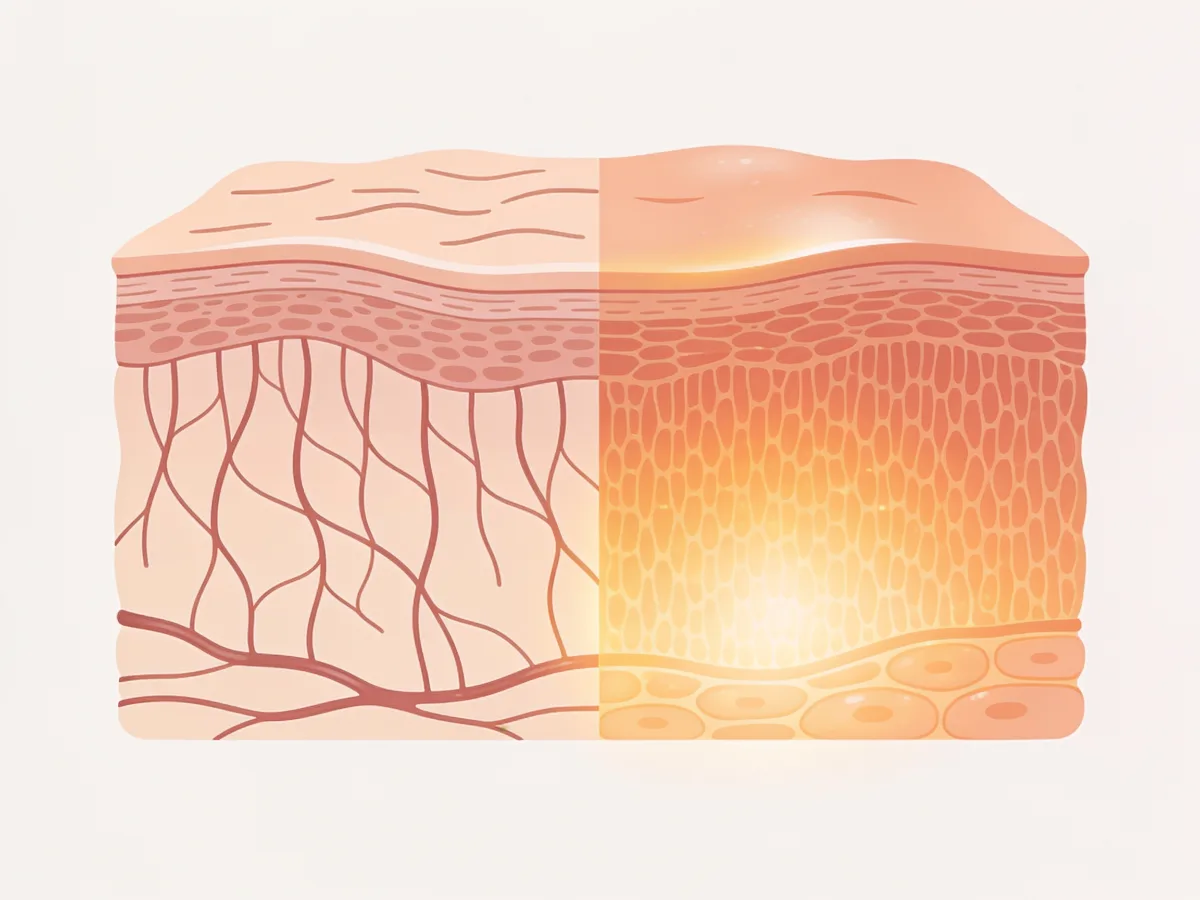
Stretch marks are lines or bands that appear where skin has been stretched faster than it can adapt. They are common on the tummy, hips, thighs, breasts, buttocks, upper arms and lower back. New marks are usually pink, red or purple and may feel slightly raised or itchy; older ones fade to white or silver and often look finely wrinkled or sunken. Anyone looking at stretch marks treatment in Singapore should know that colour and age matter, because they affect what responds.
Under the surface, the dermis has been overstretched. Its collagen and elastic fibres break and line up in thin parallel strands, much like a scar, and the skin above becomes thinner. Pregnancy, growth spurts in puberty, rapid weight gain or loss and fast muscle building are the usual triggers, with hormones making the skin more vulnerable. Some medical conditions and long-term use of certain medicines can also cause them, especially wide purple marks that appear without an obvious reason.
That deep-seated change is why creams and oils alone rarely shift established marks. Surface treatment can improve texture and the crepey look around shallow marks, while deeper marks need collagen remodelling in the dermis. SkinRev handles the non-invasive surface side with SKINTIGHT®. Fractional laser and RF microneedling are medical treatments performed by Dr Sin Yong at SkinRev Lab. A doctor should also check unexplained, widespread purple marks.


“Stretch marks can be made narrower, flatter and closer in colour to your skin, but no treatment returns them to skin that was never stretched.”
— Dr Sin Yong, SkinRev Lab
- Two stages
- Striae rubrae (red or purple, newer) and striae albae (white or silver, older)
- Layer involved
- Dermis: collagen and elastic fibres overstretch and break; the skin above thins
- Common triggers
- Pregnancy, puberty, rapid weight gain or loss, fast muscle building
- Creams for prevention
- Systematic review found topical products appear to lack preventive effect
- Energy-based options
- Fractional CO₂ (10,600 nm), RF microneedling, non-ablative thulium and erbium glass laser
- Realistic aim
- Narrower, smoother, less visible marks rather than complete removal
Stretch mark removal: key facts
| Fact | Detail | Source |
|---|---|---|
| What they are | Fine lines that occur from tissue under the skin tearing from rapid growth or over-stretching; a type of scar that forms when the collagen and elastin supporting the skin rupture. | DermNet, 2023; AAD |
| How common | Very common, affecting 70% of adolescent girls and 40% of boys; pregnancy is a common trigger on the abdomen and breasts. | DermNet, 2023 |
| Red vs white marks | New marks are reddish or purplish, slightly swollen lines (striae rubrae); over time they lighten to whitish or flesh-coloured lines (striae albae). | DermNet, 2023 |
| How treatment works | Energy-based devices reduce the width of the marks: a network meta-analysis of 18 randomised trials compared radiofrequency, ablative lasers, non-ablative lasers and intense pulsed light and found no significant differences in width reduction between them. | Wu et al., Dermatol Surg 2024 |
| Creams vs in-clinic procedures | Creams, lotions and gels seem to have little effect on mature marks, and none of the in-office procedures can get rid of stretch marks. | AAD |
| Sessions and downtime | There is no single number: a dermatologist may combine more than one procedure. Redness and swelling after a procedure are common and tend to disappear in a few hours or days. | AAD |
| Cost at SkinRev Lab | SKINTIGHT®: from S$588 before GST. RF microneedling, FSX Laser and fractional CO₂ laser (Tetra Pro S3): priced at consultation. | SkinRev Lab |
| Who performs it at SkinRev Lab | SKINTIGHT®: Aesthetic Therapists. RF microneedling, FSX Laser and fractional CO₂ laser: Dr Sin Yong, medical adviser. | SkinRev Lab |
Full guide: Post-pregnancy slimming in Singapore
What goes where
The honest ladder:
non-invasive first, medical when it is needed
At SkinRev Lab · non-invasive
SKINTIGHT® — Alma PrimeX microplasma works on the surface layer to refine texture and the crepey look around shallow or newer marks, without needles. They do not rebuild the broken fibres deep in an established stretch mark, so wide or deep white marks usually need a medical option. Read more
Doctor-led · Dr Sin Yong
RF Microneedling — Insulated microneedles deliver radiofrequency heat into the dermis inside and around each mark to stimulate new collagen. Recovery is usually short, and it is often favoured for darker skin because the risk of post-inflammatory darkening is lower than with resurfacing. How it works
FSX Laser — Dr Sin Yong's non-ablative, multi-pass laser protocol using thulium and erbium glass energy, which heats the dermis without breaking the skin. It suits shallower or newer marks and people wanting less downtime. How it works
Fractional CO₂ Laser (Tetra Pro S3) — The DEKA Tetra Pro fractional CO₂ laser resurfaces microscopic columns of skin to restart collagen remodelling in established, textured marks. It needs several days of recovery and careful settings in Asian skin to limit pigment change. How it works
Dr Sin Yong performs medical treatments at SkinRev Lab, CityLink Mall (City Hall).
Start at SkinRev with SKINTIGHT® if your marks are fairly shallow, you mainly want smoother-looking skin and you prefer a treatment without needles. See Dr Sin Yong first if your marks are wide, deep or white and sunken, if you have tried surface care without much change, or if you want the more significant collagen remodelling that RF microneedling or fractional laser can give. See a doctor promptly if wide purple marks appear suddenly without pregnancy, weight change or a growth spurt to explain them. If you are pregnant or breastfeeding, mention it before any treatment. Some people combine both routes, using SKINTIGHT® for overall surface texture across a wider area and medical treatment for the deepest individual marks, with timing planned so the skin has time to recover in between.
Where this happens
Medical and non-invasive treatments — SkinRev Lab, CityLink Mall #B1-28, 1 Raffles Link, Singapore 039393. Underground from City Hall MRT and Esplanade MRT; a short walk from Raffles Place, Marina Bay, Suntec and Bugis. Open daily 11am–8pm. Medical treatments by Dr Sin Yong; facials and body treatments by trained therapists.
What the research says
The evidence,
with sources
A systematic review in the British Journal of Dermatology describes stretch marks as a common form of dermal scarring that is hard to treat. They occur in pregnancy, puberty and obesity as well as some medical conditions, and are linked with hormones, physical stretch and structural changes in the skin. Light and laser treatments have shown improvements in appearance, but few high-quality randomised studies exist, and topical products appear to lack effect in preventing stretch marks.
A 2024 network meta-analysis of 18 randomised studies found that radiofrequency, ablative lasers, non-ablative lasers and intense pulsed light all reduced the width of stretch marks, with none clearly superior, although radiofrequency and ablative lasers may have the highest chance of improving appearance. A separate meta-analysis comparing fractional microneedle radiofrequency with fractional CO₂ laser found similar improvement on both doctor and patient assessments, but post-inflammatory darkening occurred significantly less often after microneedle radiofrequency. Individual results vary.
References
- Al-Himdani S, Ud-Din S, Gilmore S, Bayat A. Striae distensae: a comprehensive review and evidence-based evaluation of prophylaxis and treatment. Br J Dermatol. 2014;170(3):527-547.
- Wu TJ, Huang YL, Kang YN, Chen KH, Chen C. Comparing energy-based devices for striae improvement: a systematic review and network meta-analysis of randomized controlled trials. Dermatol Surg. 2024;50(10):931-938.
- Aktoz F, Yilmaz N. Comparing fractional microneedle radiofrequency and fractional CO2 laser for striae distensae treatment: a systematic review and meta-analysis. Lasers Med Sci. 2024;39(1):271.
Laser vs microneedling for stretch marks: what trials compared
Fractional CO₂ laser and microneedling improved stretch marks by a similar amount in trials; the difference reported between them was darkening of the skin afterwards. A separate trial of a non-ablative laser against microneedling compared pain and how many days side effects lasted.
| What was measured | What the study found | Source |
|---|---|---|
| Improvement: CO₂ laser vs microneedling | A meta-analysis of six randomised trials (166 patients) found significant clinical improvement in over 70% of patients with both methods and no significant difference between them (risk ratio 0.97). | Mustafa et al., 2025 |
| Darkening after treatment (post-inflammatory hyperpigmentation) | Significantly more frequent after fractional CO₂ laser than after microneedling (risk ratio 8.37). | Mustafa et al., 2025 |
| Size of the largest mark | In a split-side trial of 40 patients with white marks, the cross-section of the largest mark fell significantly on both sides, with no significant difference between CO₂ laser and microneedling. | Saki et al., 2022 |
| Pain | In 20 women with white marks (skin types III–IV), mean pain score was 5.23 with microneedling and 2.39 with a 1340 nm non-ablative fractional laser. | Naspolini et al., 2019 |
| Days of side effects | On average 4.03 days after the non-ablative fractional laser and 3 days after microneedling. | Naspolini et al., 2019 |
At SkinRev Lab the medical options for stretch marks are RF Microneedling, FSX Laser and Fractional CO₂ Laser (Tetra Pro S3), chosen by Dr Sin Yong, medical adviser, after an examination of the marks; all are priced at consultation.
How many stretch mark sessions you need, and how far apart
The two randomised trials below used four or five sessions spaced about a month apart; the four-session trial compared the marks before and 6 months after treatment.
| Study | Who was treated | Sessions and spacing | When the result was judged |
|---|---|---|---|
| Saki et al., 2022 | 40 patients with white marks; one side CO₂ laser, the other microneedling | 4 sessions, monthly | Measured again 6 months after treatment; follow-up over 10 months |
| Naspolini et al., 2019 | 20 women with abdominal white marks, skin types III–IV | 5 sessions, monthly | Skin biopsies before treatment and after the 3rd and 5th sessions |
| Mustafa et al., 2025 | Pooled analysis of six randomised trials, 166 patients | Protocols varied between trials | Improvement, satisfaction and size of the largest mark compared |
Monthly spacing was the common pattern in these trials. How many sessions you need is set at consultation once the type, age and colour of the marks are clear.
Types
Red vs white stretch marks: why the age of the mark changes the plan
| Option | Red or purple marks | White or silver marks | Downtime |
|---|---|---|---|
| Creams (a prescription retinoid, hyaluronic acid, centella) | Some evidence for early marks | Little effect | None |
| SKINTIGHT surface care | Refines texture of shallow marks | Surface texture only | Little |
| RF microneedling | Helps | Helps texture; lower PIH risk | A few days |
| FSX Laser (non-ablative) | Helps newer, shallow marks | Modest | Redness for a day or two |
| Fractional CO2 (S3 on the Tetra Pro) | Helps | Texture of established marks | Several days |
Sources: Al-Himdani S, Ud-Din S, Gilmore S, Bayat A. Striae distensae: a comprehensive review and evidence-based evaluation of prophylaxis and treatment. Br J Dermatol. 2014;170(3):527-547; Ud-Din S, McGeorge D, Bayat A. Topical management of striae distensae (stretch marks): prevention and therapy of striae rubrae and albae. J Eur Acad Dermatol Venereol. 2016;30(2):211-222.
Preventing stretch marks: what reviews of creams and oils found
No cream or oil has been shown to prevent stretch marks reliably. They are common in pregnancy, affecting 50% to 90% of women, yet a Cochrane review of six trials involving 800 women found no high-quality evidence that any topical preparation prevents them (Brennan et al., 2012).
| What was tried | What a review found |
|---|---|
| Any topical preparation, against placebo or nothing | Stretch marks were not significantly less common: risk ratio 0.74 (95% CI 0.53 to 1.03), five trials, 474 women (Brennan et al., 2012) |
| Centella preparations | Limited evidence that they may prevent marks or reduce their severity (Korgavkar and Wang, 2015) |
| Massage with bitter almond oil | Possibly helpful, on limited evidence (Korgavkar and Wang, 2015) |
| Hyaluronic acid | Weak evidence (Korgavkar and Wang, 2015) |
| Cocoa butter or olive oil | Not effective for prevention or for severity (Korgavkar and Wang, 2015) |
Moisturising is reasonable for comfort, but it is not a dependable way to stop marks forming, and newer red marks usually respond better to treatment than older white ones. At SkinRev Lab, SKINTIGHT® (from S$588 before GST) is performed by Aesthetic Therapists; RF microneedling, FSX Laser and fractional CO₂ laser are performed by Dr Sin Yong, medical adviser, and priced at consultation.
Common questions
Your questions,
answered
What is the most effective stretch marks treatment in Singapore?
Studies comparing devices have not found one clear winner. Radiofrequency microneedling and fractional lasers tend to give the most noticeable change in established marks, while surface treatments suit shallower ones. The right choice depends on the colour, depth and location of your marks and your skin type. Dr Sin Yong assesses this at SkinRev Lab, and SkinRev can advise on whether SKINTIGHT® is a sensible place to start.
How much does stretch marks treatment in Singapore cost?
At SkinRev, SKINTIGHT® is from S$588. For the medical options — RF microneedling, FSX Laser and fractional CO₂ laser — pricing is given at consultation at SkinRev Lab, because it depends on the size of the area, the method and the plan. Our team at CityLink Mall can help you decide which route to ask about first.
Do creams and oils get rid of stretch marks?
They can keep skin comfortable and may help the look of the surface a little, but a large systematic review found that topical products appear to lack effect in preventing stretch marks, and they do not rebuild the broken fibres in the dermis. If creams have not changed your marks after a few months, an in-person treatment that works on collagen is the more realistic next step.
Are red stretch marks easier to treat than white ones?
Generally, newer red or purple marks still have active blood supply and remodelling, and many people find they respond more readily. Older white or silver marks have settled into thin, scar-like tissue and usually need deeper collagen stimulation with RF microneedling or fractional laser. Both types can improve, though how much varies from person to person.
Can I treat stretch marks during pregnancy or breastfeeding?
Energy-based medical treatments are generally postponed until after pregnancy, and it is sensible to discuss breastfeeding with the doctor before starting. Gentle moisturising during pregnancy keeps skin comfortable, even though it may not prevent marks. Always tell the team at SkinRev if you are pregnant, trying to conceive or breastfeeding so the plan can be adjusted.
How many sessions do stretch marks need?
It varies with the depth, age and extent of the marks and the method used. A course is usually planned at consultation, with sessions spaced several weeks apart so the dermis has time to remodel between them. Collagen changes build gradually over months, so progress is reviewed along the way rather than judged after a single visit.
Can stretch marks be removed completely?
Rarely. Treatment can make them flatter, narrower and closer to your skin colour, especially when they are still red. Older white marks usually improve in texture more than in colour.
Do stretch marks fade on their own?
Red and purple marks usually fade to pale silvery lines over months to a few years, but the change in texture tends to stay.
Is it normal for a 20 year old to have stretch marks?
Yes. Stretch marks commonly appear during teenage growth spurts, weight change, muscle gain and pregnancy, and many adults have them by 20. They are harmless. Red or purple marks respond to stretch marks treatment more readily than older white ones.
Stretch marks by body area: tummy, thighs, breasts, arms and back
Where a stretch mark sits changes the cause, the skin you are treating and how it heals. This helps you plan before your consultation.
| Area | Common cause | What to know |
|---|---|---|
| Tummy | Pregnancy, weight change | Marks often come with loose skin, so a plan may combine mark treatment with skin tightening. |
| Hips and thighs | Growth spurts, weight gain | Inner thigh skin can darken more easily after heat-based treatment, so settings are gentler. |
| Breasts | Puberty, pregnancy, breastfeeding | Wait until breastfeeding has ended before medical treatment. |
| Upper arms and shoulders | Fast muscle gain, weight change | Common in men and gym-goers; marks are often long and narrow. |
| Lower back | Growth spurts in teens | Often white by the time they are noticed, so texture treatment matters more than colour. |
Dr Sin Yong examines each area in good light before suggesting SKINTIGHT®, RF Microneedling, FSX Laser or Fractional CO2 Laser.
After stretch mark treatment: a recovery timeline
Recovery depends on the treatment. SKINTIGHT® usually leaves only brief warmth. Doctor-led RF Microneedling and fractional laser take a little longer. This is a common pattern; your own aftercare sheet comes first.
| When | What is common | What to do |
|---|---|---|
| Day 0 to 1 | Redness, warmth, tightness | Wear loose clothes over the area. Skip hot showers, saunas and hard exercise. |
| Days 2 to 5 | Dryness, roughness or a faint grid pattern after fractional treatment | Moisturise gently. Do not pick or scrub. |
| Week 1 to 2 | Skin looks close to normal | Keep the area covered from the sun. |
| Weeks 4 to 6 | The next session is often planned around here | Results build slowly between sessions. |
Call us if you notice blisters, crusting that spreads, increasing pain or signs of infection.
Who should wait before stretch mark treatment
Stretch mark treatment is planned, not urgent, so it is worth waiting until the timing is right. Dr Sin Yong may suggest waiting, or a gentler option, if any of these apply.
- Pregnant or breastfeeding: medical treatment waits. Gentle moisturising is fine.
- A recent tan or sunburn on the area: wait until it fades, to lower the risk of dark marks.
- Raised or thick scars in the past: tell us, as the plan may change.
- An infection, rash or broken skin on the area: let it heal first.
- Recent oral acne medicine: doctor-led treatment is usually delayed. Ask us how long.
- Still gaining or losing weight fast: new marks may form, so a stable weight first gives a fairer result.
Marks that appear suddenly and widely, without pregnancy, growth or weight change, should be checked by a doctor first.
References
- Mustafa A, Zahid R, Khan S, Faisal M, Farooq MAH, Imran J, Malik W, Khan A, Azeem B, Maryam A, Kumar S, Khatri M (2025). Evaluating CO2 laser and micro-needling therapies for striae distensae: a comprehensive meta-analysis and systematic review. Lasers in Medical Science 40(1):161. doi:10.1007/s10103-025-04420-z. PMID 40131559. Source
- Saki N, Rahimi F, Pezeshkian FS, Parvar SY (2022). Comparison of the efficacy of microneedling versus CO2 fractional laser to treat striae alba: A randomized clinical trial. Dermatologic Therapy 35(1):e15212. doi:10.1111/dth.15212. PMID 34796595. Source
- Naspolini AP, Boza JC, da Silva VD, Cestari TF (2019). Efficacy of Microneedling Versus Fractional Non-ablative Laser to Treat Striae Alba: A Randomized Study. American Journal of Clinical Dermatology 20(2):277-287. doi:10.1007/s40257-018-0415-0. PMID 30618025. Source
- Ngan V (2003; updated 2023). Stretch marks (striae). DermNet. Source
- American Academy of Dermatology. Stretch marks: why they appear and how to get rid of them. aad.org (accessed 13 Nov 2026). Source
- Wu et al. (2024). Comparing energy-based devices for striae improvement: a systematic review and network meta-analysis of randomized controlled trials. Dermatologic Surgery. PMID 38820425. Source
- Brennan M, Young G, Devane D (2012). Topical preparations for preventing stretch marks in pregnancy. Cochrane Database Syst Rev 11:CD000066. PMID 23152199. Source
- Korgavkar K, Wang F (2015). Stretch marks during pregnancy: a review of topical prevention. Br J Dermatol 172(3):606-15. doi:10.1111/bjd.13426. PMID 25255817. Source