Guide · Removing old brows
Eyebrow embroidery removal in Singapore: brows gone wrong, and what T2 laser, creams or saline can really do
Old brow embroidery that has turned red, orange or grey, healed too dark, or sits in the wrong place can usually be lightened. Here is how the options compare, why cosmetic pigment behaves differently from ordinary tattoo ink, and how T2 Targeted Tattoo laser is used.
Prices for non-invasive treatments are on our SkinRev Lab price list; doctor-led treatments are priced at consultation.
Medically reviewed by Dr Sin Yong, medical adviser · Last reviewed 17 November 2026
Eyebrow embroidery removal is the lightening or removal of cosmetic brow pigment, most often with a Q-switched or picosecond laser whose very short pulses break the pigment into fragments the body clears over several sessions. At SkinRev Lab, CityLink Mall (City Hall MRT), Dr Sin Yong, medical adviser, performs it with T2 Targeted Tattoo laser, priced at consultation.
Quick answer
- Eyebrow embroidery removal in Singapore is most reliably done with a picosecond or Q-switched laser performed by a doctor, which shatters pigment into fragments the body clears over several sessions. Fading creams do not reach pigment in the dermis, and non-laser 'saline' removal has very little published evidence and a real risk of scarring.
- Cosmetic brow pigments often contain iron oxides and white or flesh-toned ingredients that can turn darker when lasered, and old brows commonly fade to red, orange, grey or blue. A doctor usually treats a small test area first and chooses the wavelength by colour.
- In a chart review of 76 people treated for eyeliner and eyebrow tattoos, the average was 2.8 laser sessions, and about a quarter of cases revealed hidden colours after the first session. Brow hairs can whiten or singe temporarily; eye shields are essential.
- At SkinRev Lab, CityLink Mall (City Hall MRT), Dr Sin Yong assesses brows that have gone wrong and performs T2 Targeted Tattoo laser himself on the DEKA TORO, priced at consultation. WhatsApp a clear photo to 8266 9585 to start.

By Dr Sin Yong · 8 November 2026
Dr Sin Yong, Global Key Opinion Leader
MBBS (Singapore) · MRCS (Edinburgh) · MSc Practical Dermatology (Cardiff) · MSc Aesthetic Medicine (University of London) · 15+ years in clinical practice
Brow pigment is removed with care to avoid a tattoo removal scar; if one is already present, see our scar removal guide.
For body tattoos rather than brows, see our page on tattoo removal in Singapore.
Our eyebrow tattoo removal Singapore guide covers brows that healed too dark, red or patchy, alongside lip blush and hairline pigment.
Patients researching pico lasers for fading old brow pigment may see PicoSure named, and our guide to the PicoSure laser in Singapore explains how it compares with other pico platforms.
This guide is written for SkinRev Lab by Dr Sin Yong, who assesses brows that have gone wrong and performs T2 Targeted Tattoo laser himself at SkinRev Lab, CityLink Mall. DEKA (Italy), the maker of the TORO laser used for T2, has appointed him a Global Key Opinion Leader, as have CLASSYS and HIRONIC (Korea); he speaks and trains doctors at their academies in Europe, Asia and South America.
Global Key Opinion Leader for
- CLASSYS
- DEKA
- HIRONIC
- FOTONA
- ALMA
- LUTRONIC
- ILOODA
 DEKA Academy, Florence 2026
 CLASSYS Academy, São Paulo 2026
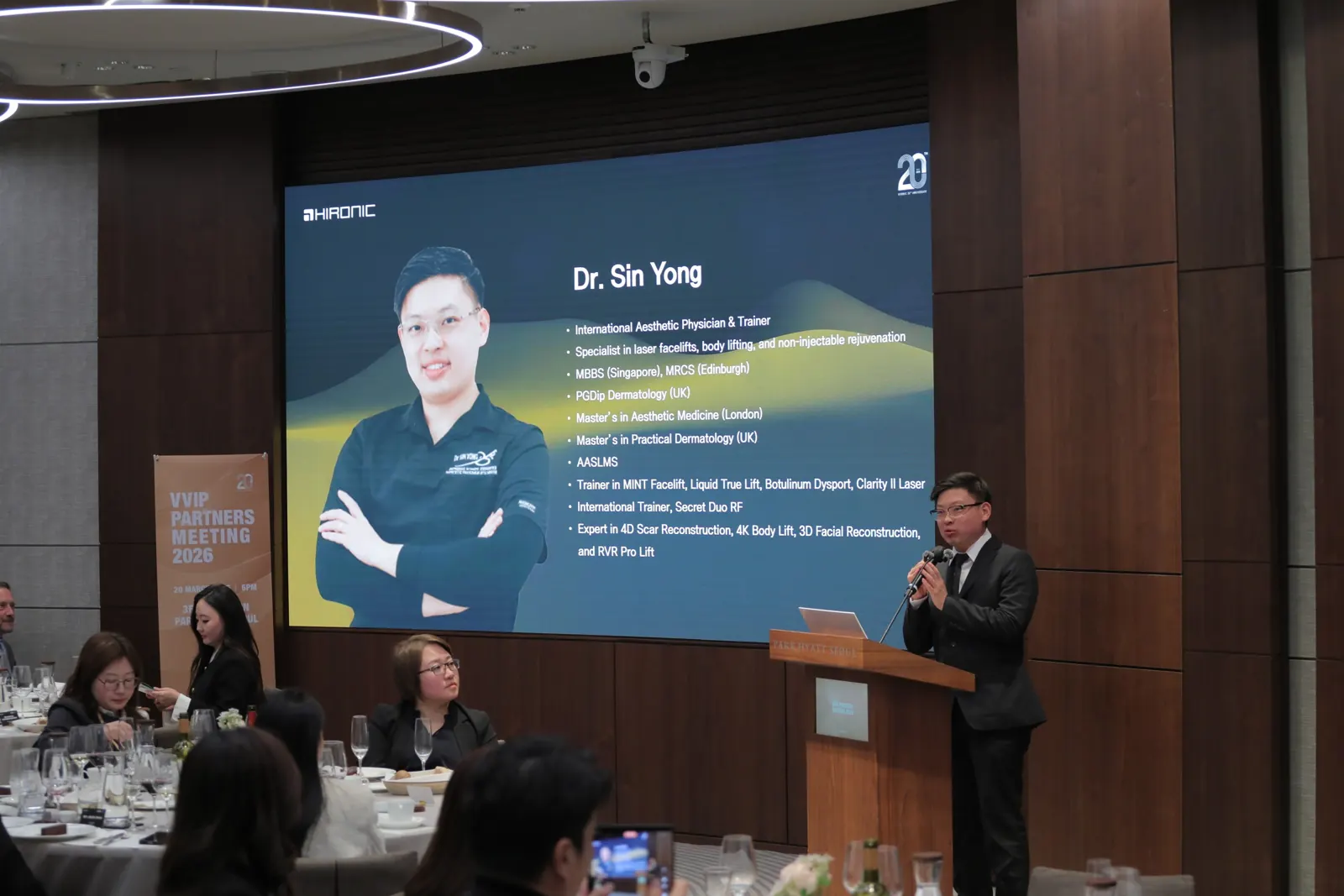 HIRONIC VVIP Partners Meeting, Seoul 2026
 CLASSYS APAC Symposium, Bangkok 2026
His conferences and KOL certificates →More about Dr Sin Yong →
Eyebrow embroidery removal: key facts
| Fact | Detail | Source |
|---|---|---|
| What it is and how it works | Lasers heat the pigment with very short pulses, in the nanosecond or picosecond range, so it breaks into fragments the body clears (selective photothermolysis). In a chart review of 76 people with brow or eyelid tattoos, most were treated with picosecond lasers at 755 nm (50.0%) or 532/1064 nm (28.9%). | Ho & Goh, J Cutan Aesthet Surg, 2015; Kream et al., J Clin Aesthet Dermatol, 2023 |
| What it treats | Eyebrow microblading and other cosmetic brow pigment. A 2023 literature review summarised 11 studies, with 129 patients treated specifically for eyebrow pigment, using Q-switched, picosecond and CO2 lasers. | Geisler et al., Lasers Med Sci, 2023 |
| Number of sessions | A study measured an average of 2.8 treatments (range 1 to 12) in 76 people with eyebrow or eyelid tattoos; 42 had eyebrow tattoos. Other colours were unmasked after the initial treatments in 26.3% of cases. | Kream et al., J Clin Aesthet Dermatol, 2023 |
| Interval between sessions | Approximately every 8 weeks; laser tattoo sessions are typically scheduled six to eight weeks apart. | Ho & Goh, J Cutan Aesthet Surg, 2015; UCSF Health, accessed 2026 |
| Downtime | Whitening of the treated skin can last approximately 20 minutes; the area is then red and swollen, blisters and crusting might occur, and ointment can be applied for 10 to 14 days. | Ho & Goh, J Cutan Aesthet Surg, 2015 |
| Main risks | Inks containing titanium dioxide and iron oxide may irreversibly turn black after Q-switched laser, so test spots should be considered for cosmetic tattoos; this darkening is less common with picosecond lasers. In the 76-person review, no scarring or permanent hair loss was recorded, though some brow hairs may temporarily turn white. | Ho & Goh, 2015; Geisler et al., 2023; Kream et al., 2023 |
| Cost at SkinRev Lab | Priced at consultation. | SkinRev Lab |
| Who performs it at SkinRev Lab | Dr Sin Yong, medical adviser, with T2 Targeted Tattoo, his staged protocol on the DEKA TORO laser, at #B1-28 CityLink Mall (City Hall MRT). | SkinRev Lab |
Your options
Eyebrow embroidery removal options at a glance
Brow embroidery, microblading and powder brows are all cosmetic tattooing: pigment is placed in the dermis, below the surface layer that sheds. That is why it fades slowly over years rather than washing off, and why removing it means either breaking the pigment up so the body can clear it, or drawing it back out through a wound.
Which route makes sense depends on what you want. Full removal, lightening before new embroidery, and correcting a colour that has turned warm or grey are different goals, and they may need different plans.
| Option | How it works | Evidence | Main risks |
|---|---|---|---|
| Fading or brightening creams | Act on the skin surface | No good evidence they remove dermal pigment | Irritation; acid 'erasers' can scar |
| Saline or other non-laser removal | Solution worked into the tattoo to draw pigment out as the skin crusts | Very little published data | Scarring, texture change, uneven fading, infection |
| Picosecond or Q-switched laser | Very short pulses shatter pigment; immune cells clear it | Case series and reviews; picosecond appears quicker for brows | Paradoxical darkening, temporary pigment change, brow hair whitening |
| Working over the old brows | New embroidery designed to blend with faded work | Depends on the old pigment | Dark or discoloured pigment can show through |
Eyebrow tattoo removal methods compared: laser, saline and non-laser devices
Eyebrow tattoo removal is offered in Singapore by laser, by saline or acid-based lightening, and by newer non-laser devices marketed for brows. They differ mainly in how much published evidence stands behind them.
| Method | How it works | Published evidence | At SkinRev Lab |
|---|---|---|---|
| Picosecond or Q-switched laser | Very short pulses break pigment into particles the body clears | A systematic review of 6 human trials (160 participants) found that 69% or more of tattoos reached more than 70% clearance after 1 to 10 treatments (Reiter et al., 2016); an eyebrow-only review is summarised below | Offered: T2 laser by Dr Sin Yong, medical adviser; priced at consultation |
| Saline or acid lightening | Solution worked into the skin draws pigment out through a wound | Very few studies and no controlled trials against laser (see the saline section below) | Not offered |
| Radiofrequency and other non-laser brow devices | Energy or a solution lifts pigment through the skin surface | The promotional pages we reviewed cited no clinical studies | Not offered |
| Fading creams | Act on the surface only | Unlikely to reach dermal pigment (see below) | Not offered |
If a method has no published results, ask what happens if it scars, and whether a doctor can treat the area afterwards.
Creams
Fading creams and home 'tattoo erasers'
Brightening creams, peeling serums and so-called tattoo removal creams work on the top layers of skin. Brow pigment sits deeper, in the dermis, so these products may make the skin look a little brighter but do not meaningfully remove embroidery.
Some products sold online as erasers contain strong acids. A dermatologist's case report and literature review on a lactic acid tattoo eraser described permanent loss of skin colour and thick, raised scars, and concluded the safety data were insufficient to recommend it. Around the brows, scarring and pale patches are hard to hide, so this is not a place to experiment.
Saline removal
Saline and non-laser removal: what is known
Saline removal is offered by some brow studios. A needle or microblading tool is used to work a concentrated salt solution, sometimes with other ingredients, into the tattooed skin. The idea is that the wound crusts over and draws some pigment up and out as it heals. It is repeated over several sessions spaced weeks apart. What drives the cost of a course is explained in our tattoo removal price guide.
The honest position is that there are very few published studies on saline brow removal, and no controlled trials comparing it with laser. A 2023 review of laser treatment for eyebrow tattoos noted that older non-laser methods, such as dermabrasion, cryosurgery, electrosurgery and excision, often left scarring and further pigment problems, which is why lasers became the standard.
Because it works by creating a controlled wound, saline removal carries risks of scarring, changes in skin texture, patchy lightening, infection and darker marks in Asian skin. It is sometimes suggested for colours that may darken under laser, but if you consider it, ask who performs it, how wounds are managed, and what happens if the skin does not heal well. A doctor's assessment first is sensible.
Laser
Laser removal by a doctor: picosecond and Q-switched
Pigment lasers fire extremely short pulses that are absorbed by the pigment and break it into smaller fragments. The skin's clean-up cells then carry those fragments away over the following weeks. Q-switched lasers use nanosecond pulses; picosecond lasers use pulses roughly ten to a hundred times shorter, so more of the effect is mechanical and less heat spreads into the surrounding skin.
A 2023 review of 11 studies covering 129 people treated for eyebrow pigment concluded that picosecond Nd:YAG was quicker and more effective than Q-switched Nd:YAG for eyebrow tattoos, and that paradoxical darkening was less common with picosecond lasers. The studies were mostly case reports and series, so the evidence is promising rather than definitive.
Wavelength is chosen by colour. 1064 nm passes deeper and suits black, grey and dark blue-black pigment and darker skin; 532 nm is absorbed by red and orange; other colours may need other wavelengths. At SkinRev Lab, Dr Sin Yong performs Pico Laser (T2 Frax Radiance) on a platform with a 785 nm picosecond output and 532 nm and 1064 nm nanosecond outputs, chosen after examining the brows.
Eyebrow tattoo removal results: what a pico laser study found
The most direct evidence for eyebrow tattoos comes from a 2024 single-centre review of 24 people treated with a picosecond Nd:YAG laser between January 2022 and August 2023 (Pawar et al., 2024).
- Clearance: 70% were rated very much improved (75% or more of the tattoo removed) and 30% much improved (50% to 75% removed).
- Sessions: an average of 3 sessions to reach a satisfactory result.
- Wavelength: 1064 nm was used first in every case.
- Colour shifts: 4 of the 24 had an unexpected change in the brow's main colour after the first session, which was then treated with 532 nm.
- Side effects: no pigment change, scarring or damage to brow hairs was reported.
A larger 2023 review of 98 people with complex eyebrow tattoos treated with a picosecond laser (755 nm and 532 nm) found similar numbers: the 70 who completed treatment averaged three sessions, but visible warm pigments (red, orange or yellow) needed significantly more sessions. Immediate grey discolouration in 18 people did not change the session count; side effects were mainly redness, swelling and pinpoint bleeding (Menozzi-Smarrito and Smarrito, 2023).
Across tattoos in general, a systematic review found only sparse evidence that picosecond lasers clear ink better than nanosecond (Q-switched) lasers, mainly for black and blue ink, and most studies had no comparison group (Reiter et al., 2016). The practical point: the colour of your brow pigment, not the device name, decides the wavelength and the number of sessions.
Colour shifts
Why old brows turn red, orange or grey, and what that means for removal
Brow pigments are usually blends. As the darker component fades, warmer iron oxide tones can be left behind, so brows drift towards red, orange or pinkish brown. Carbon-based black pigment can look grey or blue-grey through the skin. Some artists also use white or skin-toned pigments to correct earlier work.
These colours matter because some cosmetic inks change chemically under a laser pulse. In a report of five cases, white, flesh-toned and pink-red cosmetic tattoos turned dark immediately after Q-switched or pulsed laser; the authors showed that ferric oxide, a common red-brown cosmetic pigment, could blacken on laser exposure, and recommended test spots before treatment. In some cases further laser cleared the darkened ink; in others it did not.
Hidden colours can also appear. In a chart review of 76 people treated for eyeliner and eyebrow tattoos, about a quarter of cases showed colours such as red, orange, yellow, green or blue after the first session that had not been visible before. That does not mean treatment has failed; it changes which wavelength comes next.
| What you see | Likely reason | What a doctor usually considers |
|---|---|---|
| Red, orange or salmon-pink brows | Warm iron oxide pigment left as darker tones fade | 532 nm wavelength; test area for darkening first |
| Grey, blue-grey or ashy brows | Black or carbon-based pigment seen through the skin | 1064 nm wavelength; usually responds well |
| Flesh-toned or white correction pigment | Titanium dioxide or iron oxide ingredients | High risk of darkening; test area essential; non-pigment-specific approaches sometimes used |
| Uneven, patchy or blurred brows | Pigment placed at varying depths or spread over time | Several sessions; realistic goal set at consultation |
How long eyebrow embroidery lasts, and when waiting is not enough
Eyebrow embroidery fades, but not always evenly. A dermatology review describes microblading as superficial micropigmentation placed as deep as the papillary dermis, with results that last about 12 to 18 months (Marwah et al., 2021). As brows fade, the colour can shift to red, orange or grey, as explained above, so waiting does not always help.
| Your brows now | Waiting | Lightening or removal |
|---|---|---|
| Done in the last few weeks, and you dislike them | Let them heal first; a doctor reassesses after about 4 to 6 weeks | Planned once healed |
| Fading evenly, and you plan to redo them | Often reasonable | Lightening before redoing is discussed at assessment |
| Turned red, orange or grey | Usually leaves the off-colour behind | Laser matched to the colour, after a test spot |
| Dark, the wrong shape or uneven | Unlikely to help soon | Laser sessions, usually 6 to 8 weeks apart |
| White or flesh-toned | Does not remove it | A test spot first, because these pigments can darken with laser |
Laser removal is performed by Dr Sin Yong, medical adviser, and priced at consultation. SkinRev Lab removes eyebrow embroidery; it does not perform it.
Sessions
How many sessions eyebrow embroidery removal takes
Cosmetic brow pigment is usually less dense than a professional body tattoo, so it often needs fewer sessions. In the chart review of 76 people mentioned above, the mean was 2.8 laser treatments. Dense, layered, multicoloured or repeatedly redone brows can take more, and some pigment may lighten a great deal without disappearing completely.
Sessions are spaced weeks apart, commonly six to eight weeks or more, so the body has time to clear fragments. If your aim is only to lighten the brows enough for new embroidery, rather than remove them entirely, that usually takes fewer visits; say so at the start, because it changes the plan.
- Fewer sessions: faded, single-colour, fairly superficial brow embroidery.
- More sessions: dense or layered work, several rounds of previous embroidery, mixed colours, correction pigments.
- Unpredictable: brows with white or skin-toned pigment, which may darken and need a different approach.
Eyebrow tattoo removal cost in Singapore: what changes the number of sessions
At SkinRev Lab, eyebrow tattoo removal is priced at consultation, because the total depends on how many sessions your brows need. Dr Sin Yong, medical adviser, estimates this after a test spot. These are the factors that move the number up or down.
| Factor | Fewer sessions | More sessions |
|---|---|---|
| Pigment colour | Black, dark brown or grey-blue | Warm red, orange or yellow pigments, which needed significantly more sessions in a 98-person study (Menozzi-Smarrito and Smarrito, 2023) |
| Layers | One embroidery session | Several layers, or correction pigment over an old brow |
| Density | Fine hair strokes | Solid powder or ombré fill |
| Goal | Lightening before new embroidery | Full removal |
For scale, the eyebrow picosecond study above averaged 3 sessions (Pawar et al., 2024), and the chart review cited in our key facts averaged 2.8 sessions with a range of 1 to 12. Sessions are spaced weeks apart to let the skin and immune system clear pigment, so full removal usually takes several months.
Brow hair and eyes
Will laser affect my eyebrow hair and eyes?
Laser eyebrow embroidery removal is done with protective eye shields and cautious settings because the brows sit close to the eyes. Pigment lasers can whiten or singe brow hairs at the time of treatment, but in a chart review of 76 patients no scarring, hair loss, necrosis or burns were documented. Tell the doctor if your brows are already thin.
The brows sit close to the eyes, so protective eye shields are essential and settings are chosen cautiously. Laser removal of eyeliner tattoos needs specific assessment by the doctor, because the eyelid is even closer to the eye.
Pigment lasers can whiten or singe brow hairs at the time of treatment. In the chart review of 76 patients, no scarring, hair loss (hypotrichosis), necrosis or burns were documented, and the authors highlighted eye and hair protection, pain control and pigment unmasking as the main practical points. Tell the doctor if your natural brows are already thin, so the plan accounts for it.
Aftercare
What to expect after each laser session
- Immediately: a white frosting over the pigment, redness and swelling, settling over hours.
- Days one to seven: pinpoint bleeding, crusting or small blisters can follow. Keep the area clean, apply what the doctor recommends, and do not pick.
- Avoid brow make-up, waxing, threading, tinting, saunas and swimming pools until the skin has healed.
- Protect the area from sun; Singapore's UV is high all year and darker marks are a risk in Asian skin.
- Report any new darkening, blistering that worsens, or signs of infection between sessions.
Gone wrong
Eyebrow embroidery gone wrong: what T2 laser can fix
Eyebrow embroidery goes wrong in a handful of predictable ways: brows that healed too dark or too thick, a shape that sits too high or is uneven, colour that has turned red, orange, grey or blue, and strokes that have blurred into a block. Most of these are improved by lightening the pigment rather than adding more.
| Problem | T2 approach |
|---|---|
| Too dark or too thick | Staged 1064 nm lightening, so the brows can be left natural or redone softer |
| Wrong shape, too high or uneven | Only the parts outside the shape you want are treated |
| Red, orange or pink | Test area first, then 532 nm |
| Grey, blue or green | 1064 nm, with 785 nm picosecond for a blue-green cast |
| Blurred hair strokes | Staged lightening of the spread pigment |
T2 stands for Targeted Tattoo: Dr Sin Yong's staged removal protocol on the DEKA TORO laser at SkinRev Lab, which treats each colour at the wavelength it absorbs and treats only the pigment that needs to go. Covering a mistake with more pigment is the route most likely to make removal harder later, so have the brows assessed before anyone adds to them.

Where to go
Eyebrow embroidery removal in Singapore: where to go
Laser removal is a medical treatment. At SkinRev Lab, CityLink Mall (City Hall), Dr Sin Yong examines the brows, the colours and your skin type, explains what is realistic, usually starts with a test area, and plans the course. Pico Laser is priced at consultation; WhatsApp SkinRev Lab on +65 8266 9585. SkinRev Lab is open daily, 11am to 8pm.
SkinRev Lab, at #B1-28 CityLink Mall on the underground link between City Hall and Esplanade MRT, is an aesthetic clinic where Dr Sin Yong performs medical lasers after a consultation. It is open daily from 11am to 8pm. Send the team a clear photo of your brows on WhatsApp (+65 8266 9585) to arrange an assessment with Dr Sin Yong. See a doctor first about any brow skin that is itchy, raised, scaly or changing, which can be a reaction to pigment rather than simple fading.
Lips or hairline too? Our guide to embroidery gone wrong covers T2 laser removal for brows, lip blush and scalp micropigmentation.
Eyebrow tattoo removal
Pico laser eyebrow tattoo removal: what T2 does differently near the eye
Eyebrow tattoo removal is not just a smaller tattoo removal. Brow pigments are often iron oxides mixed with white titanium dioxide, they sit close to the eye, and they grow inside hair-bearing skin. T2 Targeted Tattoo on the DEKA TORO plans around all three:
| How the brow looks now | Likely pigment | T2 approach | Caution |
|---|---|---|---|
| Black or grey | Carbon black or dark iron oxide | 1064 nm | A faint shadow may remain |
| Blue-grey | Carbon pigment that has spread or cooled in tone | 1064 nm, then 785 nm picosecond for residue | Often several sessions |
| Red, orange or pink | Red iron oxide, faded | 532 nm after a test spot | Can darken before it clears |
| Brown with a pale cast | Mixed with white titanium dioxide | Test spot first | Paradoxical darkening is possible |
Sources: Anderson RR, Geronemus R, Kilmer SL, et al. Cosmetic tattoo ink darkening: a complication of Q-switched and pulsed-laser treatment. Arch Dermatol. 1993;129(8):1010-1014; Ho SG, Goh CL. Laser tattoo removal: a clinical update. J Cutan Aesthet Surg. 2015;8(1):9-15.
Metal eye shields are used for every session. Sessions are spaced about six to eight weeks apart. For the wider picture of cosmetic tattoos that have gone wrong, see embroidery gone wrong; for body tattoos, see laser tattoo removal.
Common questions
Your questions,
answered
Can eyebrow embroidery be removed completely?
Often it can be lightened until it is hard to see, but complete clearance cannot be promised. Cosmetic pigments vary, some colours are stubborn, and a faint shadow may remain. A doctor will tell you at consultation how your brows are likely to respond.
How much does eyebrow embroidery removal cost in Singapore?
Laser removal is a medical treatment, so at SkinRev Lab it is priced at consultation, after Dr Sin Yong has examined the brows and estimated the number of sessions. When comparing anywhere, ask about the likely total course rather than a single session.
Is saline eyebrow tattoo removal safe?
There is very little published research on saline removal and no controlled trials against laser. It works by wounding the skin so pigment comes out as it crusts, which carries risks of scarring, texture change, uneven fading and infection. Get a doctor's opinion before choosing it.
Why has my eyebrow embroidery turned red or orange?
Brow pigments are usually blends. As the darker part fades, warmer iron oxide tones can remain, leaving brows red, orange or pinkish. These pigments can sometimes darken when lasered, so a doctor usually treats a small test area first.
Why do old brows look grey or blue?
Black or carbon-based pigment can look grey or blue-grey when seen through the skin, especially as it spreads slightly over the years. This colour usually responds to 1064 nm laser, though the number of sessions varies.
How many laser sessions does eyebrow embroidery removal need?
It varies with the pigment, its depth and colours. In one chart review of 76 people treated for eyebrow and eyeliner tattoos, the average was 2.8 sessions. Dense, layered or correction-pigment brows can need more. Sessions are spaced weeks apart.
Will laser remove or damage my eyebrow hair?
Brow hairs can whiten or singe temporarily during treatment. A chart review of 76 patients documented no hair loss or scarring. Eye shields are essential, and you should tell the doctor if your natural brows are already thin.
Can I redo my brows over old eyebrow embroidery?
Often, if the old work has faded evenly, but dark, saturated or discoloured pigment can shift a new result. Brows that have gone wrong are usually lightened first; Dr Sin Yong can assess whether T2 laser is needed and confirm when the skin is ready for new work.
Does eyebrow tattoo removal hurt?
Most people describe laser as quick, sharp snaps, like a rubber band. Numbing cream and cooling are used, and a brow session is short. Afterwards the area feels like mild sunburn for a few hours.
What is T2 Targeted Tattoo laser?
T2 stands for Targeted Tattoo. It is Dr Sin Yong's staged removal protocol on the DEKA TORO laser, with 1064 nm and 532 nm nanosecond and 785 nm picosecond wavelengths, so each brow colour is treated at the wavelength it absorbs, with a test area first for warm or light shades.
My eyebrow embroidery went wrong. What should I do?
Let it heal fully, about four to six weeks, then have it assessed by a doctor before anyone adds more pigment. Brows that are too dark, the wrong shape or the wrong colour can be lightened with T2 laser, often only where they are off.
Can pico laser remove an eyebrow tattoo?
Often, yes. Old brow tattoos are usually lighter and shallower than body tattoos, so they tend to need fewer sessions. Red, orange or skin-toned pigments can darken when lasered, so a test spot comes first, and the eyes are always shielded.
Is eyebrow tattoo removal the same as eyebrow embroidery removal?
Yes. Eyebrow embroidery, microblading and brow tattoo all place pigment in the skin, so they are removed in the same way. What changes the plan is the pigment colour and how deep and dense it is.
Will my eyebrows grow back normally after laser removal?
Brow hairs can turn lighter for a while after laser, and rarely stay lighter. Hair loss is uncommon. Dr Sin Yong adjusts settings over hair-bearing skin and explains this before you start.
Questions people ask
Do I need a test spot before laser eyebrow embroidery removal?
Often, yes. A clinical review advises considering test spots for cosmetic tattoos, because pigments containing titanium dioxide or iron oxide may turn black after Q-switched laser. A small area is treated and checked before the whole brow. At SkinRev Lab, Dr Sin Yong, medical adviser, examines the pigment first and decides whether a test area is needed.
How long does it take to heal after a laser eyebrow session?
Aftercare usually runs for 10 to 14 days. Straight after treatment the brow can look white for about 20 minutes, then red and swollen; blisters and crusting might occur, and a simple ointment can be applied. Some brow hairs may turn white for a while. The next session is usually about 8 weeks later.
Laser or saline: which has more evidence for eyebrow tattoo removal?
Laser has far more published evidence. A systematic review of 6 human trials found that 69% or more of tattoos reached more than 70% clearance after 1 to 10 laser treatments, while saline removal has very few studies and no controlled trials against laser. SkinRev Lab offers doctor-led T2 laser only, priced at consultation.
How many sessions does eyebrow tattoo removal take?
Usually about three. Two picosecond studies of eyebrow tattoos (24 and 98 people) both averaged three sessions, and a chart review averaged 2.8, with a range of 1 to 12. Warm or layered pigments tend to need more sessions than dark, single-layer brows.
Can eyebrow tattoo removal change the colour of my brows?
Yes, sometimes. In a 2024 eyebrow study, 4 of 24 people had an unexpected change in their brow's main colour after the first laser session, which was then treated with a different wavelength (532 nm). A test spot first helps show how your pigment reacts before the whole brow is treated.
How long does eyebrow embroidery last?
Usually a year or more before it fades noticeably, and not always evenly. A dermatology review gives about 12 to 18 months for microblading (Marwah et al., 2021). Faded brows often leave a red, orange or grey tint rather than disappearing, and laser removal is then planned around that colour.
Is eyebrow embroidery the same as microblading?
They overlap. Microblading is superficial micropigmentation, with pigment placed as deep as the papillary dermis (Marwah et al., 2021), and eyebrow embroidery is a common name for hand-drawn brow strokes. For removal, both are treated as cosmetic tattoos, with the same laser approach and a test spot.
Before your first removal session: a short checklist
- Stop tinting, waxing or threading the brows for two weeks before
- Avoid tanning and strong sun on the face for two weeks
- Stop exfoliating acids and strong actives on the brow area a few days before
- Bring a photo of your brows before the embroidery, if you have one, to guide what to keep
- Tell Dr Sin Yong about cold sores, keloid scarring or any recent brow work
Removing only part of your brows
You do not have to remove everything. Laser can lighten just the tails, a line drawn too high, or one brow that does not match the other, leaving the part you like. Partial removal can make it easier to redo the brows to match.
More questions, answered
Can I remove only the tails or one side of my brows?
Yes; the laser can be aimed at the part you want gone and the rest left in place.
Can I fill in my brows with makeup after a session?
Wait until any crusting has healed, usually 10 to 14 days, before using brow makeup on the treated area.
References
- Pawar M, Satvaldinova A, Singh M (2024). Picosecond Nd:YAG laser for the removal of cosmetic tattoos of the eyebrow: a single-center retrospective review. Revista da Sociedade Portuguesa de Dermatologia e Venereologia 82(1). Source
- Reiter O, Atzmony L, Akerman L, Levi A, Kershenovich R, Lapidoth M, Mimouni D (2016). Picosecond lasers for tattoo removal: a systematic review. Lasers in Medical Science 31(7):1397-1405. PMID 27311768. doi:10.1007/s10103-016-2001-0. Source
- Menozzi-Smarrito C, Smarrito S (2023). Laser Removal of Cosmetic Eyebrow Tattoos with a Picosecond Laser. Dermato 3(3):182-192. doi:10.3390/dermato3030014. Source
- UCSF Health (2026). Laser tattoo removal. University of California San Francisco. Source
- Ho & Goh, J Cutan Aesthet Surg, 2015. Source
- Kream et al., J Clin Aesthet Dermatol, 2023. Source
- Geisler et al., Lasers Med Sci, 2023. Source
- Geisler AN, Eber A, Kim K, Arndt KA. Lasers for the treatment of eyebrow microblading and cosmetic tattoo pigment: a review of the literature. Lasers Med Sci. 2023;38(1):256. Source
- Kream E, Jairath N, Bajaj S, Orbuch D, Wang JV, Geronemus RG. Laser removal of eyeliner and eyebrow tattoos: chart review, experiences, and learnings. J Clin Aesthet Dermatol. 2023;16(11):47-49. Source
- Anderson RR, Geronemus R, Kilmer SL, Farinelli W, Fitzpatrick RE. Cosmetic tattoo ink darkening: a complication of Q-switched and pulsed-laser treatment. Arch Dermatol. 1993;129(8):1010-1014. Source
- McIlwee BE, Alster TS. Treatment of cosmetic tattoos: a review and case analysis. Dermatol Surg. 2018;44(12):1565-1570. Source
- Wollina U. Depigmentation and hypertrophic scars after application of a fluid lactic acid tattoo eraser. Wien Med Wochenschr. 2015;165(9-10):195-198. Source
- Ghafari G, Newcomer J, Rigali S, Liszewski W. Permanent makeup: a review of its technique, regulation, and complications. J Am Acad Dermatol. 2024;91(4):690-698. Source
- Marwah MK, Kerure AS, Marwah GS (2021). Microblading and the Science Behind it. Indian Dermatology Online Journal 12(1):6-11. doi:10.4103/idoj.IDOJ_230_20. PMID 33768017. Source