Hair Loss · Guide · SkinRev Lab
Hair loss treatment without a transplant
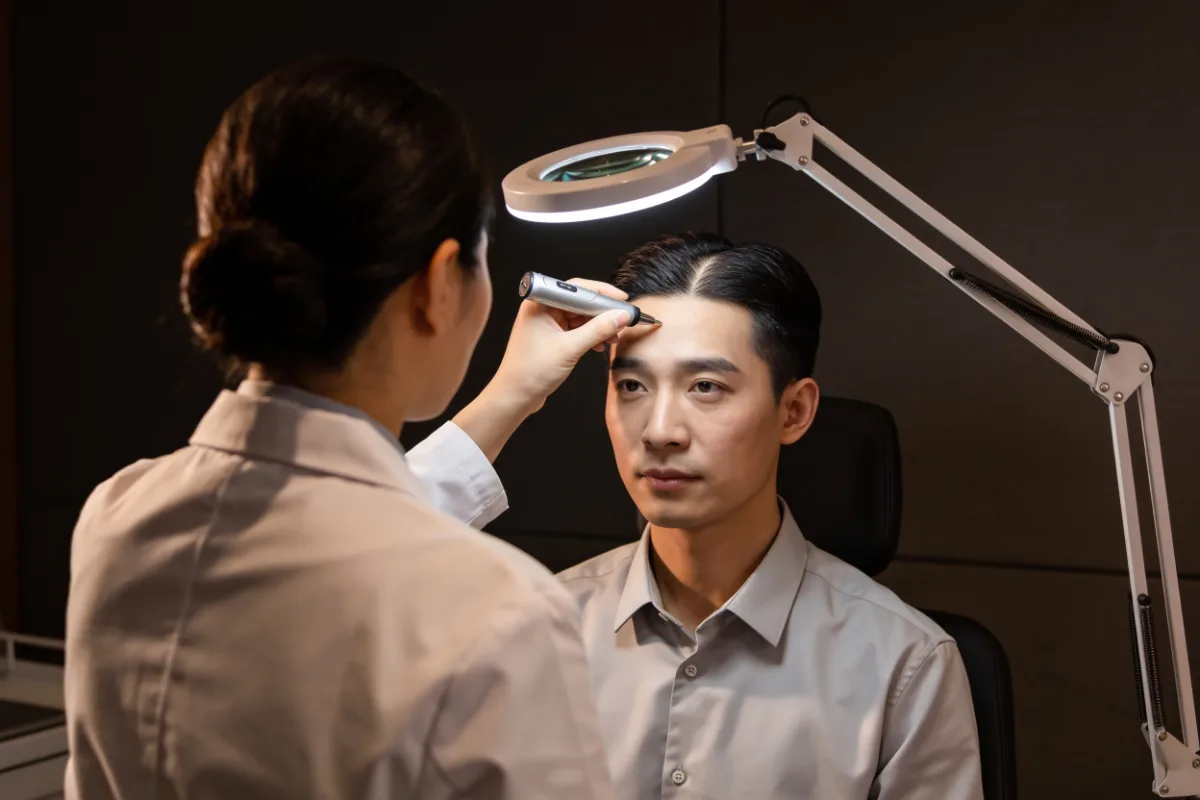
A transplant moves hair. Everything else works on the hair you still have. Knowing that difference tells you what non-surgical treatment can and cannot do.
By SkinRev Lab Editorial · Updated 28 November 2026
Hair loss treatment without a transplant means keeping and thickening the hair you still have, using doctor-prescribed medicines, low-level laser and micrografting, or changing how thin areas look with camouflage. It does not put hair back where follicles have gone. At SkinRev Lab, CityLink Mall (City Hall MRT), Dr Sin Yong, medical adviser, assesses the cause and plans treatment, priced at consultation. SkinRev Lab does not perform hair transplants.
In short
Non-surgical hair loss treatment suits areas that are thinning but still have fine hairs. Medicines slow the loss and thicken those hairs, low-level laser and micrografting can be added, and results are judged at around six months. Bare, shiny areas do not regrow; there the choices are a transplant elsewhere or camouflage.
Key facts
- Suits: thinning areas that still have fine hairs
- Does not: regrow hair where the scalp has been bare for years
- Options at SkinRev Lab: prescription treatment, H2LT low-level laser and Regenera Activa by Dr Sin Yong
- Timescale: judged at around six months; continues to work only while treatment continues
- Not offered: hair transplants and PRP
Updated
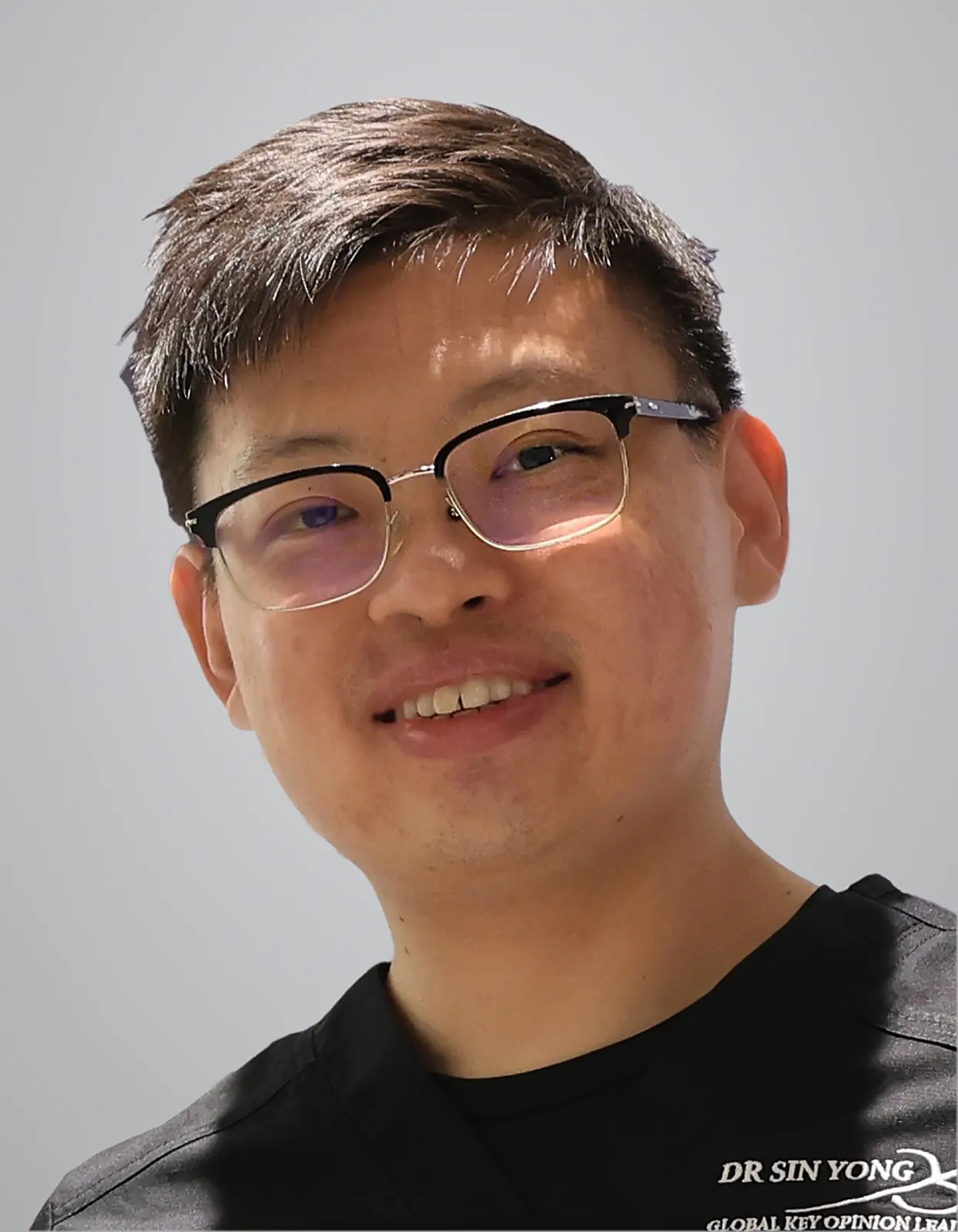
Your doctor
Dr Sin Yong
This treatment is performed by Dr Sin Yong, after a consultation. Dr Sin Yong is a Global Key Opinion Leader for seven device makers and has been invited to teach doctors in São Paulo, Bangkok, Seoul, Taipei, Dubai and Singapore.
Invited to present or train: DEKA Academy 2026, Florence 2026 · CLASSYS Academy, São Paulo 2026 · 7th CLASSYS APAC Symposium, Bangkok 2026
MBBS (NUS) · MRCS (Edinburgh) · MSc Aesthetic Medicine, Distinction (London) · MSc Practical Dermatology (Cardiff) · Professional Diploma in Obstetrics and Gynaecology (RCPI) · Profile · KOL brands & devices
The options
What each one
can do
| Option | What it does | Where it stops | At SkinRev Lab |
|---|---|---|---|
| Doctor-prescribed medicines | Slow pattern hair loss and thicken hairs that are shrinking [1][2]. | Work only while continued. Do not revive follicles that have gone. | Dr Sin Yong, priced at consultation |
| H2LT low-level laser | Light-based sessions that support thinning follicles [3]. | A supporting treatment, used with medicines. | Dr Sin Yong, priced at consultation |
| Regenera Activa micrografting | Tiny grafts taken from your own scalp and placed into thinning areas in one session. | For thinning areas, not bare ones. | Dr Sin Yong, priced at consultation |
| Scalp care | Improves scalp comfort and condition. | Does not regrow hair. | Rejuran® Scalp Care by Aesthetic Therapists, from S$348 per 90-minute session before GST |
| Scalp micropigmentation | Adds the look of density with pigment. | Does not grow hair. | Available at SkinRev Lab; ask for details |
Who it suits
When non-surgical
treatment is enough
Non-surgical treatment suits early and moderate thinning: a hairline that is receding but still has fine hairs, a widening parting, a thinner crown. In Asian men and women pattern hair loss often shows as diffuse thinning, which is the pattern medical treatment is designed for [4].
It is the first step even for people who later choose a transplant, because a transplant does not stop the remaining hair from thinning.
Be realistic
When a transplant
is the honest answer
Where the scalp has been smooth and shiny for years, the follicles are gone and no medicine, laser or scalp treatment will bring hair back. A hair transplant moves follicles into that area. SkinRev Lab does not perform transplants; Dr Sin Yong will say when a surgical opinion is the more suitable route. How to stop a receding hairline and hair loss treatment cost cover the next questions.
Common questions
Your questions,
answered
Can hair loss be treated without a transplant?
Yes, where follicles are still alive. Doctor-prescribed medicines slow pattern hair loss and thicken shrinking hairs, and low-level laser or micrografting can be added. Areas that have been bare for years do not regrow without a transplant.
What is the most effective non-surgical hair loss treatment?
For pattern hair loss, the evidence is strongest for doctor-prescribed medicines used continuously. Low-level laser has supporting evidence. Which combination suits you depends on the cause, which Dr Sin Yong assesses first.
Does SkinRev Lab do hair transplants?
No. SkinRev Lab does not perform hair transplants or PRP. Dr Sin Yong provides assessment, prescription treatment, H2LT low-level laser and Regenera Activa micrografting.
How long do non-surgical results last?
As long as treatment continues. Results are judged at around six months, and stopping treatment for pattern hair loss usually means the benefit is lost over the following months.
Do scalp treatments regrow hair?
No. Scalp care improves scalp comfort and condition and can sit alongside medical treatment, but it does not regrow hair.
Where can I get hair loss treatment in Singapore?
At SkinRev Lab, #B1-28 CityLink Mall, 1 Raffles Link, Singapore 039393, a covered walk from City Hall MRT (Exit C) and Esplanade MRT (Exit D). Dr Sin Yong assesses the cause of the hair loss at a consultation first, then plans the medical treatment. SkinRev Lab is open daily, 11am to 8pm, and visits are booked on WhatsApp at +65 8266 9585. Hair transplants are not offered at SkinRev Lab.
References
- Adil A, Godwin M (2017). The effectiveness of treatments for androgenetic alopecia: a systematic review and meta-analysis. Journal of the American Academy of Dermatology 77(1):136-141. Source
- Blumeyer A, Tosti A, Messenger A, et al. (2011). Evidence-based (S3) guideline for the treatment of androgenetic alopecia in women and in men. Journal der Deutschen Dermatologischen Gesellschaft 9 Suppl 6:S1-57. Source
- Avci P, Gupta GK, Clark J, Wikonkal N, Hamblin MR (2014). Low-level laser (light) therapy (LLLT) for treatment of hair loss. Lasers in Surgery and Medicine 46(2):144-151. Source
- Lee WS, Lee HJ (2012). Characteristics of androgenetic alopecia in Asian. Annals of Dermatology 24(3):243-252. Source