Melasma · Guide · SkinRev Lab
Melasma: causes, triggers and types
Melasma is not one trigger. Light, heat, hormones and genes work together, which is why it is controlled rather than removed.
By SkinRev Lab Editorial · Updated 28 November 2026
Melasma is a common pigment condition that causes symmetrical brown or grey-brown patches on the cheeks, forehead, upper lip and nose. It is driven by several triggers working together: ultraviolet and visible light, heat, hormones such as pregnancy and the contraceptive pill, family history, and irritation from harsh products. It comes in three types, epidermal, dermal and mixed, and the type decides how well it responds. At SkinRev Lab, CityLink Mall (City Hall MRT), Dr Sin Yong, medical adviser, diagnoses the type and plans treatment, priced at consultation.
In short
Light and hormones are the main drivers, and genes load the dice: many people with melasma have an affected relative. Heat and visible light, not only UV, make it darker, which matters in Singapore. Epidermal melasma usually responds most, dermal least, and mixed, the most common, partly.
Key facts
- Looks like: symmetrical brown or grey-brown patches on cheeks, forehead, upper lip, nose
- Main triggers: UV and visible light, heat, hormones, genes, irritation
- Most affected: women aged about 20 to 40 with medium to darker skin
- Types: epidermal, dermal, mixed (most common)
- At SkinRev Lab: diagnosis and treatment by Dr Sin Yong, priced at consultation
Updated

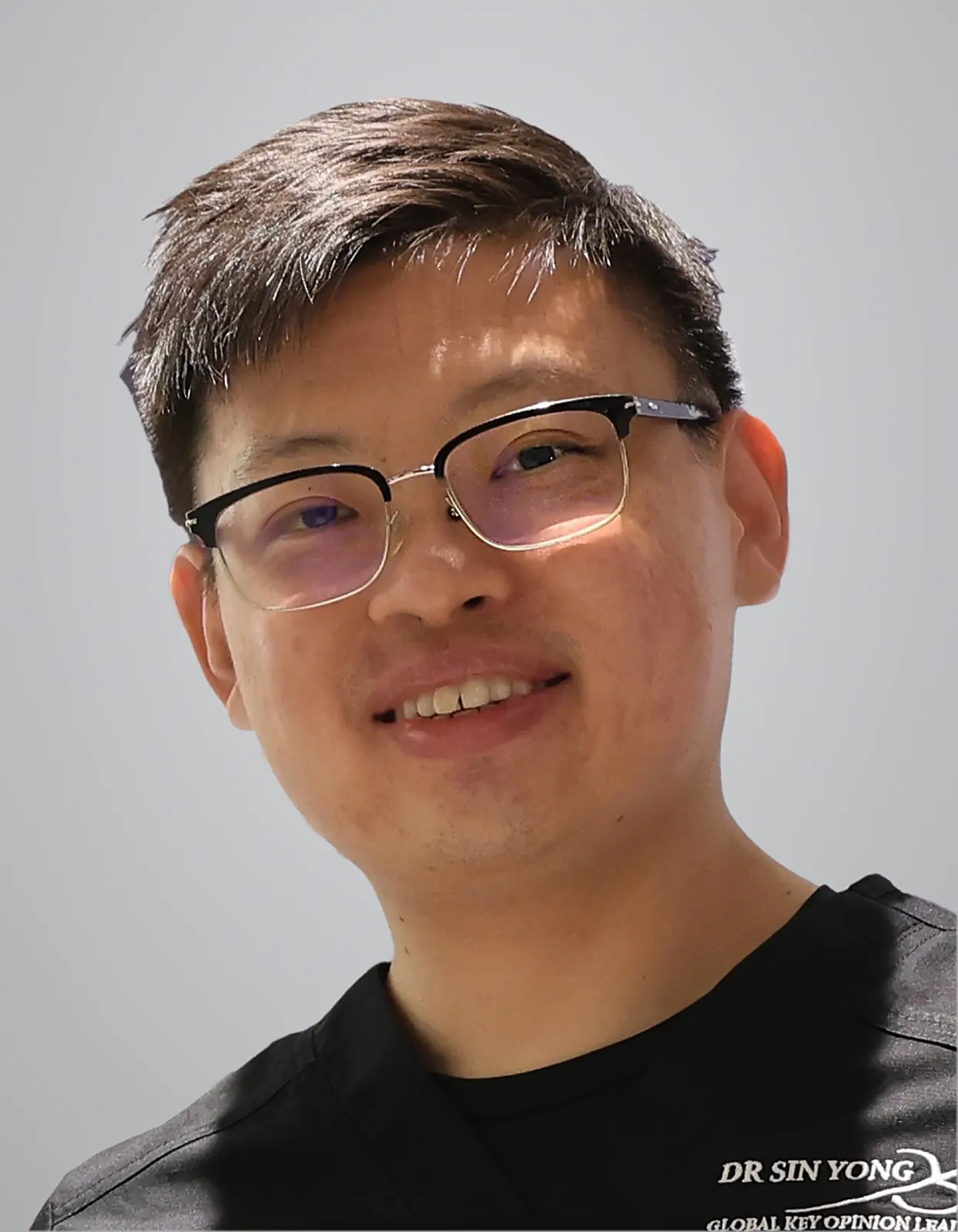
Your doctor
Dr Sin Yong
This treatment is performed by Dr Sin Yong, after a consultation. Dr Sin Yong is a Global Key Opinion Leader for seven device makers and has been invited to teach doctors in São Paulo, Bangkok, Seoul, Taipei, Dubai and Singapore.
Invited to present or train: DEKA Academy 2026, Florence 2026 · CLASSYS Academy, São Paulo 2026 · 7th CLASSYS APAC Symposium, Bangkok 2026
MBBS (NUS) · MRCS (Edinburgh) · MSc Aesthetic Medicine, Distinction (London) · MSc Practical Dermatology (Cardiff) · Professional Diploma in Obstetrics and Gynaecology (RCPI) · Profile · KOL brands & devices
Triggers
What drives
melasma
| Trigger | How it acts | What helps |
|---|---|---|
| Ultraviolet light | Switches on pigment cells and damages the skin around them [2]. | Daily broad-spectrum SPF 50+ and reapplying outdoors. |
| Visible light | Daylight, including through windows, darkens melasma in darker skin. | Tinted sunscreen with iron oxides, which blocks visible light [6]. |
| Heat | Saunas, hot workouts and long hours outdoors can darken patches. | Cooling down, shade, avoiding heat-based facials. |
| Hormones | Pregnancy, the contraceptive pill and hormone therapy are common starting points [1]. | Discuss alternatives with your doctor if melasma began on a hormone. |
| Genes | Many people with melasma have an affected relative [3]. | Cannot be changed; explains why some people relapse more. |
| Irritation | Harsh scrubs, strong peels and aggressive lasers can darken it. | Gentle skincare and conservative settings. |
Types
The three types,
and why they matter
| Type | What it looks like | Usual response |
|---|---|---|
| Epidermal | Well-defined, darker brown; shows more under a Wood lamp. | Usually responds most. |
| Dermal | Ill-defined, light brown to blue-grey. | Usually responds poorly. |
| Mixed | Brown and blue-grey together; the most common type [1]. | Partial improvement is typical. |
The type is judged in clinic, often with a dermatoscope or Wood lamp. It sets expectations before any money is spent. Melasma can look like sun spots, freckles or Hori's naevus, which need different treatment; see melasma vs freckles.
Treatment
What the plan
looks like
- Daily tinted SPF 50+ with iron oxides, every day, as the base of every plan.
- Prescription lightening creams as the usual first step.
- Oral prescription medicine for suitable patients, after a check of clotting risk [4].
- Gentle laser, such as low-energy Laser Toning or Pico Laser, in spaced sessions [5].
- Facials such as HydraFacial (from S$288 before GST) for surface brightness only.
Standalone chemical peels and IPL are not offered at SkinRev Lab, because both can worsen melasma. Does melasma come back? explains maintenance.
Common questions
Your questions,
answered
What causes melasma?
Several triggers working together: ultraviolet and visible light, heat, hormones such as pregnancy and the contraceptive pill, family history and irritation. Genes make some people more prone.
Is melasma caused by hormones?
Hormones are a common trigger. Melasma often starts in pregnancy or on the contraceptive pill or hormone therapy, but light and genes play a large part too.
What are the types of melasma?
Epidermal, dermal and mixed. Epidermal usually responds most, dermal least, and mixed, the most common, partly.
Why is melasma worse in Singapore?
Strong year-round sun, visible light through windows and heat all darken melasma, so protection has to be daily and include visible light.
Can facials remove melasma?
No. Facials can brighten the surface, but melasma needs medical treatment with strict sun protection.
Where can I get melasma treatment in Singapore?
At SkinRev Lab, #B1-28 CityLink Mall, 1 Raffles Link, Singapore 039393, a covered walk from City Hall MRT (Exit C) and Esplanade MRT (Exit D). Dr Sin Yong diagnoses the type of melasma and plans medical treatment, priced at consultation. Facials by Aesthetic Therapists brighten the surface but do not remove melasma. SkinRev Lab is open daily, 11am to 8pm, and visits are booked on WhatsApp at +65 8266 9585.
References
- Ogbechie-Godec OA, Elbuluk N (2017). Melasma: an up-to-date comprehensive review. Dermatology and Therapy 7(3):305-318. Source
- Passeron T, Picardo M (2018). Melasma, a photoaging disorder. Pigment Cell and Melanoma Research 31(4):461-465. Source
- Handel AC, Miot LD, Miot HA (2014). Melasma: a clinical and epidemiological review. Anais Brasileiros de Dermatologia 89(5):771-782. Source
- Lee HC, Thng TGS, Goh CL (2016). Journal of the American Academy of Dermatology 75(2):385-392 (oral treatment of melasma in Singapore, retrospective analysis). Source
- Wattanakrai P, Mornchan R, Eimpunth S (2010). Low-fluence Q-switched neodymium-doped yttrium aluminum garnet (1,064 nm) laser for the treatment of facial melasma in Asians. Dermatologic Surgery 36(1):76-87. Source
- Castanedo-Cazares JP, Hernandez-Blanco D, Carlos-Ortega B, Fuentes-Ahumada C, Torres-Alvarez B (2014). Near-visible light and UV photoprotection in the treatment of melasma: a double-blind randomized trial. Photodermatology, Photoimmunology and Photomedicine 30(1):35-42. Source