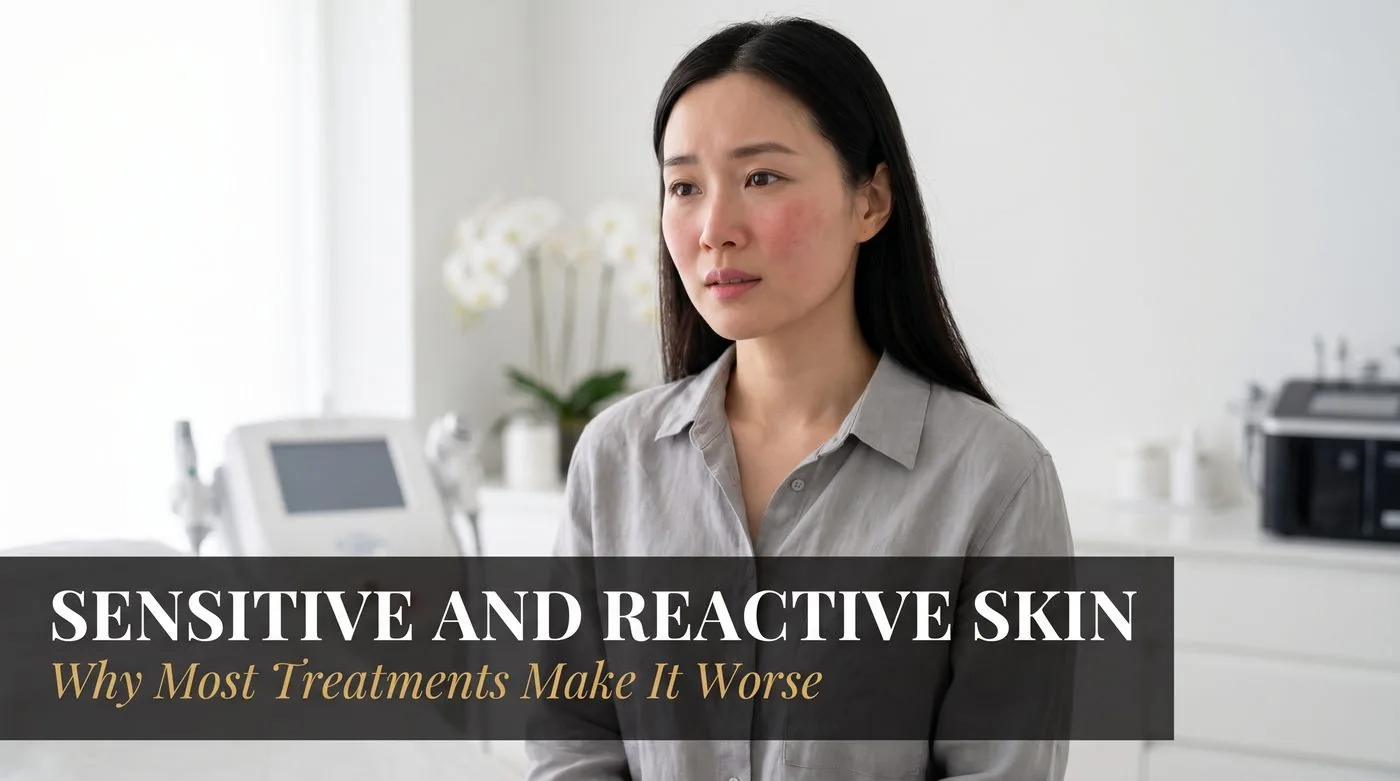
Melasma is a stubborn form of pigmentation that appears as symmetrical brown or grey-brown patches, usually across the cheeks, forehead and upper lip. It is driven by a combination of UV exposure, heat and hormonal factors — which is why Singapore's year-round sun and humidity make it particularly persistent here. It can be significantly improved, but it is managed rather than permanently cured.
What Melasma Actually Is
Melasma occurs when melanocytes — the pigment-producing cells in your skin — become overactive and deposit excess melanin in patches. Unlike sun spots, which are discrete and well-defined, melasma tends to appear as diffuse, symmetrical patches with soft edges. It is more common in women and in medium to deeper skin tones, and it frequently first appears during pregnancy or after starting hormonal contraception.
Why Singapore's Climate Makes It Worse
Two factors matter here beyond UV alone. First, Singapore sits almost on the equator, so UV index readings are high year-round rather than seasonal — there is no low-exposure winter for skin to recover. Second, ambient heat itself is a trigger independent of UV: infrared heat can stimulate melanocyte activity, which is why melasma often flares after time outdoors even in shade, or during activities near heat sources.
Why It Keeps Coming Back
Melasma is a chronic condition with a strong tendency to recur. Treatments reduce existing pigment, but the underlying melanocyte overactivity remains. Without ongoing sun protection and trigger management, pigment returns — often within months. This is the single most common reason people feel treatments have 'failed': the initial clearing was real, but maintenance was not sustained.
What Genuinely Helps
A realistic melasma plan has three parts. Daily broad-spectrum SPF with iron oxide protection against visible light is non-negotiable — without it, nothing else holds. Gentle, barrier-supporting treatments reduce inflammation, since inflammation drives pigment production. And patience: melasma responds to consistent, gentle intervention far better than aggressive treatment, which can trigger rebound pigmentation.
Approaches to Avoid
Aggressive resurfacing and high-energy treatments can worsen melasma by triggering post-inflammatory hyperpigmentation on top of the existing condition. Skin-lightening products containing unregulated ingredients carry real safety risks. If a treatment promises to permanently remove melasma in one session, treat that claim with caution.
If this describes what you are dealing with, our SKINLDM LDM Ultrasound Facial protocol is the relevant option to discuss — our Aesthetic Specialist will confirm whether it suits you, or tell you honestly if it does not.
Frequently Asked Questions
Melasma can be significantly faded and kept under control, but it is a chronic condition rather than something permanently cured. The melanocyte overactivity that causes it remains, so ongoing sun protection and periodic maintenance treatments are what keep skin clear long term.
Gentle, barrier-supporting protocols work better than aggressive resurfacing, which can trigger rebound pigmentation. Our SKINLDM LDM ultrasound facial calms inflammation and supports an even complexion — a suitable option for melasma-prone and sensitive skin. A consultation is needed to assess your specific pigmentation pattern.
Pregnancy-related melasma (chloasma) often fades within months of delivery as hormones settle, but it does not always resolve completely and can return with subsequent pregnancies or hormonal contraception. Sun protection during and after pregnancy makes a meaningful difference.