Moles · Guide · SkinRev Lab
Does mole removal leave a scar?
Every removal leaves a mark. The method, the site and the aftercare decide how small it ends up.
By SkinRev Lab Editorial · Updated 28 November 2026
Mole removal always leaves some mark, but it is usually small: a shaved mole tends to heal as a flat, slightly paler or pinker spot, and an excised mole as a fine line. How visible it becomes depends on the method, the mole's depth and site, your skin tone and scar tendency, and aftercare. At SkinRev Lab, CityLink Mall (City Hall MRT), Dr Sin Yong, medical adviser, chooses the method after examining the mole, priced at consultation.
In short
Expect a small mark that fades over months. Shave removal leaves a flat spot; punch and excision leave a small round or line scar. The chest, shoulders and back scar more, and darker skin can stay darker for a while after healing. Sun protection and leaving the scab alone help most.
Key facts
- Shave: flat, slightly paler or pinker spot
- Punch or excision: small round mark or fine line
- Healing: scab off in about one to two weeks; mark fades over months
- Higher scar risk: chest, shoulders, back; people who form keloids
- At SkinRev Lab: method chosen by Dr Sin Yong, priced at consultation
Updated
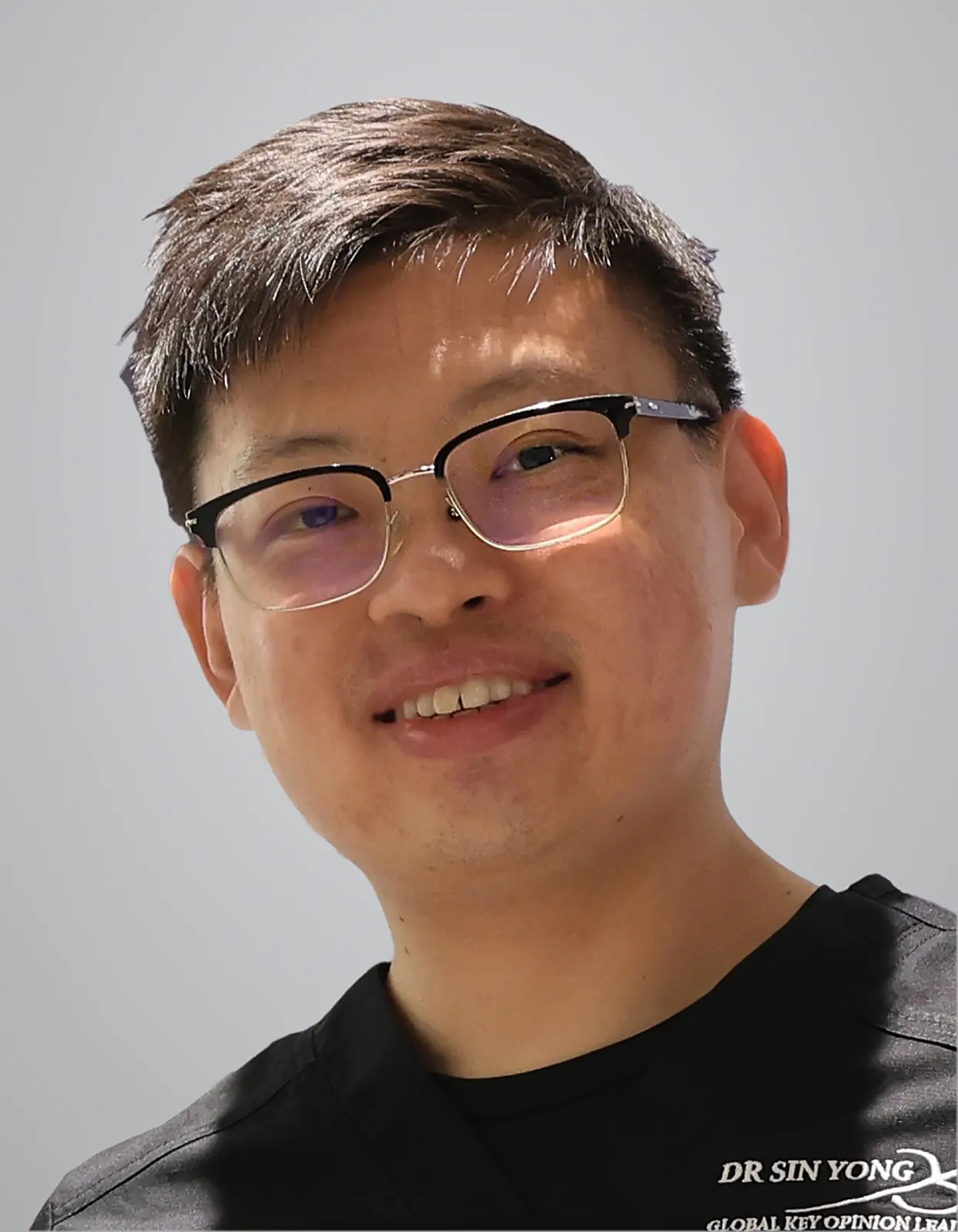
Your doctor
Dr Sin Yong
This treatment is performed by Dr Sin Yong, after a consultation. Dr Sin Yong is a Global Key Opinion Leader for seven device makers and has been invited to teach doctors in São Paulo, Bangkok, Seoul, Taipei, Dubai and Singapore.
Invited to present or train: DEKA Academy 2026, Florence 2026 · CLASSYS Academy, São Paulo 2026 · 7th CLASSYS APAC Symposium, Bangkok 2026
MBBS (NUS) · MRCS (Edinburgh) · MSc Aesthetic Medicine, Distinction (London) · MSc Practical Dermatology (Cardiff) · Professional Diploma in Obstetrics and Gynaecology (RCPI) · Profile · KOL brands & devices
By method
What each method
leaves
| Method | Suits | Usual mark |
|---|---|---|
| Shave | Raised moles that look clearly benign | Flat, slightly paler or pinker spot; the mole can partly return [3]. |
| Punch | Small moles when a complete specimen is wanted | Small round scar, sometimes with a stitch. |
| Elliptical excision | Flat or deeper moles, or any doubt | A fine line, longer than the mole. |
| Radiofrequency | After assessment, usually with a shave | Flat mark, similar to shave. |
| Laser | Small moles the doctor is confident are benign | Flat mark; no tissue for testing. |
What affects it
Why some scars
are more visible
- Site. The chest, shoulders and upper back are under tension and more likely to form thick or raised scars [4].
- Depth. Deeper moles need deeper removal.
- Skin tone. Darker skin can stay darker for weeks to months after healing [5].
- Scar history. If you form keloids, tell the doctor first; see keloid scars.
Aftercare
How to keep
the mark small
- Keep the wound clean and covered as advised; do not pick the scab.
- Use sunscreen on the healed mark for several months.
- Avoid stretching an excision site for a few weeks.
- See the doctor if it becomes red, hot, painful or raised.
Mole removal aftercare gives the day-by-day routine.
Common questions
Your questions,
answered
Does mole removal leave a scar?
Yes, every method leaves some mark, but it is usually small: a flat spot after shave removal or a fine line after excision.
Which mole removal method leaves the least scar?
For a raised benign mole, shave removal usually leaves the flattest mark. Moles that need testing or are deep may need excision, which leaves a fine line.
How long does a mole removal mark take to fade?
The scab usually falls off in about one to two weeks, and the mark keeps fading over months.
Can a mole grow back after removal?
A shaved mole can partly return because some cells may remain. Excision removes it fully.
Do moles on the chest scar more?
Yes. The chest, shoulders and upper back are more prone to thick or raised scars.
Where can I get a mole checked or removed in Singapore?
At SkinRev Lab, #B1-28 CityLink Mall, 1 Raffles Link, Singapore 039393, a covered walk from City Hall MRT (Exit C) and Esplanade MRT (Exit D). Dr Sin Yong examines each mole with a dermatoscope before any removal, and refers to a dermatologist or hospital when a mole looks unusual. SkinRev Lab is open daily, 11am to 8pm, and visits are booked on WhatsApp at +65 8266 9585.
References
- Goodson AG, Florell SR, Boucher KM, Grossman D (2010). Low rates of clinical recurrence after biopsy of benign to moderately dysplastic melanocytic nevi. Journal of the American Academy of Dermatology 62(4):591-596. Source
- Ogawa R (2017). Keloid and hypertrophic scars are the result of chronic inflammation in the reticular dermis. International Journal of Molecular Sciences 18(3):606. Source
- Davis EC, Callender VD (2010). Postinflammatory hyperpigmentation: a review of the epidemiology, clinical features, and treatment options in skin of color. Journal of Clinical and Aesthetic Dermatology 3(7):20-31. Source