Treatment · T2 Frax Radiance
T2 Frax Radiance pico laser: tone and tighten in one appointment
T2 Frax Radiance is a two-step laser protocol by Dr Sin Yong. The first step works on pigment with very little heat. The second warms the deeper skin to encourage collagen.
Medically reviewed by Dr Sin Yong, medical adviser · Last reviewed 20 November 2026
Quick answer: Pico laser in Singapore
- T2 Frax Radiance is a two-step laser protocol: Tone, then Tighten. Both can be done in one appointment.
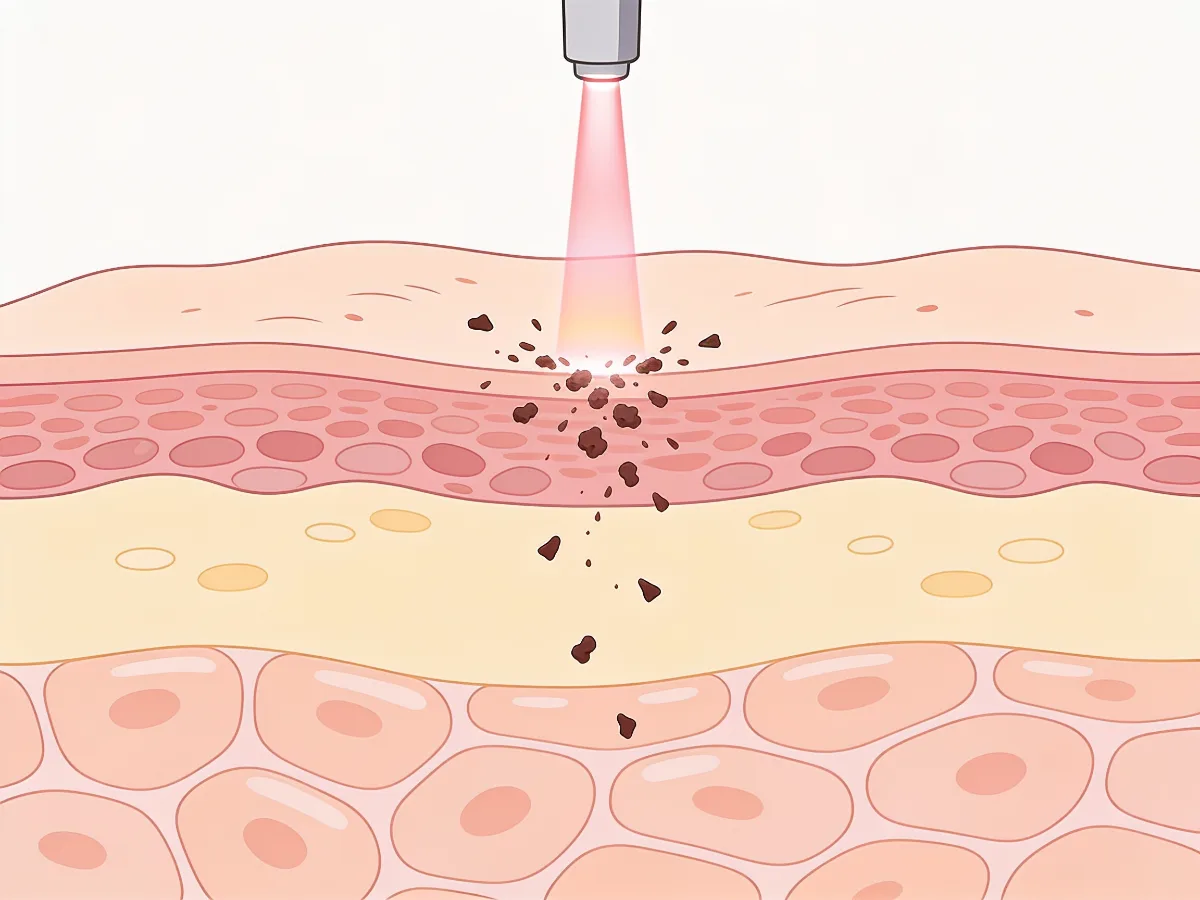
- Tone uses 785 nm picosecond pulses, which break up pigment mechanically with little heat.
- Tighten uses a longer thermal pulse aimed at the collagen in the deeper skin.
- It is used for sun-related pigment, marks left after acne and patchy tone. Melasma is treated conservatively, and only after assessment.
What is T2 Frax Radiance?
T2 Frax Radiance is a laser protocol planned and carried out by Dr Sin Yong. The "T2" stands for its two steps, Tone and Tighten.
- Tone. Picosecond pulses at 785 nm break pigment into fine particles mechanically, with little heat. The body then clears those particles over the following weeks.
- Tighten. A longer, thermal pulse warms the collagen layer of the skin, which is intended to improve firmness and surface texture over time.
The two steps can be done in the same appointment, or one can be done alone, depending on what your skin needs. It is one of the pico laser treatments at SkinRev Lab, and is related to the R2 Glow laser, which is aimed more at oiliness, pores and glow.
Why 785 nm, and why picosecond pulses?
Two things decide how a pigment laser behaves: the wavelength and the pulse length.
A picosecond pulse is extremely short. It delivers its energy faster than the pigment can turn it into heat, so the pigment is shattered by pressure more than by heating. Less heat in the surrounding skin means a lower chance of the skin darkening afterwards, which is a particular concern in Asian skin. Lower heat reduces that risk. It does not remove it.
The 785 nm wavelength is well absorbed by melanin, the pigment in sun spots and in marks left after inflammation, which makes it efficient for brown pigment near the surface. Studies of picosecond lasers in Asian skin, and of pigment problems in darker skin, are the background to this approach (Koh and colleagues, Dermatologic Surgery, 2020; Davis and Callender, Journal of Clinical and Aesthetic Dermatology, 2010). Our guide to pico and Q-switched lasers compares pulse lengths in more detail.
What it is used for
| Concern | How T2 Frax Radiance is used |
|---|---|
| Sun spots and freckles | Tone step, targeted to the spots |
| Marks left after acne or inflammation | Tone step, at gentle settings, once the acne is controlled |
| Patchy, uneven tone | Tone step across the face |
| Early looseness and rough texture | Tighten step |
| Melasma | With caution. Plans are conservative and start only after an assessment in person |
Melasma needs particular care, because over-treatment can make it darker. Laser is one part of a melasma plan, alongside sun protection and skincare, and it is not always the first step. See pico laser for melasma for how this is approached.
What a session involves, and the downtime
The skin is cleansed and protective eyewear is worn. Cooling is used, and the settings are adjusted area by area. A comfort cream is optional. Most people describe the Tone step as quick, light snaps, and the Tighten step as warmth.
| When | What usually happens |
|---|---|
| The same day | Redness, warmth and sometimes mild swelling for a few hours. Treated spots may look darker |
| Days 1 to 3 | Spots may crust lightly or flake |
| Week 1 | Flaking clears |
| Weeks 2 to 4 | Pigment continues to clear, and collagen builds |
Most people go back to work the same day. The number of sessions is not fixed. It is planned after the assessment, and the interval between sessions is set by how your skin responds.
Risks include darkening of the skin after treatment and, in melasma, darkening from over-treatment. Use sunscreen every day, avoid picking at flaking skin, and report any darkening early, at or before your review. Treatment is postponed on recently tanned or inflamed skin and during pregnancy. More detail is in our guide to pico laser downtime.
T2 Frax Radiance price and booking at SkinRev Lab
SkinRev Lab is at #B1-28 CityLink Mall, 1 Raffles Link, linked underground to City Hall MRT and Esplanade MRT, and is open daily from 11am to 8pm.
T2 Frax Radiance is a medical treatment. It is carried out by Dr Sin Yong and always starts with a consultation, where the area is examined, your medical history is taken and the plan is explained before anything is agreed. It is priced at consultation, because the cost depends on what is found at that examination. Whether you have Tone, Tighten or both, the depth of the pigment and the number of sessions decide the quote.
To arrange a consultation, message us on WhatsApp at 8266 9585 with your concern and the days that suit you. Prices for our non-medical treatments are on the price list.
Main guide
Pico laser
pico laser at SkinRev LabRelated questions: What types of pico laser are there?What is the downtime after pico laser?What does pico laser cost?
Common questions
Your questions,
answered
What does T2 mean in T2 Frax Radiance?
It stands for the two steps of the protocol: Tone, which works on pigment with picosecond pulses, and Tighten, which warms the deeper skin to encourage collagen.
Is T2 Frax Radiance suitable for melasma?
With caution. Melasma can darken with over-treatment, so plans are conservative and start only after an assessment in person. Laser is one part of a melasma plan.
Is T2 Frax Radiance painful?
Most people describe the Tone step as quick, light snaps and the Tighten step as warmth. Cooling is used, and a comfort cream is optional.
How many sessions will I need?
The number is not fixed. It depends on the type and depth of the pigment and on how your skin responds, and it is planned after the assessment.
Can I go back to work the same day?
Most people do. Redness and warmth last a few hours. Treated spots may look darker for a few days before they flake.
How long do the results last?
Sun spots that have cleared can return with sun exposure, and new ones can form. Daily sunscreen is the main way to keep the result, and maintenance is discussed at review.
Medical journal references
Peer-reviewed background reading for this page. These papers report research in groups of people and do not predict an individual result.
- Zhou Y, Hamblin MR, Wen X. An update on fractional picosecond laser treatment: histology and clinical applications. Lasers Med Sci. 2023;38(1):45. PubMed
- Li J, Duan F, Kuang J. Fractional picosecond laser for atrophic acne scars: A meta-analysis. J Cosmet Dermatol. 2023;22(8):2205-2217. PubMed
- Bogdan Allemann I, Kaufman J. Fractional photothermolysis--an update. Lasers Med Sci. 2010;25(1):137-44. PubMed
- Chandrashekar BS, Shenoy C, Madura C. Complications of laser and light-based devices therapy in patients with skin of color. Indian J Dermatol Venereol Leprol. 2019;85(1):24-31. PubMed