Treatment · Laser for acne
Laser acne treatment in Singapore: what lasers can and cannot do for active acne
Lasers can calm inflamed spots, reduce oiliness for a time and fade the marks left behind. They do not stop pores from blocking, so they are added to acne care and do not replace it.
Medically reviewed by Dr Sin Yong, medical adviser · Last reviewed 20 November 2026
Quick answer
- Laser is used for mild to moderate inflammatory acne, oily congested skin, and the red or brown marks left after breakouts settle.
- Different lasers do different jobs: a 675 nm laser for inflammation and redness, a 1064 nm laser for oil, a carbon laser peel for the surface, and a pico laser for brown marks.
- A course is typically four to six sessions, two to four weeks apart, reviewed at about eight to twelve weeks.
- Laser does not stop pores from blocking or address hormones, so acne usually returns if laser is used alone.
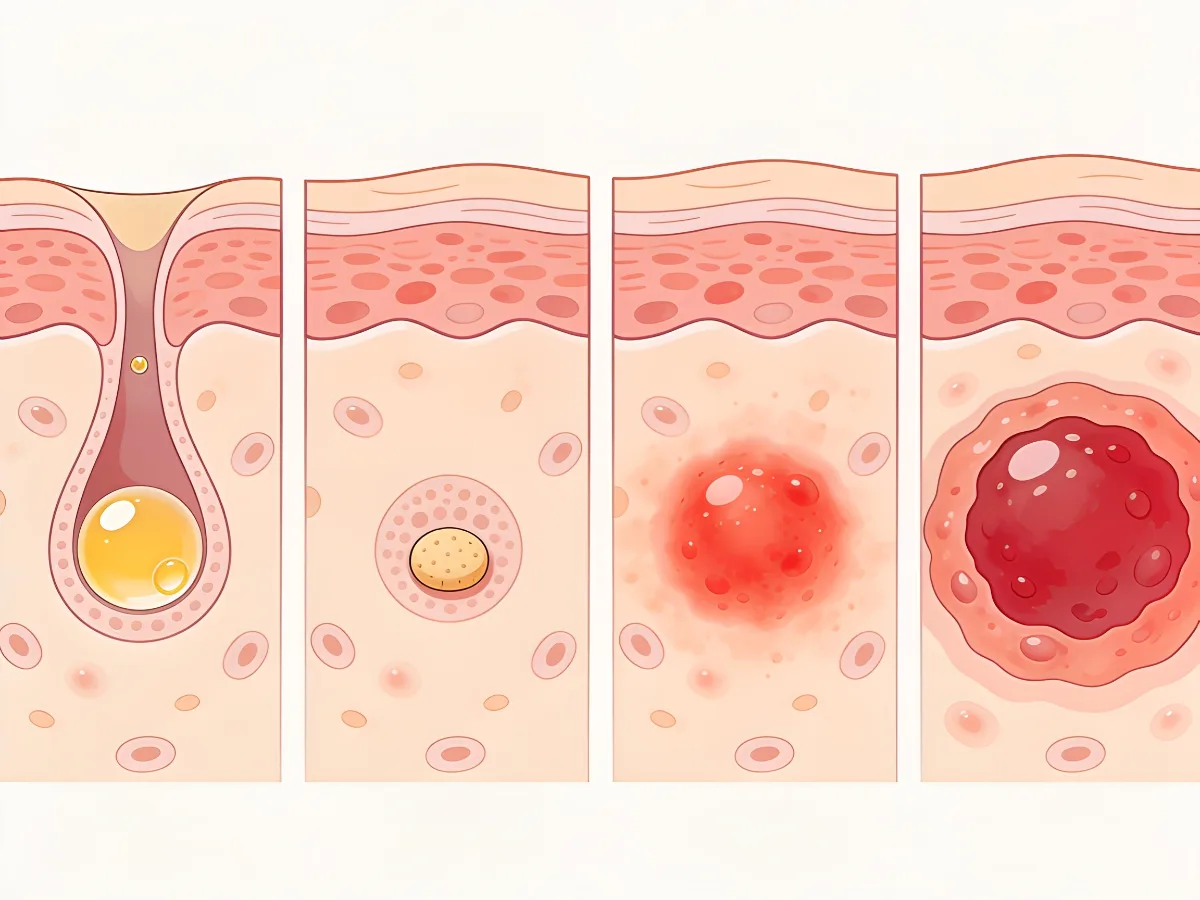
What laser can do for acne, and what it cannot
Acne has four drivers: pores that block, oil, bacteria and inflammation, with hormones behind much of it. Lasers act on some of these. They can calm inflammation, warm the oil glands so that they make less oil for a period, and clear the surface. They can also fade the red and brown marks that spots leave behind.
What a laser cannot do is stop the pore lining from blocking, or change the hormonal drive. For that reason, laser is added to medical acne care and good skincare. Used alone, it usually gives a temporary improvement, and the acne returns.
Laser suits mild to moderate inflammatory acne and oily, congested skin. Deep, painful nodules and cysts need prescription treatment first, and our page on cystic acne explains why. Acne that comes with fever or joint pain needs urgent medical care.
Which laser does what
| Laser | How it works | What it is used for |
|---|---|---|
| 675 nm laser (Shaonu Guang) | Fractional red light into the deeper skin, with contact cooling | Calming inflammation and redness |
| R2 Glow (1064 nm) | Warms the upper skin and the oil glands | Reducing oiliness for a period |
| Carbon laser peel | Carbon lotion at the pore openings absorbs the laser | Clearing the surface and congestion |
| Pico laser (T2 Frax Radiance) | Picosecond pulses break up pigment with little heat | Brown marks, once breakouts are controlled |
The laser is chosen on the day, according to what the skin is doing. Inflamed skin is treated differently from skin that is mainly oily, and marks are left until the active acne has settled.
Marks and scars are not the same thing. Flat red or brown marks fade, and laser can speed that up. Dents in the skin are scars, and need a different plan, covered in acne marks and acne scars and acne scar treatment. Scars are treated only after the acne is under control.
What a course involves
- Assessment and photographs. Dr Sin Yong grades the acne, checks what you are already using, and decides whether laser, medical treatment or both fit.
- Comfort. A comfort cream can be applied for 20 to 30 minutes.
- Treatment. The laser is passed over the skin with cooling.
- Aftercare. Sunscreen and gentle skincare.
A course is typically four to six sessions, two to four weeks apart. Progress is reviewed at about eight to twelve weeks, which is how long acne treatments of any kind take to show their effect.
Redness and warmth last an hour or two. Marks treated with a pico laser may look darker for a few days before they flake. Most people go back to their day, and make-up can usually be worn the next day.
If you take prescription acne medicine, tell Dr Sin Yong. Some medicines make the skin more sensitive to light or slower to heal, and the timing of laser is decided case by case.
Side effects, and who should wait
Common and short-lived: redness, mild swelling, temporary dryness, and darkening of marks after pico laser before they clear.
Uncommon: darkening of the skin after treatment, a short flare of spots, blisters or a superficial burn, and a cold sore outbreak.
Contact the clinic about blisters, crusts, weeping, pain that is worse after the first day, a sudden flare with fever, or new dark patches.
Laser is postponed after recent tanning, while taking medicines that make the skin sensitive to light, during pregnancy, and with an active cold sore. For acne in pregnancy, see acne during pregnancy.
Darker skin can be treated. The settings are more conservative, because darker skin is more prone to marks after any inflammation, and sunscreen matters more.
Laser acne treatment price and booking at SkinRev Lab
SkinRev Lab is at #B1-28 CityLink Mall, 1 Raffles Link, linked underground to City Hall MRT and Esplanade MRT, and is open daily from 11am to 8pm.
Laser treatment for acne is a medical treatment. It is carried out by Dr Sin Yong and always starts with a consultation, where the area is examined, your medical history is taken and the plan is explained before anything is agreed. It is priced at consultation, because the cost depends on what is found at that examination. The plan and the cost are explained after the assessment, and depend on the lasers used and the number of sessions.
To arrange a consultation, message us on WhatsApp at 8266 9585 with your concern and the days that suit you. Prices for our non-medical treatments are on the price list.
Main guide
Acne treatment
acne treatment at SkinRev LabRelated questions: What drives hormonal acne?Is it an acne mark or a scar?What is a carbon laser peel?
Common questions
Your questions,
answered
Can laser clear acne for good?
No. Laser can calm inflammation, reduce oil for a period and fade marks, but it does not stop pores from blocking. Acne usually returns if laser is used without medical care and suitable skincare.
How many laser sessions are needed for acne?
Typically four to six sessions, two to four weeks apart, reviewed at about eight to twelve weeks.
Does laser work for cystic acne?
Deep nodules and cysts need prescription treatment first. Laser may be added later, for redness, oil and marks, once the deep inflammation is controlled.
Can lasers help hormonal acne?
They can calm the inflammation and reduce oil, but they do not change the hormonal drive, so they are used alongside medical treatment.
Can I have laser while on acne medicine?
Often, yes, but it depends on the medicine. Some make the skin more sensitive to light or slower to heal. Tell Dr Sin Yong what you take, and the timing is decided case by case.
Is laser better than a facial for acne?
They do different things. A facial clears congestion at the surface. Laser acts on inflammation, oil and marks. Many plans use both.
Which laser treats red marks after acne?
Red marks are small blood vessels left after inflammation. A 675 nm laser is used to calm redness, and brown marks are treated with a pico laser once breakouts are controlled.
Medical journal references
Peer-reviewed background reading for this page. These papers report research in groups of people and do not predict an individual result.
- Yuan Y, Wang Y, Xia J, et al. Topical, light-based, and complementary interventions for acne: an overview of systematic reviews. Cochrane Database Syst Rev. 2024;10(10):CD014918. PubMed
- Ishii L, Deoghare S, Boen M. Light and laser-based therapy in treatment of acne vulgaris: A clinical review. J Am Acad Dermatol. 2025;93(4):1058-1064. PubMed
- Reynolds RV, Yeung H, Cheng CE, et al. Guidelines of care for the management of acne vulgaris. J Am Acad Dermatol. 2024;90(5):1006.e1-1006.e30. PubMed
- Salameh F, Shumaker PR, Goodman GJ, et al. Energy-based devices for the treatment of Acne Scars: 2022 International consensus recommendations. Lasers Surg Med. 2022;54(1):10-26. PubMed