Guide · Restylane problems
Restylane gone wrong: overfilled, lumpy or swollen filler and what can help
Most Restylane treatments go smoothly. When they do not, the usual problems are an overfilled look, lumps or bumps, and swelling that lasts longer than expected, and because Restylane is hyaluronic acid, it can usually be reduced or dissolved with an enzyme.
Medically reviewed by Dr Sin Yong, medical adviser · Last reviewed 17 November 2026
Advised surgery, or unsure what your options are?
Dr Sin Yong, our medical adviser, reviews filler lumps, nodules and overfilled areas, including filler placed elsewhere and fillers that cannot be dissolved. Surgery is sometimes the right answer; a review first helps you understand your options and their limits before you decide.
- Bring the product name and treatment dates if you have them, or the clinic's records.
- Take clear daylight photos from the front and both sides, and bring any scan reports.
- Do not wait for an appointment if you have pale, dusky or mottled skin or severe or rising pain (contact the provider who treated you at once or go to A&E), spreading redness with fever (see a doctor the same day), or any change in vision (call 995 or go to A&E at once).
WhatsApp us for a second opinion · Told you need surgery to remove filler? · What to bring to a filler second opinion
Quick answer
- Restylane is a range of stabilised hyaluronic acid gels of non-animal origin; most treatments go smoothly, and short-lived swelling, tenderness and bruising are the common side effects.
- The problems people ask about most are an overfilled look, lumps or bumps under thin skin, and swelling that lingers or returns.
- Early lumpiness and swelling are judged at about two weeks, because both often settle by then.
- Because Restylane is hyaluronic acid, it can usually be reduced or dissolved with an enzyme (hyaluronidase), partially and in stages.
- Seek same-day care for spreading redness, heat, rising pain or fever; for pale, dusky or mottled skin, or any change in vision, get help immediately.
- At SkinRev Lab, Dr Sin Yong, medical adviser, assesses Restylane problems wherever you were treated, with ultrasound where useful; correction is priced at consultation.
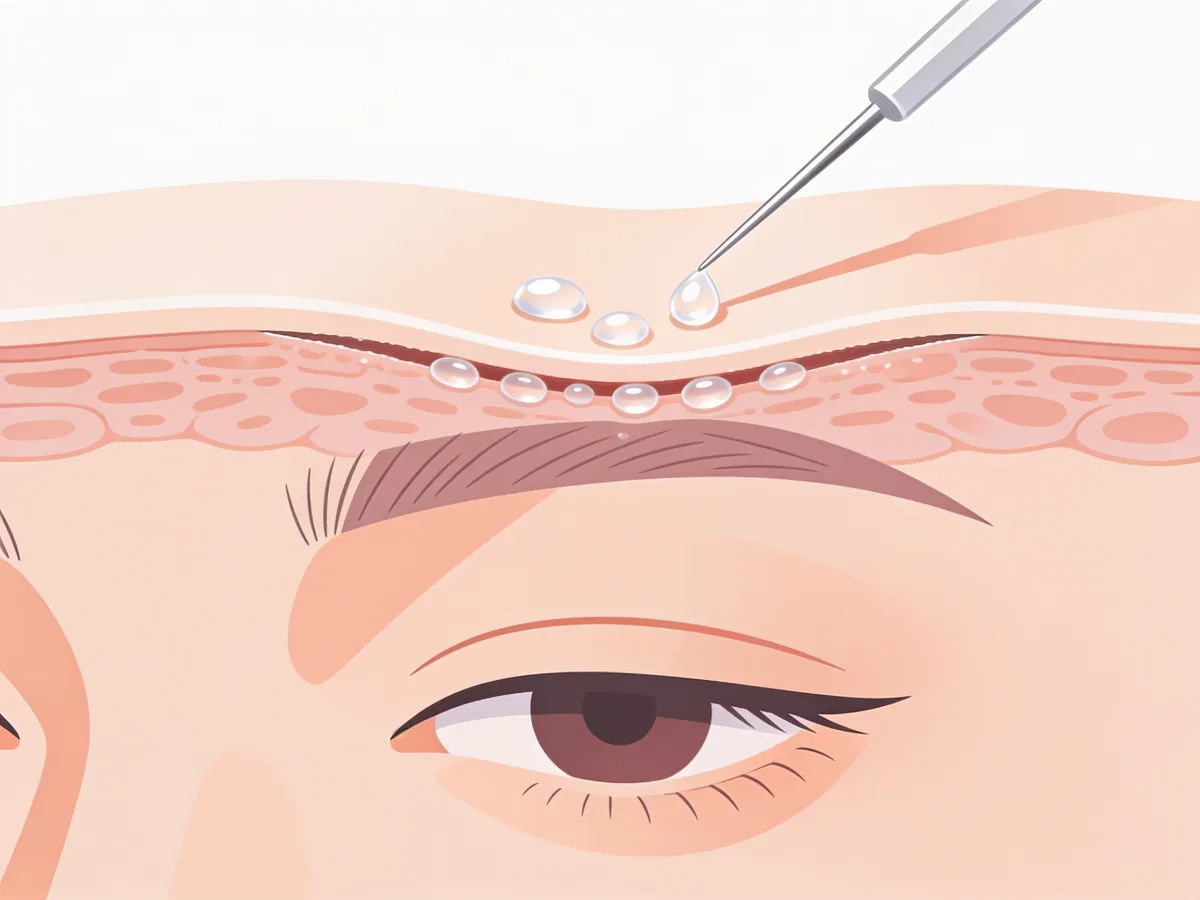
What is Restylane, and what can go wrong?
Restylane is a range of hyaluronic acid fillers made by Galderma, and most treatments with it go smoothly; when something goes wrong, it is usually too much volume, a lump or bump, or swelling that lasts. Galderma describes Restylane as a stabilised hyaluronic acid filler of non-animal origin, first launched more than 25 years ago, and says its range is based on two technologies, NASHA and OBT (known as XpresHAn in the United States). The range includes fillers for different areas of the face and skin booster products sold as Skinboosters. Product names are given only so that you can match them to your treatment record; none is a recommendation.
Hyaluronic acid is a natural sugar-based substance in the skin. In a filler it is stabilised, or cross-linked, so that it lasts longer, and it attracts water. This page does not endorse Restylane or any other brand; it explains what can go wrong and how it is corrected. For SkinRev Lab's approach to filler problems in general, see filler correction at SkinRev Lab.
The problems people ask about most:
- Overfilled: lips, cheeks or under-eyes that look heavier or fuller than planned.
- Lumps and bumps: small firm beads you can feel or see, especially in the lips and under the eyes.
- Swelling: swelling that lasts beyond the first fortnight, or returns weeks later.
- Uneven results: one side fuller, or filler that has spread beyond the area treated.
- Rarely: infection, a delayed inflamed nodule, or a blocked blood vessel, which is an emergency with any filler.
How common are problems after Restylane?
Short-lived swelling, redness and bruising are common after Restylane, as after any hyaluronic acid filler, and lasting or serious problems are uncommon. A review of dermal filler complications found that most adverse reactions are mild and short-lived, that most complications relate to the volume used and the technique, and that serious events are rare (Funt and Pavicic, 2013).
One of the earliest published reviews of side effects with a hyaluronic acid filler looked at Restylane reports from 1999 and 2000, when the product was newer (Friedman and colleagues, 2002):
- What was most common: localised hypersensitivity, meaning swelling, redness and firmness at the treated site, which lasted a median of about two weeks. No whole-body reactions were reported for 1999.
- How often: about 1 in 1,400 patients in 1999 and about 1 in 5,000 in 2000, based on estimated patient numbers.
- Why it fell: the authors linked the drop to a raw material with much lower protein content introduced in mid-1999, while noting that changes in reporting may also have played a part.
- Less often: inflammation at the injection site, and rare reports of granulomas, infection and cystic lesions.
These figures are more than 20 years old and came from reported events and estimated patient numbers, so they may undercount and may not reflect current products. They do show a pattern that still applies: firm, red swelling at the injection site can be a reaction to the filler rather than infection, and the two need to be told apart by a doctor. Your doctor will advise how this applies to you.
Restylane overfilled: when it looks like too much
Restylane looks overfilled when the filler in an area is more than the tissue can carry, which usually comes from repeated top-ups or a large amount in one session. Hyaluronic acid can persist in the tissue for several years in some people, often longer than it remains visible, so new filler may be added on top of filler that is still there (Wollina and Goldman, 2023).
How too much Restylane can look:
- Lips: lips that project too far, look heavy, or have lost a defined border.
- Under the eyes: a ridge or sausage-like bulge along the lower lid, or puffiness.
- Cheeks: fullness that sits too high or too far forward, most obvious when smiling.
- Whole face: a soft, rounded look, sometimes called pillow face.
What to do first: wait about two weeks after a recent session, because swelling exaggerates fullness, and avoid adding more filler elsewhere to balance the face until it has been assessed.
What may help: overfilled Restylane can usually be reduced with small amounts of an enzyme (hyaluronidase), placed only into the excess. Where filler has built up in layers, this is often done in stages so that the area keeps some support. For a self-check, see signs of too much filler; for whole-face fullness, see pillow face correction.
Restylane lumps and bumps
A lump after Restylane is most often swelling, a small bruise or gel concentrated in one spot, and it is assessed by when it appeared and whether it is inflamed. In thin, mobile areas such as the lips and under-eyes, even a small bead of filler placed too close to the surface can be felt or seen.
- Early lumps: unevenness in the first two weeks is commonly swelling or gel settling, and often softens.
- Quiet lumps that stay: cool, firm, well defined and not tender; usually filler sitting in one place or too superficially.
- A blue tint over a bump: filler near the surface of thin skin can scatter light and look bluish, known as the Tyndall effect.
- Inflamed delayed nodules: red, warm, tender lumps two weeks or more after treatment. Suggested causes include a delayed immune reaction, a low-grade bacterial film on the filler, and triggers such as viral illness or dental infection (Convery and colleagues, 2021).
- Granulomas: rare, firm lumps from a foreign-body reaction, typically many months later.
What may help, depending on the type (your doctor will advise which suits you): waiting and review for early or small quiet lumps; dissolving a persistent lump with an enzyme (hyaluronidase); and, for inflamed nodules, medical treatment for possible infection first, as a published guideline advises (King and colleagues, 2018). The enzyme is not a fix for every chronic lump, and some need more than one approach (Convery and colleagues, 2021).
Do not massage or squeeze a lump unless your doctor advises it. See filler lumps and nodules, Tyndall effect after filler and filler granuloma.
Swelling after Restylane: normal or not?
Swelling after Restylane is normal for the first few days, especially in the lips and under the eyes, and most settles within about two weeks; swelling that keeps growing, becomes hot or painful, or returns weeks later is not routine. Hyaluronic acid attracts water, so a treated area can look slightly fuller at first before it settles.
Patterns that are usually expected:
- Swelling that peaks in the first two or three days and then eases.
- Lips that look larger or uneven for several days, often more on one side.
- Mild morning puffiness under the eyes in the first week.
Patterns that need a doctor's review:
- Firm, red swelling at the treated sites that lasts: may be a reaction to the filler; in the early Restylane reports, this lasted a median of about two weeks (Friedman and colleagues, 2002).
- Puffiness under the eyes that lasts for weeks: filler in or near the tear trough can slow drainage so that fluid pools, sometimes called malar oedema.
- Swelling that returns weeks or months later: sometimes after an illness, a vaccination or dental work (Convery and colleagues, 2021).
- Hot, painful or spreading swelling: possible infection; same-day review.
What may help: time and a cool compress for expected swelling; for lasting puffiness caused by the filler itself, reducing it with an enzyme. Do not add more filler to disguise swelling. See filler swelling: what is normal.
Restylane in the lips and under the eyes
The lips and under-eyes are where problems after Restylane are most often noticed, because the skin is thin, the areas move a lot, and small excesses show. Filler in these areas can also spread beyond where it was placed. A 2023 review lists technique, large volumes, injecting under pressure, massage, muscle movement and gravity as the usual causes, and notes that under-eye filler placed too shallow or too close to the rim of the eye socket can spread into the lower eyelid (Wollina and Goldman, 2023).
In the lips:
- A shelf of filler above the lip line, sometimes called a filler moustache.
- Small beads you can feel along the inside of the lip.
- Lips that look duck-like or project too far when you smile.
Under the eyes:
- A ridge or bag along the lower lid, or a bluish tint.
- Puffiness that is worse in the morning.
- Fullness that has crept into the lower eyelid.
In both areas, ultrasound can show where the filler now sits so that the enzyme is placed precisely. These areas have their own guides: dissolving lip filler, lip filler migration, dissolving under-eye filler and tear trough filler problems. If you had a Restylane skin booster rather than a filler, see skin booster side effects.
Can Restylane be dissolved?
Yes. Restylane is hyaluronic acid, so it can be broken down with an enzyme (hyaluronidase), and this can be done partially and in stages. The enzyme can also act on the body's own hyaluronic acid, so it is placed into the unwanted filler only (King and colleagues, 2018).
What to expect:
- How quickly it works: many effects are seen soon after treatment; denser, more cross-linked gels can take up to about 48 hours, and the final result can take up to two weeks (King and colleagues, 2018).
- Response varies: in a laboratory study that exposed four hyaluronic acid fillers, including Restylane, to the enzyme outside the body, the gels broke down at different rates (Rao and colleagues, 2014). Tissue behaves differently from a dish, so this does not predict how one person will respond, and older or layered deposits may still need more than one session.
- Selective and staged: small amounts go into the unwanted filler so that filler you want to keep can stay, with a review a few weeks after each session.
- Allergy: people who have reacted strongly to bee or wasp stings are at higher risk of an allergic reaction to the enzyme, so this history is checked first (King and colleagues, 2018).
Refilling: new filler is usually left for at least two weeks after the enzyme, and longer if swelling persists. See dissolving filler, how long filler takes to dissolve and hyaluronidase side effects.
Warning signs after Restylane: what is normal and when to get help
Mild swelling, redness, tenderness and small bruises in the first few days are normal after Restylane; a change in skin colour, pain that keeps rising, spreading redness with heat or fever, or any change in vision is not. Use the table as a general guide, and contact your provider or a doctor if you are unsure.
| What you notice | Usual timing | What it may mean | What to do |
|---|---|---|---|
| Mild swelling, redness, tenderness, small bruises | First few days | Expected reaction | A cool compress can ease swelling; avoid pressing or rubbing |
| Slight lumpiness or one side fuller | First two weeks | Swelling, or gel settling | Wait and review at about two weeks |
| A firm lump that stays and is not tender | Beyond two weeks | Filler concentrated in one spot or placed too shallow | Doctor review; no more filler there meanwhile |
| Fullness that looks like too much, or puffiness that comes and goes | Once swelling settles | Overfill, filler from earlier sessions, or fluid | Doctor review before any top-up |
| Firm, red swelling at the treated sites that is not settling | Days to weeks | Possible reaction to the filler, or early infection | Doctor review within a day or two |
| A shelf above the lip line or a ridge under the eye | Once swelling settles | Filler that has spread or sits too shallow | Doctor review; the filler can usually be dissolved |
| A lump that turns red, warm, tender or grows | Weeks to months later | Delayed inflamed nodule or infection | Prompt doctor review; do not massage |
| Red, hot, increasingly painful swelling, pus or fever | Often within the first two weeks; occasionally later | Possible infection | Same-day medical review |
| Pale, white, dusky or mottled skin, or pain that keeps rising | During or soon after injection | Possible blocked blood vessel | Contact the provider who treated you immediately, or go to an emergency department |
| Any change in vision | During or after injection | Emergency | Call 995 or go to A&E at once |
A blocked blood vessel is rare with any filler, but it is the one problem that cannot wait. Hyaluronic acid filler can be broken down with an enzyme (hyaluronidase) in this situation, which is why it is treated straight away rather than booked as a routine visit. If you cannot reach the provider who treated you, any doctor or emergency department can assess urgent symptoms. For more on the signs, see filler vascular occlusion.
How Dr Sin Yong assesses and corrects Restylane problems
At SkinRev Lab, Dr Sin Yong, medical adviser, assesses problems after Restylane by taking a full history of previous treatments, examining the area at rest and in movement, and, where useful, scanning it with ultrasound to see where the filler sits. This applies wherever you were treated. The aim is to tell filler from swelling, fluid, fat or a reaction before deciding whether to wait, dissolve or treat something else first.
What helps the assessment:
- The product names, dates, amounts and areas for every filler or skin booster you can recall, including other brands.
- Photos from before treatment and since the problem began.
- Any allergy, especially to bee or wasp stings, and any recent illness, vaccination or dental work.
What correction may involve, where appropriate:
- Observation and review where the change is mild or still within the first two weeks.
- Small amounts of an enzyme (hyaluronidase) placed only into the unwanted Restylane, partially or in stages.
- Medical treatment first where a lump or swelling may be infected or inflamed.
- A different plan where the history or scan suggests a filler that is not hyaluronic acid.
A session typically takes 30 to 60 minutes. Mild swelling, redness or itch for a day or two is common afterwards, bruising is possible, and the area is reviewed a few weeks later. Doing nothing can be the right advice, and no outcome is promised. Correction is priced at consultation. See how mapping works in ultrasound-guided filler dissolving.
How to lower the risk: questions to ask before Restylane
The most useful way to lower the risk of Restylane problems is to be treated by a doctor who checks what is already there, uses conservative amounts and reviews the result before any top-up. These questions help:
- Which product is planned for this area, and will its name and batch be recorded for you?
- Do I still have filler from before? Hyaluronic acid can outlast its visible effect, so top-ups are better planned after an assessment.
- How much, and at what depth? Most complications relate to volume and technique (Funt and Pavicic, 2013).
- Is filler the right tool? Eye bags from bulging fat and loose skin usually need a different approach.
- Who is injecting, and how would a complication be managed on the day?
- When is the review, and how long should I wait before more?
Tell the doctor about: every filler you have had in the area, cold sores if lips are being treated, autoimmune conditions, recent infections, vaccinations or planned dental work, allergies, and pregnancy or breastfeeding. A guideline advises delaying filler during an illness or local inflammation (Convery and colleagues, 2021).
A doctor who suggests a smaller amount, dissolving first or no treatment is often protecting your result. After dissolving, see filler after dissolving for when refilling is reasonable.
Sources
References & sources
- Galderma Aesthetics. Innovation and science: pioneering aesthetic treatments (NASHA and OBT technologies). Accessed 17 November 2026.
- Friedman PM, Mafong EA, Kauvar ANB, Geronemus RG. Safety data of injectable nonanimal stabilized hyaluronic acid gel for soft tissue augmentation. Dermatol Surg. 2002;28(6):491-494. doi:10.1046/j.1524-4725.2002.01251.x.
- Funt D, Pavicic T. Dermal fillers in aesthetics: an overview of adverse events and treatment approaches. Clin Cosmet Investig Dermatol. 2013;6:295-316. doi:10.2147/CCID.S50546.
- Convery C, Davies E, Murray G, Walker L. Delayed-onset nodules (DONs) and considering their treatment following use of hyaluronic acid (HA) fillers. J Clin Aesthet Dermatol. 2021;14(7):E59-E67.
- Wollina U, Goldman A. Filler migration after facial injection: a narrative review. Cosmetics. 2023;10(4):115. doi:10.3390/cosmetics10040115.
- King M, Convery C, Davies E. This month's guideline: the use of hyaluronidase in aesthetic practice (v2.4). J Clin Aesthet Dermatol. 2018;11(6):E61-E68.
- Rao V, Chi S, Woodward J. Reversing facial fillers: interactions between hyaluronidase and commercially available hyaluronic-acid based fillers. J Drugs Dermatol. 2014;13(9):1053-1056.
Main guide
Filler correction
filler correction at SkinRev LabRelated questions: How is hyaluronic acid filler dissolved?How much swelling is normal after filler?What kind of lump is it after filler?
Common questions
Your questions,
answered
Can Restylane be dissolved?
Yes. Restylane is a hyaluronic acid filler, so an enzyme (hyaluronidase) can break it down. Small amounts are placed into the unwanted filler, and many effects are seen within a day or two, with the final result by about two weeks. It can be done partially and in stages, so filler you want to keep can stay.
How long does swelling last after Restylane?
Most swelling after Restylane peaks in the first two or three days and settles within about two weeks, often longer in the lips and under the eyes. Swelling that keeps growing, turns hot or painful, or comes back weeks later needs a doctor's review. Hot, spreading swelling with fever needs same-day care.
Why do I have lumps after Restylane?
Early lumps are usually swelling or gel settling and often soften within two weeks. A lump that stays is often filler concentrated in one spot or placed too close to the surface, which can usually be dissolved. A lump that becomes red, warm or tender weeks later may be a delayed nodule and needs prompt review.
How do I know if my Restylane is overfilled?
Overfilled Restylane may show as lips that project too far or lose their border, a ridge under the eyes, cheeks that sit too high, or a rounded look overall. It often builds up over several top-ups. Judge it about two weeks after a session, then have a doctor assess it, ideally with ultrasound.
Does Restylane always dissolve in one session?
Not always. Many effects are seen within a day or two, but older, layered or firm deposits may need more than one session, with a review a few weeks after each. In a laboratory study, hyaluronic acid fillers broke down at different rates, so your doctor judges the response rather than assuming it.
Should I massage a lump after Restylane?
Only if your doctor advises it. Pressing on filler can push it further from where it was placed, and massaging an inflamed lump can make it worse. A soft, early lump often settles on its own. A lump that is red, warm, tender or growing should not be massaged and needs assessment.
When is a problem after Restylane urgent?
Seek same-day care for spreading redness, heat, rising pain, pus or fever, which may mean infection. Pale, white, dusky or mottled skin, or pain that keeps rising, needs help immediately. For any change in vision, call 995 or go to A&E at once. These problems are rare, but they should not wait.
Can Dr Sin Yong correct Restylane done elsewhere?
Yes. Dr Sin Yong, medical adviser at SkinRev Lab, can assess Restylane wherever it was injected, with a treatment history, an examination and ultrasound where useful. Bring the product name and dates if you have them. Correction is priced at consultation, and no outcome is promised.
Medical journal references
Peer-reviewed background reading for this page. These papers report research in groups of people and do not predict an individual result.
- Clark NW, Pan DR, Barrett DM. Facial fillers: Relevant anatomy, injection techniques, and complications. World J Otorhinolaryngol Head Neck Surg. 2023;9(3):227-235. PubMed
- DeLorenzi C. Complications of injectable fillers, part 2: vascular complications. Aesthet Surg J. 2014;34(4):584-600. PubMed
- Baranska-Rybak W, Lajo-Plaza JV, Walker L, Alizadeh N. Late-Onset Reactions after Hyaluronic Acid Dermal Fillers: A Consensus Recommendation on Etiology, Prevention and Management. Dermatol Ther (Heidelb). 2024;14(7):1767-1785. PubMed