Guide · Profhilo problems
Profhilo gone wrong? Bumps, puffiness, swelling and lumps that last
Most Profhilo treatments go smoothly, and the bumps it leaves are expected to flatten within about a day. When bumps, puffiness or a lump do not settle, it helps to know what is normal, what is not, and that hyaluronic acid can be broken down if needed.
Medically reviewed by Dr Sin Yong, medical adviser · Last reviewed 17 November 2026
Advised surgery, or unsure what your options are?
Dr Sin Yong, our medical adviser, reviews filler lumps, nodules and overfilled areas, including filler placed elsewhere and fillers that cannot be dissolved. Surgery is sometimes the right answer; a review first helps you understand your options and their limits before you decide.
- Bring the product name and treatment dates if you have them, or the clinic's records.
- Take clear daylight photos from the front and both sides, and bring any scan reports.
- Do not wait for an appointment if you have pale, dusky or mottled skin or severe or rising pain (contact the provider who treated you at once or go to A&E), spreading redness with fever (see a doctor the same day), or any change in vision (call 995 or go to A&E at once).
WhatsApp us for a second opinion · Told you need surgery to remove filler? · What to bring to a filler second opinion
Quick answer
- Most Profhilo treatments go smoothly; small bumps at the injection points, mild swelling, redness and the odd bruise are the expected effects and usually settle within days.
- Profhilo is a fluid hyaluronic acid gel made by a heat-based process without chemical modification, and it is designed to spread within the skin, not to add volume.
- The bumps at the injection points usually flatten within several hours to about a day; a lump that lasts for weeks is uncommon and worth having examined.
- Because Profhilo is hyaluronic acid, an enzyme (hyaluronidase) can break it down, although in practice this is rarely needed.
- Seek same-day care for spreading redness, heat, rising pain, pus or fever; for pale, dusky or mottled skin, or any change in vision, get help immediately.
- At SkinRev Lab, Dr Sin Yong examines the area, scans it with ultrasound where useful and explains the options, including waiting; correction is priced at consultation.
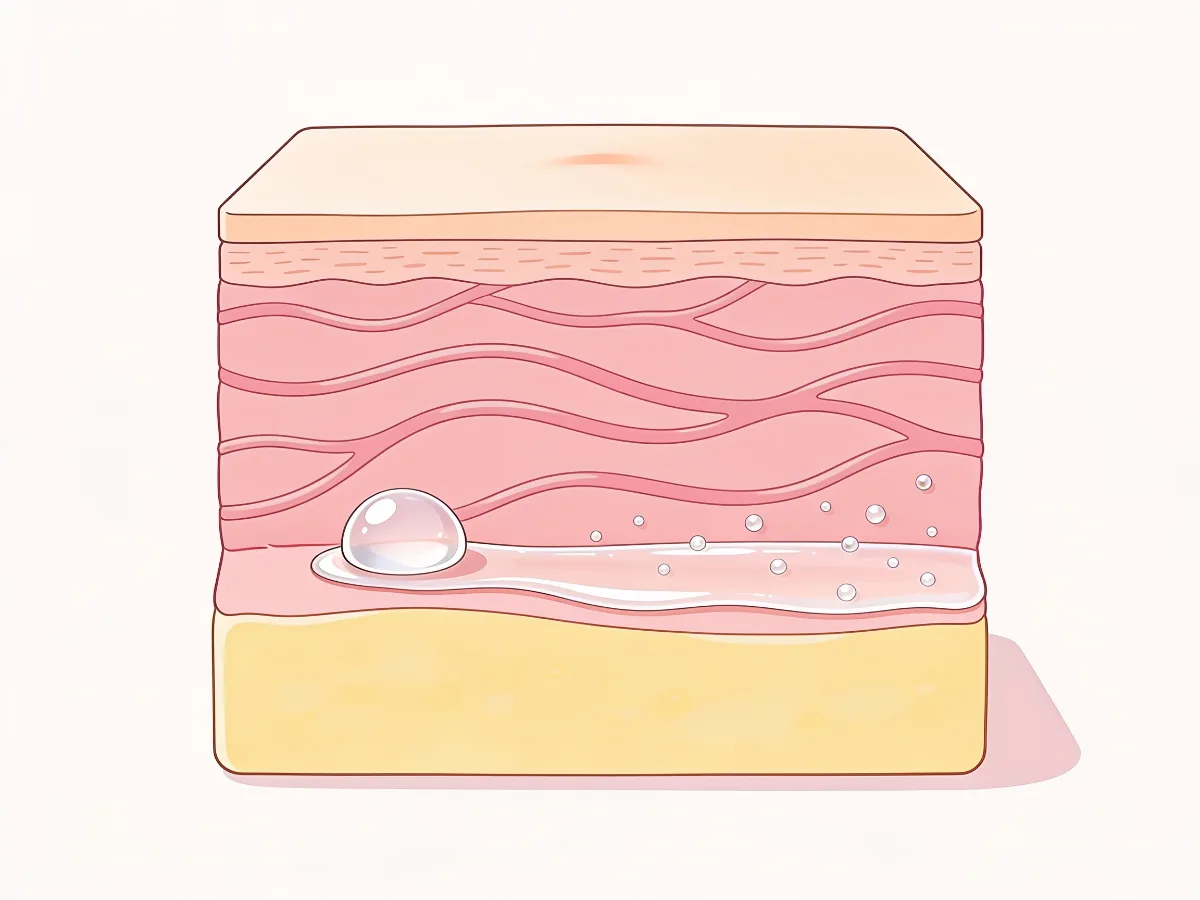
What is Profhilo, and what can go wrong?
Profhilo is an injectable hyaluronic acid gel used to improve skin quality, and most treatments with it go smoothly; when people say it has gone wrong, they usually mean bumps that have not flattened, puffiness, or a lump that lasts. It contains a high concentration of two sizes of hyaluronic acid, combined by a patented heat-based process without chemical modification, unlike the chemical cross-linking used in most hyaluronic acid fillers (Sparavigna and Tenconi, 2016; Salti and colleagues, 2025).
It is usually described as a skin booster or bio-remodelling treatment rather than a volumising filler. It is placed as small deposits at a set of points on each side of the face; in one published study, five points on each side across the cheek and lower face, at two sessions four weeks apart (Sparavigna and Tenconi, 2016). The brand name is used here only so that you can match it to your treatment record. For what it is and how it differs from filler, see Profhilo in Singapore; for how SkinRev Lab approaches problems after injectables, see filler correction at SkinRev Lab.
The problems people ask about most:
- Bumps at the injection points that seem slow to flatten.
- Puffiness or swelling, across the cheeks or around the eyes.
- A lump that lasts after everything else has settled.
- Bruising or redness at one or more points.
- A face that looks fuller or puffier than expected.
- Less often: an inflamed lump, an allergic-type reaction or infection.
- Rarely: a blocked blood vessel, which is an emergency with any injection of this kind.
How common are problems after Profhilo?
Mild, short-lived reactions are common after Profhilo, and lasting or serious problems appear to be uncommon, although most published data come from a small number of studies and from safety reviews written with the manufacturer.
- A 2016 study of 64 adult women treated at two sessions recorded mild, temporary reactions at the injection sites in 23 in every 100 people, mostly light bruising or light swelling, which cleared within 3 to 10 days (Sparavigna and Tenconi, 2016).
- A worldwide review of reports made to the manufacturer between 2015 and 2018, covering more than 40,000 patients, found 12 adverse event reports, none serious. Most were early reactions at the injection site; two were later reactions such as swelling or nodules, and all resolved (Cassuto and colleagues, 2020).
- An updated review of reports from 2018 to 2023 estimated an adverse event rate of about 0.034% of treated patients, roughly 3 in every 10,000. Swelling and redness were the most frequent. The reports included 19 of swelling around the eyes, 11 of nodules and two involving a blocked blood vessel, which the authors attributed to injection technique rather than the product (Salti and colleagues, 2025).
Two cautions apply. These reviews depend on doctors choosing to report problems, so mild or expected effects are under-counted, and several authors work for the manufacturer. The figures also say little about how often problems occur in one area of the face, such as around the eyes. Your doctor will advise how this applies to you.
Bumps after Profhilo: what is normal and what is not
Small raised bumps at each injection point are an expected part of Profhilo, and they usually flatten within several hours to about a day as the gel spreads through the skin. They are the deposits of gel themselves, not a sign that something has gone wrong.
Usually normal:
- Round, soft bumps at each point straight after treatment.
- Slight redness or tenderness at the points for a day or two.
- A small bruise at one or two points, which can take a week or more to fade.
- Light swelling at the points; in the 2016 study, this cleared within 3 to 10 days.
Worth a review:
- A bump that is still clearly raised after a few days.
- A bump that is firm, sore, red or warm, or getting bigger.
- Bumps in places other than the points that were injected.
- Skin over a bump that turns pale, dusky or mottled, which needs help straight away.
A bump that lingers is often a little swelling or a bruise under the skin, or gel that sat slightly closer to the surface than planned. Do not squeeze or press hard on it, and follow the aftercare advice your provider gave you. If you had filler or another booster at the same visit, mention it, because that product may be the bump. For bruising, see bruising after filler.
Puffiness and swelling after Profhilo, including around the eyes
Some puffiness in the first few days after Profhilo is expected, because hyaluronic acid holds water and the skin reacts to the injections; swelling that is getting worse, or is still obvious after about two weeks, deserves a review. The updated safety review describes swelling, redness and pain as typical and generally short-lived, usually appearing within 72 hours of treatment (Salti and colleagues, 2025).
Common patterns:
- Overall puffiness: a slightly fuller face for a day or two, often more noticeable on waking.
- Swelling at the points: small, soft swellings that fade as the bumps flatten.
- One side more swollen: common if you slept on that side, or if one side bruised.
Puffiness around the eyes: eye swelling is among the effects reported to the manufacturer (Salti and colleagues, 2025). The lower lid and upper cheek have thin skin and drain fluid slowly, partly because of a band of tissue called the malar septum, which fluid does not cross easily (Funt, 2011). Swelling there can look heavier and last longer than on the cheek. In studies of hyaluronic acid filler placed under the eyes, longer-lasting swelling was reported in roughly 6 to 24 in every 100 people (Siperstein, 2022). Those figures are for under-eye filler, not Profhilo, but they explain why puffiness near the eyes deserves care.
What can look similar: an allergic-type reaction, which often itches; fluid retention after salty food, alcohol or poor sleep; and older filler in the cheeks or under the eyes swelling again. For how swelling after injectables usually behaves, see filler swelling: what is normal.
Lumps that last after Profhilo
A lump that lasts after Profhilo is uncommon, because the gel is fluid and designed to spread, so a lump that persists is worth examining to work out what it is. In the worldwide review, the later reactions recorded were swelling and nodules, and all of them resolved (Cassuto and colleagues, 2020).
What a lasting lump may be:
- A bruise or small collection of blood under the skin, which feels firm and fades over weeks.
- Gel that sat closer to the surface than intended, usually soft and not sore.
- Another product: filler or a collagen-stimulating booster given at the same visit or in the past.
- An inflamed nodule: red, warm or tender, sometimes weeks or months later, which needs a doctor's review.
- Infection: a lump that becomes hot and increasingly painful between about day 3 and day 14 is more likely to be infection (King and colleagues, 2016).
What may help, depending on the type (your doctor will advise which suits you):
- Time and review for a small lump that is not inflamed.
- An enzyme (hyaluronidase) to break down hyaluronic acid, where that is the cause.
- Antibiotics where a doctor suspects infection after examining you.
- Further medical treatment for an inflamed nodule, once infection has been treated or ruled out.
Ultrasound can show where material sits and whether it looks like gel, fluid or something else. For lumps after other products, see filler lumps and nodules; for lumps that appear months or years later, see filler granuloma and delayed nodules.
Can Profhilo make your face look overfilled?
Profhilo is not designed to add volume, so a lasting overfilled look from Profhilo alone is unusual; when a face looks puffy or heavy weeks after treatment, the cause is more often swelling, fluid or filler from earlier treatments. Many people who have Profhilo have also had cheek, under-eye or lip filler over the years, and those layers can add up.
- In the first two weeks: fullness is most likely swelling and water held by the gel, so judge the result after that.
- Weeks later: fullness that persists suggests another product or fluid, and ultrasound can help show which.
- Worse in the morning: points towards fluid rather than gel.
- Most obvious when you smile: often filler in the cheeks or under the eyes rather than Profhilo.
Adding more product to even things out before the area has been assessed can make matters worse. For a self-check, see signs of too much filler; for a face that looks overfilled overall, see pillow face correction.
Can Profhilo be dissolved?
Yes. Profhilo is hyaluronic acid, so an enzyme (hyaluronidase) can break it down, but this is rarely needed, because the bumps flatten quickly and the gel spreads thinly through the skin. Dissolving is considered mainly when a lump or swelling that is hyaluronic acid persists and bothers you.
What to know:
- It acts on any hyaluronic acid it reaches, including filler you may want to keep, so small, targeted amounts are used.
- It works on hyaluronic acid only: it does not dissolve collagen-stimulating products or collagen fillers that may also be in the area.
- Allergy check: tell the doctor about any allergy, especially to bee or wasp stings, before the enzyme is used.
- Afterwards: some swelling, redness or itch for a day or two is common.
Ultrasound can show where material sits before anything is dissolved, so that the enzyme is used only where it can help. See dissolving filler and ultrasound-guided filler dissolving.
Warning signs after Profhilo: what is normal and when to get help
Bumps at the injection points, mild swelling, redness and small bruises in the first few days are normal after Profhilo; spreading redness, heat, rising pain, pus, fever or a change in skin colour are not. Use the table as a general guide, and contact your provider or a doctor if you are unsure.
| What you notice | Usual timing | What it may mean | What to do |
|---|---|---|---|
| Raised bumps at each injection point | Straight after treatment | Expected deposits of gel | Leave them alone; they usually flatten within about a day |
| Mild puffiness, redness, tenderness, small bruises | First few days | Expected reaction | Follow your aftercare advice; avoid pressing on the area |
| A bump still clearly raised | After a few days | Swelling, a bruise, or gel placed superficially | Doctor review if it is not improving |
| Puffiness around the eyes that lingers | Beyond about two weeks | Fluid, or swelling of older filler | Doctor review before any further treatment |
| A lump that turns red, tender or grows | Weeks to months | Possible inflamed nodule | Prompt doctor review; do not massage |
| Itching, rash or swelling at the treated sites | Hours to days | Possible allergic reaction | Prompt review; emergency care if breathing is affected |
| Red, hot, increasingly painful swelling, pus or fever | Often days 3 to 14; occasionally later | Possible infection | Same-day medical review |
| Pale, white, dusky or mottled skin, or pain that keeps rising | During or soon after injection | Possible blocked blood vessel | Contact the provider who treated you immediately, or go to an emergency department |
| Any change in vision | During or after injection | Emergency | Call 995 or go to A&E at once |
How Dr Sin Yong assesses problems after Profhilo
At SkinRev Lab, Dr Sin Yong, medical adviser, assesses problems after Profhilo by taking a full history of what was injected, examining the area and, where useful, scanning it with ultrasound to see what is there. The aim is to tell gel, fluid, a bruise, older filler and inflammation apart before deciding whether to wait, treat or dissolve.
What helps the assessment:
- The product name and dates of each session, and anything else injected at the same visit.
- Every filler or booster you have had in the same area, including years ago.
- Photos from before treatment and since the problem began, ideally morning and evening.
- Any allergies, recent illness or dental work, and your current medicines.
What correction may involve, where appropriate:
- Observation and review where the change is mild or still within the first two weeks.
- Small, targeted amounts of an enzyme (hyaluronidase) where a persistent lump or swelling is hyaluronic acid.
- Medical treatment first where a lump is infected or inflamed.
- A different plan where the problem is another product, fluid or loose skin.
Doing nothing can be the right advice. Dr Sin Yong explains what is realistic before anything is done, and correction is priced at consultation. It is also worth contacting the provider who treated you, as they hold your treatment records. You can see how mapping works in the ultrasound filler mapping video.
How to lower the risk: questions to ask before Profhilo
The most useful way to lower the risk is to be treated by a doctor who checks what is already in your skin, explains where and how deep the injections will go, and tells you what to expect in the first few days. These questions help:
- Who is injecting, and how would they manage a problem on the day?
- What exactly is the product, and will its name and batch be recorded for you?
- Where will it be injected? Injections near the eyes deserve particular care, because that area swells more readily.
- Is my concern suited to it? Profhilo is aimed at skin quality; it does not replace lost volume or lift loose skin.
- What should the bumps look like, and when should I call if they have not settled?
- Is anything else planned at the same visit? Combining products makes it harder to tell which one caused a problem.
Tell the doctor about: every filler or booster you have had in the face, any allergy, autoimmune conditions, recent skin or dental infections, eyes that are puffy on waking, and pregnancy or breastfeeding.
A doctor who suggests waiting, a smaller plan or no treatment is often protecting your result. For how skin boosters differ from fillers, see skin booster vs filler.
Sources
References & sources
- Sparavigna A, Tenconi B. Efficacy and tolerance of an injectable medical device containing stable hybrid cooperative complexes of high- and low-molecular-weight hyaluronic acid: a monocentric 16 weeks open-label evaluation. Clin Cosmet Investig Dermatol. 2016;9:297-305. doi:10.2147/CCID.S114450.
- Cassuto D, Delledonne M, Zaccaria G, Illiano I, Giori AM, Bellia G. Safety assessment of high- and low-molecular-weight hyaluronans (Profhilo) as derived from worldwide postmarketing data. Biomed Res Int. 2020;2020:8159047. doi:10.1155/2020/8159047.
- Salti G, Tateo A, Cassuto D, et al. Hyaluronic acid hybrid cooperative complexes nearing 10 years of use: update on safety assessment based on post-marketing surveillance data. J Cosmet Dermatol. 2025;24(7):e70197. doi:10.1111/jocd.70197.
- Funt DK. Avoiding malar edema during midface/cheek augmentation with dermal fillers. J Clin Aesthet Dermatol. 2011;4(12):32-36.
- Siperstein R. Infraorbital hyaluronic acid filler: common aesthetic side effects with treatment and prevention options. Aesthet Surg J Open Forum. 2022;4:ojac001. doi:10.1093/asjof/ojac001.
- King M, Bassett S, Davies E, King S. Management of delayed onset nodules. J Clin Aesthet Dermatol. 2016;9(11):E1-E5.
- Funt D, Pavicic T. Dermal fillers in aesthetics: an overview of adverse events and treatment approaches. Clin Cosmet Investig Dermatol. 2013;6:295-316. doi:10.2147/CCID.S50546.
Main guide
Filler correction
filler correction at SkinRev LabRelated questions: What is Profhilo, and how does it differ from filler?How long should swelling last after an injectable?How is hyaluronic acid dissolved?
Common questions
Your questions,
answered
Are bumps after Profhilo normal?
Yes. Small raised bumps at each injection point are expected straight after Profhilo, because the gel is placed as small deposits. They usually flatten within several hours to about a day as the gel spreads. A bump that is still clearly raised after a few days, or one that is red, sore or growing, should be reviewed by a doctor.
How long does swelling last after Profhilo?
Mild swelling usually settles within a few days. In a 2016 study, light swelling and bruising at the injection sites cleared within 3 to 10 days. Puffiness around the eyes can take longer, because that area drains fluid slowly. Swelling that is increasing, hot or painful needs same-day medical review.
Why are my eyes puffy after Profhilo?
Puffiness around the eyes after Profhilo is usually short-lived swelling, because hyaluronic acid holds water and the lower lid drains fluid slowly. If it lasts beyond about two weeks, a doctor should check for fluid collecting in the upper cheek, older filler swelling again, or an allergic reaction, before anything else is injected.
Can Profhilo cause lumps?
Lasting lumps are uncommon, because Profhilo is a fluid gel that spreads within the skin. A lump that remains is more often a bruise, gel placed closer to the surface than planned, or another product in the same area. A lump that turns red, warm, tender or larger needs a doctor's review.
Can Profhilo be dissolved?
Yes. Profhilo is hyaluronic acid, so an enzyme (hyaluronidase) can break it down. This is rarely needed, because the bumps flatten quickly and the gel spreads thinly. Where a persistent lump or swelling is hyaluronic acid, a doctor can use small, targeted amounts, after checking for allergies and, where useful, scanning the area first.
Can Profhilo make my face look overfilled?
Profhilo is not designed to add volume, so a lasting overfilled look from Profhilo alone is unusual. Fullness in the first two weeks is usually swelling. A face that still looks puffy weeks later more often reflects fluid or filler from earlier treatments, which an examination and ultrasound can help to identify.
When is a problem after Profhilo urgent?
Seek same-day care for spreading redness, heat, rising pain, pus or fever, which may mean infection. Pale, white, dusky or mottled skin, or pain that keeps rising, needs help immediately. For any change in vision, call 995 or go to A&E at once. These problems are rare, but they should not wait.
Can Dr Sin Yong assess a problem after Profhilo done elsewhere?
Yes. Dr Sin Yong can examine the area at SkinRev Lab, wherever you were treated, scan it with ultrasound where useful and explain the options, including waiting. Bring the product name and dates, and details of any other filler in the area. Correction is priced at consultation, and realistic expectations are explained first.
Medical journal references
Peer-reviewed background reading for this page. These papers report research in groups of people and do not predict an individual result.
- Tintor G, Cohadzic T, Bukic J, et al. Hybrid Cooperative Complexes of Low- and High-Molecular-Weight Hyaluronic Acid in Aesthetic Medicine. Pharmaceuticals (Basel). 2025;19(1). PubMed
- Humzah D, Molina B, Salti G, et al. Intradermal Injection of Hybrid Complexes of High- and Low-Molecular-Weight Hyaluronan: Where Do We Stand and Where Are We Headed in Regenerative Medicine? Int J Mol Sci. 2024;25(6). PubMed
- Humphrey S, Manson Brown S, Cross SJ, Mehta R. Defining Skin Quality: Clinical Relevance, Terminology, and Assessment. Dermatol Surg. 2021;47(7):974-981. PubMed