Treatment · Plinest
Plinest in Singapore: a polynucleotide skin booster for thin, tired skin
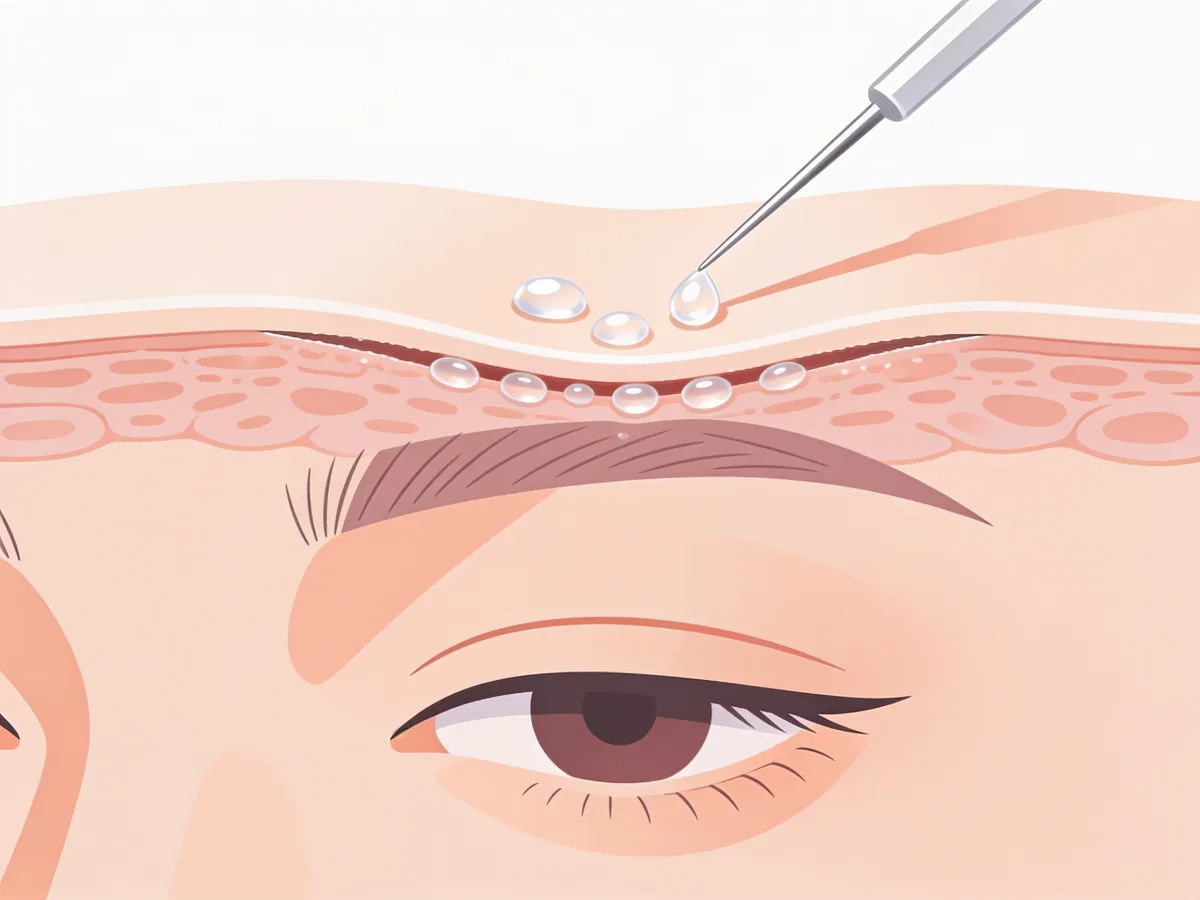
Plinest is an injectable polynucleotide gel from Italy. It is placed just beneath the skin to improve skin quality, and it adds no volume.
Medically reviewed by Dr Sin Yong, medical adviser · Last reviewed 20 November 2026
Quick answer: Plinest in Singapore
- Plinest is a polynucleotide (PN) skin booster made in Italy from highly purified DNA fragments of fish origin.
- It is placed just beneath the skin for thin, dull, crepey or sensitised skin on the face, neck, backs of the hands and under the eyes. It adds no volume.
- A course is commonly three or four sessions a few weeks apart, with maintenance if it helps.
- Small bumps flatten within hours to a day. It is not given during pregnancy or breastfeeding, and a fish allergy needs assessment first.
What is Plinest?
Plinest is an injectable skin booster made of polynucleotides, which are long chains of highly purified DNA fragments. It is made in Italy by Mastelli, from trout. Placed just beneath the skin, it forms a hydrating gel that is thought to act as a scaffold and as a signal for repair.
It is used to improve the quality of the skin: hydration, texture, and the thin, crepey look that comes with age or sun. It does not add volume and does not lift. Plinest Eye is the version made for the thin skin of the lower eyelid.
Plinest belongs to the same family as Rejuran. Our guide to polynucleotides explains how this group of treatments works, and how PN differs from PDRN and exosomes.
Plinest or Rejuran?
| Plinest | Rejuran | |
|---|---|---|
| Made by | Mastelli, Italy | PharmaResearch, Korea |
| Source | Trout | Salmon |
| What it is for | Skin quality | Skin quality |
| Adds volume? | No | No |
| How it is given | A course of sessions | A course of sessions |
The two are more alike than different. Both aim at the quality of the skin and neither replaces filler. Which one is used depends on the area, the thickness of your skin and how you have responded to earlier treatment, and Dr Sin Yong decides this at the assessment.
Compared with Profhilo, which is hyaluronic acid and mainly hydrates and firms, polynucleotides are chosen more often for thin, sensitised or crepey skin and for the under-eye area. The two are sometimes planned together.
Who Plinest suits, and who should wait
- It tends to suit thin, dull or crepey skin on the face, neck or under the eyes, sensitised skin, early fine lines, skin quality after acne, and the backs of the hands.
- It is less suited to lost volume, sagging, and deep acne scars, which need other treatments.
- It is not given during pregnancy or breastfeeding, or over active infection, acne or eczema in the area.
- A fish allergy needs specific assessment before treatment, because the product is of fish origin.
If the main concern is hollowing under the eye, a tear trough assessment is the place to start. If it is fine, crepey skin under the eye, a polynucleotide is one of the options. For the full range, see our skin boosters page.
What happens at a session, and the downtime
- Assessment of the skin and the areas to be treated.
- Comfort. A comfort cream is applied for 30 to 45 minutes.
- Treatment. Small amounts are placed at many points just beneath the skin, which takes about 20 to 40 minutes. Allow about an hour for the visit.
- Afterwards. Small bumps at each point flatten within hours to a day.
A course is commonly three or four sessions a few weeks apart, followed by maintenance if it is helping. Results build gradually across the course and vary from person to person.
Common and short-lived: redness, mild swelling, small bumps and pinpoint bruising for a few days, more often around the eyes.
Less common: lumps that last longer, infection and allergic reactions.
Contact the clinic about pain that is increasing after two days, spreading redness, heat or pus, or a lump that lasts beyond two weeks. Skin that turns white, dusky or mottled and painful needs a review the same day, and any change in vision needs the nearest emergency department.
Plinest price and booking at SkinRev Lab
SkinRev Lab is at #B1-28 CityLink Mall, 1 Raffles Link, linked underground to City Hall MRT and Esplanade MRT, and is open daily from 11am to 8pm.
Plinest is a medical treatment. It is carried out by Dr Sin Yong and always starts with a consultation, where the area is examined, your medical history is taken and the plan is explained before anything is agreed. It is priced at consultation, because the cost depends on what is found at that examination. The area, the amount of product, the version used and the number of sessions decide the quote.
To arrange a consultation, message us on WhatsApp at 8266 9585 with your concern and the days that suit you. Prices for our non-medical treatments are on the price list.
Main guide
Skin boosters
skin boosters at SkinRev LabRelated questions: What are polynucleotides?PDRN, polynucleotide or exosome?Profhilo or Rejuran?
Common questions
Your questions,
answered
How is Plinest different from Rejuran?
Both are polynucleotide skin boosters aimed at skin quality, and neither adds volume. Plinest is made in Italy from trout, and Rejuran is made in Korea from salmon. Dr Sin Yong chooses between them at the assessment.
How many Plinest sessions are needed?
A course is commonly three or four sessions a few weeks apart, followed by maintenance if it is helping.
Can Plinest be used under the eyes?
Yes. Plinest Eye is the version made for the thin skin of the lower eyelid. It is for fine, crepey skin, and does not fill a hollow.
Is Plinest a filler?
No. It is a skin booster. It improves the quality of the skin and adds no volume or lift.
Can I have Plinest if I have a fish allergy?
This needs specific assessment before treatment, because the product is of fish origin. Tell Dr Sin Yong about any allergy at the consultation.
Is there downtime after Plinest?
Small bumps flatten within hours to a day. Mild swelling and pinpoint bruising may last a few days, more often around the eyes.
Is Plinest the same as PDRN?
They are related. Both are made of DNA fragments, but polynucleotides are longer chains. Our guide to PDRN, polynucleotides and exosomes explains the difference.
How much does Plinest cost in Singapore?
Plinest is carried out by Dr Sin Yong and priced at consultation.
How soon do Plinest results show?
Results build gradually across the course and vary from person to person.
Medical journal references
Peer-reviewed background reading for this page. These papers report research in groups of people and do not predict an individual result.
- Kim ST. Comparison of Polynucleotide and Polydeoxyribonucleotide in Dermatology: Molecular Mechanisms and Clinical Perspectives. Pharmaceutics. 2025;17(8). PubMed
- Marques C, Porcello A, Cerrano M, et al. From Polydeoxyribonucleotides (PDRNs) to Polynucleotides (PNs): Bridging the Gap Between Scientific Definitions, Molecular Insights, and Clinical Applications of Multifunctional Biomolecules. Biomolecules. 2025;15(1). PubMed
- Humphrey S, Manson Brown S, Cross SJ, Mehta R. Defining Skin Quality: Clinical Relevance, Terminology, and Assessment. Dermatol Surg. 2021;47(7):974-981. PubMed
- Lampridou S, Bassett S, Cavallini M, Christopoulos G. The Effectiveness of Polynucleotides in Esthetic Medicine: A Systematic Review. J Cosmet Dermatol. 2025;24(2):e16721. PubMed