Guide · Overfilled lips
Overfilled lips: duck lips, a shelf above the lip, lumps and what can be done
When lip filler looks too big, juts forward or leaves a ridge above the lip line, the cause may be too much filler, filler that has moved, swelling, lumps or a filler that is not hyaluronic acid. Working out which it is comes first, because each is handled differently.
Medically reviewed by Dr Sin Yong, medical adviser · Last reviewed 17 November 2026
Quick answer
- Overfilled lips usually show as an upper lip that juts forward in profile, often called duck lips, a shelf or ridge above the lip line, lips that look wide or heavy at rest, or firm beads and lumps.
- The cause is often several top-ups over time rather than one treatment, because lip filler can stay in the tissue after the visible fullness fades.
- If the filler is hyaluronic acid, an enzyme (hyaluronidase) can reduce it, either in the problem area only or across the whole lip; fillers that are not hyaluronic acid do not respond to it.
- Lips swell more than most areas, so unless there are urgent signs, an overfilled look in the first two weeks is usually reviewed before anything is dissolved.
- Seek same-day care for spreading redness, heat, rising pain, pus or fever; for pale, white, dusky or mottled skin, severe pain, or any change in vision, get help immediately, and for vision change call 995 or go to A&E.
- At SkinRev Lab, Dr Sin Yong examines the lips at rest, talking and smiling, scans them with ultrasound where useful and explains the options, including waiting; correction is priced at consultation.
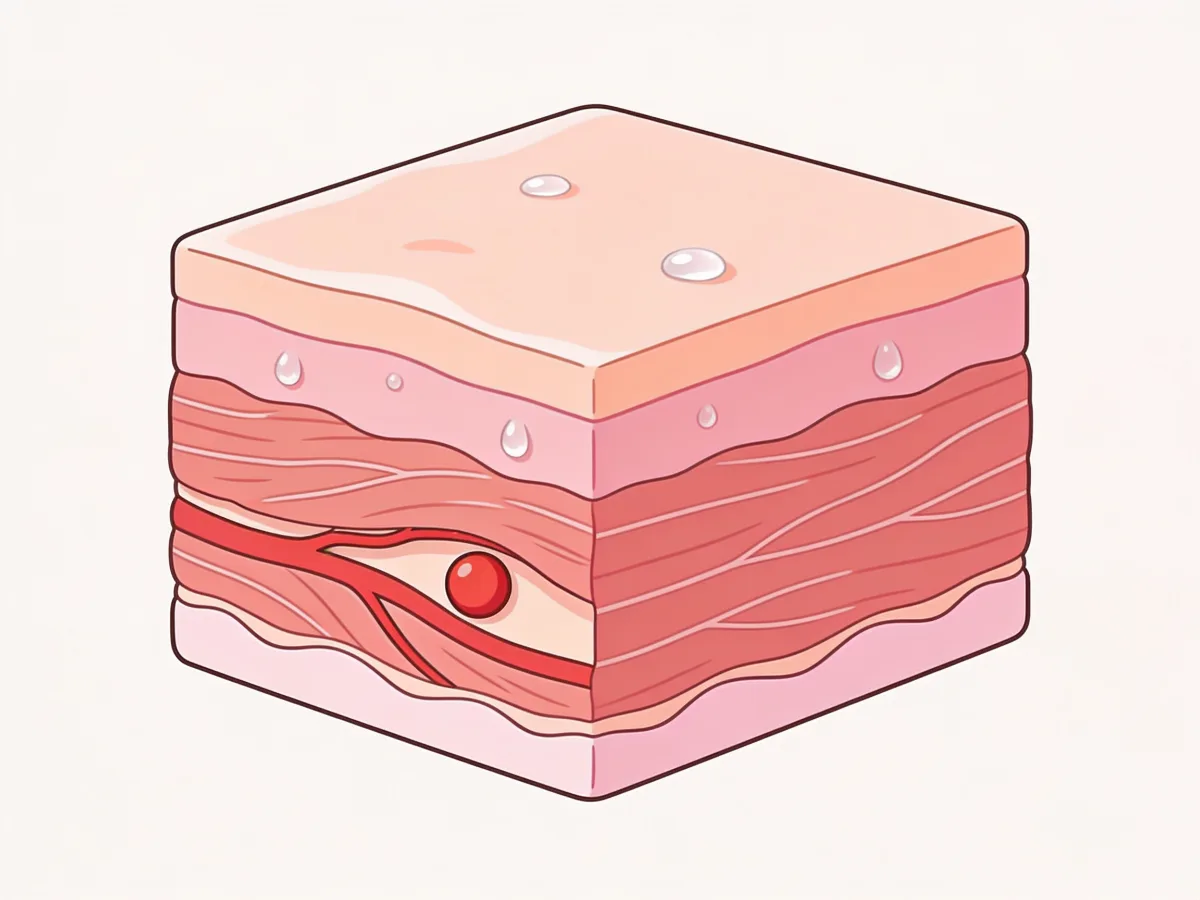
What do overfilled lips look like?
Overfilled lips carry more filler than their shape and the surrounding skin can hold, so they look heavy, wide or pushed forward rather than fuller. A review of facial overfilling lists “sausage lips” and “duck lips” among its typical appearances (Zhou and colleagues, 2026).
Signs people describe:
- Duck lips: the upper lip sits further forward than the lower lip in profile, or rolls outwards so the pink part looks flipped up.
- A shelf above the lip: a ridge or puffy band in the skin above the lip line, often from filler that has spread beyond the border.
- Width without shape: lips that look broad, flat-fronted or sausage-like, with the Cupid's bow and natural curves blurred.
- Lumps or beads: firm spots you can feel or see, especially when you smile or press your lips together.
- Changes with movement: lips that look stiff, bulge at the corners or sit unevenly when you talk or smile.
- Lips that look bigger than you asked for, or that friends now comment on.
This page helps you work out what you are dealing with and what can be tried first. For the shelf, or “filler moustache”, in detail, see lip filler migration; for how a dissolving appointment runs, see dissolving lip filler; and for how lip filler is planned, see lip filler in Singapore.
Overfilled, swollen, migrated or lumpy? Sorting out the cause
An overfilled look can come from too much filler, filler that has moved, swelling, lumps or a filler that is not hyaluronic acid, and the first step depends on which. Several can be present at once.
| What you notice | More likely | First step |
|---|---|---|
| Lips look much bigger in the first few days | Swelling | Wait and review at about two weeks; no top-up meanwhile |
| The whole lip still looks too big weeks later | Too much filler in the body of the lip | Assessment; reducing it if it is hyaluronic acid |
| A ridge or shelf above the lip line | Filler that has spread beyond the border | Assessment, with ultrasound where useful |
| Firm beads or lumps | Filler concentrated in one spot or close to the surface, or a nodule | Examination before any treatment |
| A lump that is red, warm, tender or growing | Inflammation or infection | Prompt doctor review; do not massage |
| Lips have stayed full for years, or filler was done abroad with no records | Older layers, or a filler that may not be hyaluronic acid | Assessment and scan before any dissolving |
Lips swell readily, and early unevenness often settles within about two weeks, so doctors usually review at that point before dissolving anything, unless there are signs of a blocked blood vessel. For normal swelling, see filler swelling; for a blue tint in the lips, see Tyndall effect after filler.
Why lips end up overfilled
Lips usually end up overfilled gradually, through top-ups added while earlier filler is still there, rather than from a single treatment. A review of facial overfilling describes the cumulative effect of earlier fillers, made worse by touch-ups given before previous filler has broken down, and notes that imaging studies have found filler remaining for up to 27 months (Zhou and colleagues, 2026).
- Filler outlasts the visible result: lips can look as though the filler has gone while gel is still present, so a top-up adds to it.
- The lip is thin and layered: in an ultrasound study of nine women, lip filler was found in several layers, including within the lip muscle, and came to within 1 mm of the lip's arteries and veins (Vent and colleagues, 2014). Small amounts in an unsuitable layer can change the shape.
- Movement spreads filler: the lips move constantly when you talk and eat, which can push gel towards and beyond the border.
- Stretching: lips held at a larger size for years may take time to tighten once filler is reduced.
- Perception drift: seeing your own face every day makes gradual change hard to judge, and the same review describes a perception bias that keeps requests for more filler going (Zhou and colleagues, 2026).
Most filler problems are related to volume and technique, and serious ones are rare and mostly avoidable with careful planning and technique (Funt and Pavicic, 2013). That is why a review of what is already in the lips matters more than the date of your last appointment. For the wider face, see signs of too much filler.
What can be assessed first
Before anything is dissolved, the useful questions are what is in the lips, where it sits, whether it is hyaluronic acid and whether it is causing the look you dislike. At SkinRev Lab, Dr Sin Yong, medical adviser, works through these at an assessment.
- History: every lip treatment, the product names if known, the dates, any earlier dissolving and how your lips responded.
- Examination: the lips at rest, talking and smiling, from the front and in profile, and the skin above the lip line.
- Ultrasound where useful: a high-frequency scan can show where filler sits, how far it has spread above the border and where the lip arteries run. It can suggest whether a deposit looks like hyaluronic acid but cannot confirm the type with certainty.
- Allergy check: including any bee or wasp sting allergy, which matters before the enzyme is used.
- Your goal: a smaller lip, a cleaner border, a reset to your own lips, or reassurance that nothing needs doing.
Doing nothing can be the right advice for a mild change, and correction is priced at consultation. For how scanning guides the enzyme, see ultrasound-guided filler dissolving, and you can see how mapping works in the ultrasound filler mapping video. For how SkinRev Lab approaches filler problems in general, see filler correction at SkinRev Lab.
Reduce, reset or wait: choosing a plan for hyaluronic acid filler
If the filler is hyaluronic acid, an enzyme (hyaluronidase) can break it down; a guideline states that overcorrection or misplacement of hyaluronic acid filler can be treated with it (King and colleagues, 2018). The real choice is usually how much to reduce, not whether it can be done.
- Targeted reduction: treating only the shelf, a bead or the part of the lip that projects too far, and keeping filler that still suits you. Useful where the overall shape is mostly right.
- A full reset: dissolving the filler across the lip, then judging your own lips once they have settled. Often considered after many top-ups, mixed or unknown products, or when you no longer like the overall shape.
- Staged reduction: smaller treatments over more than one visit, judged in between; the guideline allows repeat treatment at intervals of 48 hours or longer (King and colleagues, 2018). It is slower, but lowers the risk of removing more than you wanted.
- Waiting: for mild fullness, or while another issue is dealt with first.
When to wait rather than dissolve now:
- In the first two weeks after filler, unless there are urgent signs.
- During pregnancy, when non-urgent correction can wait.
- With an active cold sore, infection or broken skin on the lips, which is treated first.
- With a known enzyme allergy, or a bee or wasp sting allergy, until a different plan or a specialist review has been agreed.
Lips can look flatter or more lined for a few days after dissolving, and refilling is not planned before a review at about two weeks. The appointment, timeline and aftercare are covered in dissolving lip filler, and what to think about before any refill in filler after dissolving.
What if the lip filler is not hyaluronic acid?
If the filler in your lips is not hyaluronic acid, an enzyme (hyaluronidase) will not dissolve it, and the plan is different. This is more likely with older treatments, treatments abroad, or when there are no records.
- Non-absorbable fillers such as silicone or PMMA, and polyacrylamide gel: the body does not break these down, and they can cause firm lumps or swelling years later. Leaving them alone is often reasonable if they are causing no problems; removal, where it is needed, is a surgeon's decision.
- Collagen stimulators: these are generally not used in the lips because of the risk of lumps. If one was, lumps are managed with time, medical treatment or a surgical opinion rather than the enzyme.
- Collagen fillers: absorbed slowly by the body; the enzyme does not break them down.
- Mixed lips: many people have had more than one product. Any hyaluronic acid part can still be dissolved, which sometimes reduces the bulk enough.
- Unknown product: the original provider's records are the most reliable source. Ultrasound can suggest the material, but not always with certainty.
Thin, mobile areas such as the lips show lumps readily, so avoid having more filler placed over an unknown product to disguise it. For materials the enzyme cannot dissolve, see non-dissolvable filler removal.
Lumps in the lips: which ones need attention
Some firmness and small beads are common in the first two weeks as swelling settles; a lump that persists, or one that becomes red, warm or tender, needs a doctor's assessment. The type of lump decides the treatment, so it is worth having it examined rather than guessing.
- A firm bead that does not hurt after two weeks: often hyaluronic acid concentrated in one spot or placed close to the surface; it can usually be reduced in a targeted way.
- A hard lump that does not respond to the enzyme: may be scar-like tissue around older filler, or another material; see fibrotic filler lumps.
- A lump that appears months or years later, sometimes after an illness or dental work: may be a delayed reaction, and rarely a granuloma; see filler granuloma.
- A hot, red, increasingly painful swelling, pus or fever: possible infection, which needs same-day care; see filler infection.
- A lump inside the lip that does not behave like filler: may need a dental, oral or skin specialist to examine it.
Do not massage, squeeze or pierce a lip lump at home. For lump types across the face, see filler lumps and nodules.
When surgery is the right answer
Surgery is the right answer for some lip problems, and a surgeon who advises it may well be correct. It is most often considered when the material cannot be dissolved, or when a problem has not responded to other treatment.
- Non-absorbable filler such as silicone or PMMA causing lumps, swelling or distortion, where removal is the main route; a surgeon weighs scarring against what can realistically be taken out.
- A well-defined lump or granuloma that persists after medical treatment.
- An abscess that needs draining.
- Lip tissue that stays stretched long after the filler has gone, where a surgeon may discuss lip reduction.
The review of facial overfilling notes that for fillers the body does not break down, surgical excision may be necessary (Zhou and colleagues, 2026). Where the filler is hyaluronic acid, dissolving is usually tried first because it is far less invasive. A review before surgery can check what the material is likely to be, whether any of it is hyaluronic acid and whether an inflamed lump needs medical treatment first. SkinRev Lab does not perform surgery and refers where surgery is the right step. If you have already been told you need surgery, see filler removal surgery.
What to bring for a second opinion
A second opinion is more useful with records, although an assessment can go ahead without them. Bring what you can:
- The product name for each lip treatment, and the clinic's record or receipt if it names the product.
- The dates of each treatment, the amount if it was recorded, and any earlier dissolving and how your lips responded.
- Photos of your lips from before any filler, and since the problem began, from the front and in profile, in daylight.
- Any scan reports or letters from other doctors, including a surgeon's opinion if you have had one.
- Your allergies, including bee or wasp sting allergy, any cold sore history, your current medicines and any recent illness or dental work.
- Your goal, in your own words: smaller, more defined, back to your own lips, or simply knowing what is there.
It is also worth contacting the provider who treated you, as they hold your records. See filler second opinion for what the assessment involves.
Warning signs: when overfilled lips are urgent
An overfilled look on its own is not an emergency, but some symptoms after lip filler are. Use the table as a general guide, and contact your provider or a doctor if you are unsure.
| What you notice | Usual timing | What it may mean | What to do |
|---|---|---|---|
| Swelling, tenderness, small bruises | First few days | Expected reaction | A cool compress can ease swelling; avoid pressing |
| Lips look much bigger than planned | First two weeks | Often swelling | Review at about two weeks; no top-up meanwhile |
| A shelf, forward projection or beads that persist | After two weeks | Overfill, filler that has moved or filler concentrated in one spot | Doctor review before any more filler |
| Red, hot, increasingly painful swelling, pus or fever | Days to weeks; occasionally later | Possible infection | Same-day medical review |
| Swelling of the lips, tongue or throat, or difficulty breathing | Minutes to hours | Possible severe allergic reaction | Call 995 |
| Pale, white, dusky or mottled skin on or around the lip, or pain that keeps rising | During or soon after injection | Possible blocked blood vessel | Contact the provider who treated you immediately, or go to an emergency department |
| Any change in vision | During or after injection | Emergency | Call 995 or go to A&E at once |
If you cannot reach the provider who treated you, any doctor can assess urgent symptoms. For side effects of the dissolving enzyme itself, see hyaluronidase side effects.
Sources
References & sources
- Zhou C, Che Q, Zhao R, Wang H, Wa Q. Facial overfilled syndrome: a narrative clinical review. Clin Cosmet Investig Dermatol. 2026;19:600459. doi:10.2147/CCID.S600459.
- Vent J, Lefarth F, Massing T, Angerstein W. Do you know where your fillers go? An ultrastructural investigation of the lips. Clin Cosmet Investig Dermatol. 2014;7:191-199. doi:10.2147/CCID.S63093.
- King M, Convery C, Davies E. This month's guideline: the use of hyaluronidase in aesthetic practice (v2.4). J Clin Aesthet Dermatol. 2018;11(6):E61-E68.
- Funt D, Pavicic T. Dermal fillers in aesthetics: an overview of adverse events and treatment approaches. Clin Cosmet Investig Dermatol. 2013;6:295-316. doi:10.2147/CCID.S50546.
Main guide
Filler correction
filler correction at SkinRev LabRelated questions: What if filler has moved above the lip line?How does dissolving lip filler work?How is lip filler planned to look natural?
Long-term effects of overfilled lips: what usually recovers
Many changes from too much hyaluronic acid filler ease once the excess is reduced. Some take longer, and a few need a different plan.
| Effect | What usually happens |
|---|---|
| Stretched lip tissue | Lips held at a larger size for years may stay looser after reduction. They can take time to settle, and some looseness may remain. |
| Filler spreading over time | Over time, filler can move towards or above the lip line, and lip movement may play a part. If it is hyaluronic acid, the spread part can often be reduced on its own. |
| Ongoing puffiness | Hyaluronic acid holds water, so heavy lips can look puffy. This often eases as the excess is reduced. |
| Lumps that appear later | A firm lump months or years later may be a delayed reaction or older material. It needs examination, not massage. |
| Change that stays after the filler has gone | If the lips stay stretched, a surgeon may discuss lip reduction. SkinRev Lab does not perform surgery and refers where this is right. |
Not every change recovers fully, and no result can be promised. Dr Sin Yong explains what is likely for your lips at consultation, where correction is priced.
Sources and medical review
Medically reviewed by Dr Sin Yong. Further reading from independent medical sources:
- Vent J, Lefarth F, Massing T, Angerstein W. Do you know where your fillers go? An ultrastructural investigation of the lips. Clin Cosmet Investig Dermatol. 2014;7:191-199
- King M, Convery C, Davies E. This month's guideline: the use of hyaluronidase in aesthetic practice (v2.4). J Clin Aesthet Dermatol. 2018;11(6):E61-E68
- Zhou C, Che Q, Zhao R, Wang H, Wa Q. Facial overfilled syndrome: a narrative clinical review. Clin Cosmet Investig Dermatol. 2026;19
Common questions
Your questions,
answered
What are duck lips?
Duck lips is an everyday name for an upper lip that juts forward beyond the lower lip, or rolls outwards so the pink part looks flipped up. It usually follows too much filler in the upper lip, often built up over several top-ups. Filler that has spread above the lip line can add to it.
Will overfilled lips go down on their own?
In the first two weeks much of the extra size is often swelling, which settles. After that, hyaluronic acid filler breaks down slowly and can stay in the lips longer than the visible fullness suggests, so an overfilled look may ease only gradually. Filler that is not hyaluronic acid may not go down at all.
Can overfilled lips be made smaller without a full reset?
Often, yes, if the filler is hyaluronic acid. An enzyme (hyaluronidase) can be placed into the shelf, a bead or the part that projects too far, keeping filler that still suits you. A full reset is sometimes clearer after many top-ups or mixed products. Your doctor will advise which suits your lips.
Why do my lips look overfilled when I only had small top-ups?
Lip filler can stay in the tissue after the visible fullness fades, so each top-up may add to filler that is still there. A review of facial overfilling describes this cumulative effect. Seeing your face daily also makes gradual change hard to notice, so comparing old photos often shows it more clearly.
What if my lip filler is not hyaluronic acid?
An enzyme (hyaluronidase) does not dissolve non-absorbable fillers such as silicone or PMMA, polyacrylamide gel, collagen fillers or collagen stimulators. Options then include leaving it alone if it causes no problems, medical treatment for inflamed lumps and, where needed, a surgeon's opinion. Any hyaluronic acid part can still be dissolved.
Should I add filler to balance an overfilled upper lip?
Usually not. Adding filler to the lower lip or around the mouth to balance a heavy upper lip tends to make the whole mouth look larger and adds to what may later need reducing. Stopping top-ups until the lips have been assessed is the first step, and reducing the excess is often more effective.
When is surgery needed for overfilled lips?
Surgery is mainly considered for non-absorbable filler such as silicone or PMMA causing problems, a well-defined lump or granuloma that persists after medical treatment, an abscess needing drainage, or lip tissue that stays stretched. Hyaluronic acid filler is usually dissolved first. SkinRev Lab does not perform surgery and refers where it is right.
Can Dr Sin Yong assess lips filled elsewhere?
Yes. Dr Sin Yong can examine your lips at SkinRev Lab, wherever you were treated, at rest, talking and smiling, scan them with ultrasound where useful and explain the options, including waiting. Bring the product names, dates and photos from before any filler. Correction is priced at consultation, and realistic expectations are explained first.
How much does it cost to correct overfilled lips?
Dissolving with an enzyme (hyaluronidase) is priced at consultation at SkinRev Lab, after Dr Sin Yong has examined the lips and, where useful, mapped the filler with ultrasound.
Medical journal references
Peer-reviewed background reading for this page. These papers report research in groups of people and do not predict an individual result.
- Lim T. Facial Overfilled Syndrome. Dermatol Clin. 2024;42(1):121-128. PubMed
- Peng CX, Xv W, Ao YJ. A Review: Causes, Consequences, and Management Strategies of Facial Overfilling. Clin Cosmet Investig Dermatol. 2025;18:1857-1864. PubMed
- Borzabadi-Farahani A, Mosahebi A, Zargaran D. A Scoping Review of Hyaluronidase Use in Managing the Complications of Aesthetic Interventions. Aesthetic Plast Surg. 2024;48(6):1193-1209. PubMed
- Urdiales-Gálvez F, Delgado NE, Figueiredo V, et al. Treatment of Soft Tissue Filler Complications: Expert Consensus Recommendations. Aesthetic Plast Surg. 2018;42(2):498-510. PubMed