Guide · Deusaderm overfilled
Deusaderm overfilled: puffy or bulging under-eyes, and swelling that will not settle
When under-eyes look puffy, bulging or heavier after Deusaderm, the cause may be too much collagen, fluid, swelling or your own eye bags. Telling them apart comes first, because collagen does not dissolve like hyaluronic acid filler.
Medically reviewed by Dr Sin Yong, medical adviser · Last reviewed 17 November 2026
Advised surgery, or unsure what your options are?
Dr Sin Yong, our medical adviser, reviews filler lumps, nodules and overfilled areas, including filler placed elsewhere and fillers that cannot be dissolved. Surgery is sometimes the right answer; a review first helps you understand your options and their limits before you decide.
- Bring the product name and treatment dates if you have them, or the clinic's records.
- Take clear daylight photos from the front and both sides, and bring any scan reports.
- Do not wait for an appointment if you have pale, dusky or mottled skin or severe or rising pain (contact the provider who treated you at once or go to A&E), spreading redness with fever (see a doctor the same day), or any change in vision (call 995 or go to A&E at once).
WhatsApp us for a second opinion · Told you need surgery to remove filler? · What to bring to a filler second opinion
Quick answer: Deusaderm
- Overfilled Deusaderm usually shows as a ridge, bag or shelf under the lower lid, or under-eyes that look heavier or puffier once the early swelling has gone.
- Puffiness can also be normal swelling, fluid collecting in the upper cheek, older hyaluronic acid filler or your own eye bags, and each is handled differently.
- Deusaderm is a cross-linked collagen gel, so an enzyme (hyaluronidase), which dissolves hyaluronic acid filler, does not break it down; the body absorbs it over several months.
- Adding more filler to even out or disguise a bulge usually makes the area heavier; stopping top-ups until it has been assessed is the first step.
- Seek same-day care for spreading redness, heat, rising pain, pus or fever; for pale, dusky or mottled skin, or any change in vision, get help immediately.
- At SkinRev Lab, Dr Sin Yong examines the area at rest and while smiling, scans it with ultrasound where useful and explains the options; correction is priced at consultation.
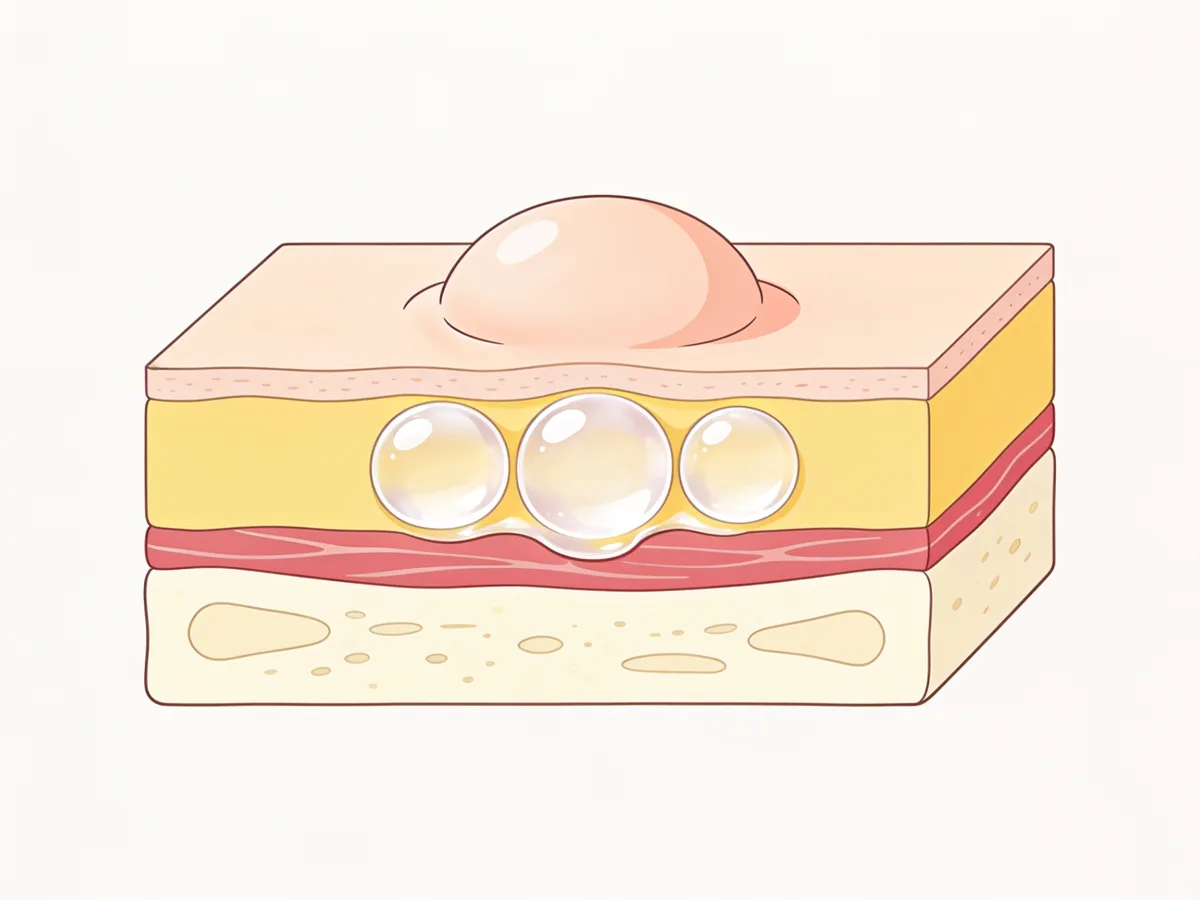
What does overfilled Deusaderm look like?
Overfilled Deusaderm usually shows as puffy, bulging or heavy-looking under-eyes once the early swelling has gone: a ridge, bag or shelf under the lower lid that was not there before, or that is larger than before. Deusaderm is an injectable gel of cross-linked type I collagen from pig skin, and some versions include a numbing agent (Sunmax Biotechnology). When it is used for hollows under the eyes, where the skin is among the thinnest on the face, small excesses show.
Signs that point to overfill:
- A sausage-like ridge or shelf along the lower lid.
- Puffy bags that look worse when you smile, or eyes that look smaller.
- Fullness that has spread onto the upper cheek, blurring the line between lid and cheek.
- A heavy or tired look, even though the hollow has gone.
- One side clearly fuller than the other.
This page deals with the overfilled and puffy look. For firm lumps and pale or white bumps after Deusaderm, see Deusaderm complications. For how SkinRev Lab approaches filler problems in general, see filler correction at SkinRev Lab.
Overfilled, swollen or something else? How to tell
Puffiness after Deusaderm can be product, fluid, swelling or your own eye bags, and telling them apart matters because each is handled differently. Timing, and how the fullness changes through the day, are the most useful clues.
| What you see | More likely | Clues |
|---|---|---|
| Fullness in the first days, with tenderness or bruising | Normal swelling | Eases over days to about two weeks |
| A defined ridge or bulge that looks the same all day | Too much product, or product placed too close to the surface | Still present once swelling settles; often clearer when smiling |
| Soft puffiness, worse on waking and better later in the day | Fluid collecting in the upper cheek | Can come and go for weeks or months |
| Bags that were there before treatment | Fat bulging forward from around the eye | Visible in photos taken before any filler |
| Fullness where hyaluronic acid filler was used before | Older hyaluronic acid filler | Mixed products under the eyes are common |
| Itchy swelling, a rash, or swelling at several treated sites | Possible allergic reaction | Needs prompt review |
Many people judge the result too early. Swelling is common after collagen filler: in a 2024 trial of two porcine collagen fillers from the same manufacturer, injected into the folds beside the nose, swelling was reported in about half to 6 in 10 participants, and most device-related effects resolved within 30 days (Yang and colleagues, 2024). That trial did not treat the under-eye, which tends to swell more and for longer. For eye bags from fat, see eye bags.
Why do under-eyes end up overfilled after Deusaderm?
Under-eyes usually end up overfilled because of the amount and depth of product rather than the product itself: too much in one session, top-ups added before earlier collagen has been absorbed, or placement too close to the surface. The manufacturer states that Deusaderm is absorbed gradually over several months, varying with the site and method (Sunmax Biotechnology), so a top-up given while earlier product is still there adds to it.
- Stacked sessions: each session may look modest, but the total can become more than the area can carry.
- Judging too early: swelling can hide or exaggerate the result in the first two weeks, which can lead to a top-up in the wrong place.
- Shallow placement: collagen near the surface of thin skin shows as a ridge more readily.
- Treating the wrong cause: fat bulging forward, pigment and loose skin are not hollows, and filling around them can make the area look heavier.
- Layering: collagen added on top of older hyaluronic acid filler.
- Slow drainage: the lower lid and upper cheek drain fluid slowly, partly because a band of tissue called the malar septum holds fluid above it, so filler here can add puffiness as well as volume (Funt, 2011).
Most of these are about planning, which is why a conservative amount, with a review before any top-up, matters more under the eyes than elsewhere. For the wider picture, see tear trough filler problems.
Swelling that will not settle: when puffiness is fluid
Puffiness that comes and goes, is worse in the morning and feels soft is more likely to be fluid than product, and it can persist for weeks or months after filler in the under-eye and upper cheek. A published account of this swelling, called malar oedema, describes it lasting for months and responding only a little to simple measures such as massage or raising the head (Funt, 2011).
What is known:
- It is reported with under-eye fillers generally: a review of hyaluronic acid filler in this area found longer-lasting swelling in roughly 6 to 24 in every 100 people across the studies it summarised (Siperstein, 2022). Comparable figures for collagen fillers under the eyes have not been published.
- Volume and depth matter: larger amounts, and placement above the malar septum, make it more likely (Funt, 2011).
- Your own tendency matters: people whose eyes are puffy on waking, or after salty food or alcohol, before any filler may be more prone to it.
What may help (your doctor will advise which suits you): no further product in the area; a review to rule out infection, allergy, or a sinus or eye problem; and, where hyaluronic acid filler is also present, dissolving it in part or in full, which a review of under-eye filler describes as the last resort when swelling cannot be controlled otherwise (Siperstein, 2022). Collagen itself cannot be dissolved, so where Deusaderm is the main cause, improvement depends on the body absorbing it over months. For swelling patterns after filler, see filler swelling: what is normal.
How long does overfilled Deusaderm last?
There is no fixed answer: the manufacturer states that Deusaderm is gradually absorbed by the body after several months, and that how long it stays varies with where and how it was placed (Sunmax Biotechnology). The cross-linking that helps it last also makes it resist breakdown, so an overfilled area does not deflate quickly.
- Mild fullness may ease gradually over months as the collagen is absorbed.
- Fullness from several sessions may take longer to ease, because there is more to absorb.
- Fluid swelling on top of the product can make the area look worse than the product alone, and may improve on a different timescale.
- Defined lumps can outlast the general fullness; these are covered in Deusaderm complications.
Photos taken in the same light, at the same time of day, every few weeks are the most reliable way to tell whether things are improving. Bring them to any review, together with photos from before treatment.
Can overfilled Deusaderm be dissolved?
No. An enzyme (hyaluronidase) dissolves hyaluronic acid filler, but Deusaderm is collagen, and the enzyme does not break it down. This is the main difference from an overfilled hyaluronic acid tear trough, which can usually be reduced within days.
- Mixed products: many people have had hyaluronic acid under the eyes before, or alongside, collagen. That part can be dissolved, and reducing it sometimes eases the overall fullness enough.
- Knowing what is there: ultrasound can show where material sits and suggest whether it looks like hyaluronic acid or another material, though not always with certainty, so your treatment records matter.
- No home remedies: massage, heat or pressing does not break down cross-linked collagen, and it can irritate thin under-eye skin.
For how products that cannot be dissolved are managed, see non-dissolvable filler removal; for how dissolving works where hyaluronic acid is present, see dissolving filler.
What can help an overfilled or puffy look after Deusaderm?
What helps depends on whether the fullness is collagen, hyaluronic acid, fluid or your own eye bags, so the first step is an assessment and the second is usually to stop adding product. Options, where appropriate (your doctor will advise which suits you):
- Stopping top-ups in the area until it has been reviewed.
- Watchful waiting with photos, where the fullness is mild and the collagen is likely to be absorbed over months.
- Dissolving any hyaluronic acid filler in the same area, in small, staged amounts.
- Medical treatment where swelling is inflamed, infected or allergic.
- A separate plan for eye bags where fat bulging forward is the main cause; see eye bag removal.
- Referral for a surgical opinion for a persistent, well-defined collection of product, as a last resort.
What usually does not help: more filler in the cheek or under the eye to disguise the bulge, which tends to add weight to the area, and treatments that heat or press on the lower lid before a diagnosis. Doing nothing for a while can be the right advice. For a self-check, see signs of too much filler.
Warning signs: what is normal and when to get help
Mild swelling, tenderness and small bruises in the first few days are normal after Deusaderm, and some puffiness can take up to about two weeks to settle; spreading redness, heat, rising pain, pus, fever or a change in skin colour are not normal. Use the table as a general guide, and contact your provider or a doctor if you are unsure.
| What you notice | Usual timing | What it may mean | What to do |
|---|---|---|---|
| Mild swelling, tenderness, small bruises | First few days | Expected reaction | A cool compress can ease swelling; avoid rubbing |
| Under-eyes look fuller than planned | First two weeks | Often swelling | Wait and review at about two weeks; no top-up meanwhile |
| A ridge, bag or shelf under the lower lid | Once swelling settles | Overfill or placement too close to the surface | Doctor review before any further product |
| Soft puffiness, worse in the morning | Weeks to months | Possible fluid collecting in the upper cheek | Doctor review; do not add filler to disguise it |
| Itching, rash or swelling at the treated sites | Hours to days | Possible allergic reaction | Prompt review; emergency care if breathing is affected |
| Swelling that turns red, tender or keeps growing | Any time | Possible inflammation or infection | Prompt doctor review; do not massage |
| Red, hot, increasingly painful swelling, pus or fever | Often days 3 to 14; occasionally later | Possible infection | Same-day medical review |
| Pale, white, dusky or mottled skin, or pain that keeps rising | During or soon after injection | Possible blocked blood vessel | Contact the provider who treated you immediately, or go to an emergency department |
| Any change in vision | During or after injection | Emergency | Call 995 or go to A&E at once |
How Dr Sin Yong assesses overfilled Deusaderm
At SkinRev Lab, Dr Sin Yong, medical adviser, assesses an overfilled or puffy look after Deusaderm by taking a full history of every under-eye treatment, examining the area at rest and while smiling, and scanning it with ultrasound where useful. The aim is to work out how much of the fullness is collagen, hyaluronic acid, fluid or fat before deciding whether to wait, dissolve, treat or refer.
What helps the assessment:
- The product name, dates and number of sessions, and any earlier fillers in the same area.
- Photos from before any under-eye treatment, and photos since, ideally both morning and evening.
- Whether the puffiness changes through the day or with salt, alcohol or sleep.
- Any allergy, autoimmune condition or recent illness, and your current medicines.
What correction may involve, where appropriate:
- Observation and review where the fullness is mild and likely to ease as the collagen is absorbed.
- Dissolving any hyaluronic acid filler found in the same area, in small, staged amounts.
- Medical treatment first where swelling is inflamed or infected.
- Referral for a surgical opinion for a persistent, well-defined collection of product, or where eye bags are the main issue.
Correction cannot shorten every problem, and doing nothing can be the right advice. Dr Sin Yong explains what is realistic before anything is done, and correction is priced at consultation. It is also worth contacting the provider who treated you, as they hold your treatment records. You can see how mapping works in the ultrasound filler mapping video.
Before any top-up: how to lower the risk of overfill
The most useful way to lower the risk of overfill is to wait until earlier product and swelling have settled, and to have the area reviewed before anything more is added. These questions help before any under-eye top-up:
- Is there still product from last time? Collagen is absorbed over months, so an earlier session may still be contributing.
- What is actually causing the shadow? A hollow, fat bulging forward, pigment and loose skin need different approaches.
- How much is planned, and at what depth? Conservative amounts placed at the planned depth help lower the risk of a ridge.
- Will the result be checked at rest and when smiling? A bulge under the eye can show only with expression.
- Is the product name and batch recorded for you? This matters if anything needs correcting later.
- When is the review, and how long should I wait before any further session?
Tell the doctor about: every filler you have had under the eyes, eyes that are puffy on waking, any allergy, and pregnancy or breastfeeding. A doctor who suggests a smaller amount, a different treatment or no treatment is often protecting your result. For under-eye concerns that filler does not treat, see dark eye circles.
Sources
References & sources
- Sunmax Biotechnology. Collagen implant products, including Deusaderm ULTRA and Deusaderm VITAL: composition and product information (in Chinese). Accessed 17 November 2026.
- Yang C-Y, Chang Y-C, Tai H-C, et al. Evaluation of collagen dermal filler with … for the correction of nasolabial folds: a randomized, double-blind, multicenter clinical trial. Clin Cosmet Investig Dermatol. 2024;17:1621-1631. doi:10.2147/CCID.S447760.
- Funt DK. Avoiding malar edema during midface/cheek augmentation with dermal fillers. J Clin Aesthet Dermatol. 2011;4(12):32-36.
- Siperstein R. Infraorbital hyaluronic acid filler: common aesthetic side effects with treatment and prevention options. Aesthet Surg J Open Forum. 2022;4:ojac001. doi:10.1093/asjof/ojac001.
- Funt D, Pavicic T. Dermal fillers in aesthetics: an overview of adverse events and treatment approaches. Clin Cosmet Investig Dermatol. 2013;6:295-316. doi:10.2147/CCID.S50546.
Main guide
Filler correction
filler correction at SkinRev LabRelated questions: What about lumps and white bumps after Deusaderm?What can go wrong with under-eye filler?What are the signs of too much filler?
Sources and medical review
Medically reviewed by Dr Sin Yong. Further reading from independent medical sources:
- Funt DK. Avoiding malar edema during midface/cheek augmentation with dermal fillers. J Clin Aesthet Dermatol. 2011
- Siperstein R. Infraorbital hyaluronic acid filler: common aesthetic side effects with treatment and prevention options. Aesthet Surg J Open Forum. 2022
- Funt D, Pavicic T. Dermal fillers in aesthetics: an overview of adverse events and treatment approaches. Clin Cosmet Investig Dermatol. 2013
Common questions
Your questions,
answered
How do I know if my Deusaderm is overfilled?
Overfilled Deusaderm usually shows as a ridge, bag or shelf under the lower lid, eyes that look smaller when you smile, or fullness that spreads onto the upper cheek. Judge it after about two weeks, once swelling has settled. If it looks the same all day, product is more likely; if it varies, fluid may be involved.
Why are my under-eyes puffy weeks after Deusaderm?
Puffiness that lasts for weeks may be too much product, or fluid collecting in the upper cheek, where drainage is slow. Fluid tends to be soft and worse in the morning. Older hyaluronic acid filler and your own eye bags can look similar, so a doctor should examine the area before anything else is injected.
Will overfilled Deusaderm go down on its own?
Often it eases gradually, because the body absorbs Deusaderm over several months, but how long depends on where and how it was placed, and on how much is there. Fullness from several sessions may take longer. Photos taken in the same light every few weeks help to show whether it is improving.
Can overfilled Deusaderm be dissolved?
No. Deusaderm is collagen, and an enzyme (hyaluronidase), which dissolves hyaluronic acid filler, does not break it down. If hyaluronic acid filler is also present under the eyes, that part can be dissolved, which sometimes reduces the fullness enough. Otherwise, improvement depends on time, and a persistent collection may need a surgical opinion.
Should I have more filler to even out the puffiness?
Usually not. Adding filler to the cheek or the other eye to disguise a bulge tends to make the area heavier, and more product under the eye can add to fluid swelling. Stop top-ups until the area has been assessed. A doctor can then advise whether waiting, dissolving any hyaluronic acid or another plan suits you.
Is it overfill or eye bags?
Eye bags from fat are usually visible in photos taken before any filler and are not caused by Deusaderm, although filling around them can make them look heavier. Overfill tends to appear as a new ridge or shelf after treatment. An examination, ideally with ultrasound, helps to show which is which.
When is swelling after Deusaderm urgent?
Seek same-day care for spreading redness, heat, rising pain, pus or fever, which may mean infection. Pale, white, dusky or mottled skin, or pain that keeps rising, needs help immediately. For any change in vision, call 995 or go to A&E at once. These problems are rare, but they should not wait.
Can Dr Sin Yong assess overfilled Deusaderm done elsewhere?
Yes. Dr Sin Yong can examine the area at SkinRev Lab, wherever you were treated, at rest and while smiling, scan it with ultrasound where useful and explain the options, including waiting. Bring the product name, dates and number of sessions. Correction is priced at consultation, and realistic expectations are explained first.
Medical journal references
Peer-reviewed background reading for this page. These papers report research in groups of people and do not predict an individual result.
- Lim T. Facial Overfilled Syndrome. Dermatol Clin. 2024;42(1):121-128. PubMed
- Peng CX, Xv W, Ao YJ. A Review: Causes, Consequences, and Management Strategies of Facial Overfilling. Clin Cosmet Investig Dermatol. 2025;18:1857-1864. PubMed
- Borzabadi-Farahani A, Mosahebi A, Zargaran D. A Scoping Review of Hyaluronidase Use in Managing the Complications of Aesthetic Interventions. Aesthetic Plast Surg. 2024;48(6):1193-1209. PubMed
- Urdiales-Gálvez F, Delgado NE, Figueiredo V, et al. Treatment of Soft Tissue Filler Complications: Expert Consensus Recommendations. Aesthetic Plast Surg. 2018;42(2):498-510. PubMed