Guide · Sculptra gone wrong
Sculptra gone wrong: nodules, lumps, unevenness and what can help
Most Sculptra treatments go smoothly. When they do not, the usual concern is a small lump or nodule, sometimes appearing months after treatment, and less often an uneven or overfilled look. Because Sculptra cannot be dissolved like hyaluronic acid filler, lumps are assessed by type and managed step by step.
Medically reviewed by Dr Sin Yong, medical adviser · Last reviewed 17 November 2026
Advised surgery, or unsure what your options are?
Dr Sin Yong, our medical adviser, reviews filler lumps, nodules and overfilled areas, including filler placed elsewhere and fillers that cannot be dissolved. Surgery is sometimes the right answer; a review first helps you understand your options and their limits before you decide.
- Bring the product name and treatment dates if you have them, or the clinic's records.
- Take clear daylight photos from the front and both sides, and bring any scan reports.
- Do not wait for an appointment if you have pale, dusky or mottled skin or severe or rising pain (contact the provider who treated you at once or go to A&E), spreading redness with fever (see a doctor the same day), or any change in vision (call 995 or go to A&E at once).
WhatsApp us for a second opinion · Told you need surgery to remove filler? · What to bring to a filler second opinion
Quick answer: Sculptra nodules
- Sculptra is poly-L-lactic acid (PLLA), a collagen stimulator supplied as a powder with carboxymethylcellulose and a sugar alcohol and mixed with sterile water before injection.
- Small lumps under the skin are the side effect people ask about most; many can be felt but not seen, and they often appear weeks or months after treatment.
- In the maker's controlled trial, nodules or papules were recorded in 17.2% of people treated with Sculptra, with a median onset of 160 days for nodules.
- Sculptra cannot be dissolved with an enzyme (hyaluronidase); lumps are managed by type, with options from waiting to dispersion, medical treatment and, rarely, removal.
- Go to an emergency department now for skin turning pale, dusky or mottled, severe or escalating pain, any change in vision, or spreading redness with fever.
- At SkinRev Lab, Dr Sin Yong, medical adviser, assesses lumps and other problems after Sculptra with a history, an examination and ultrasound where useful; correction is priced at consultation.
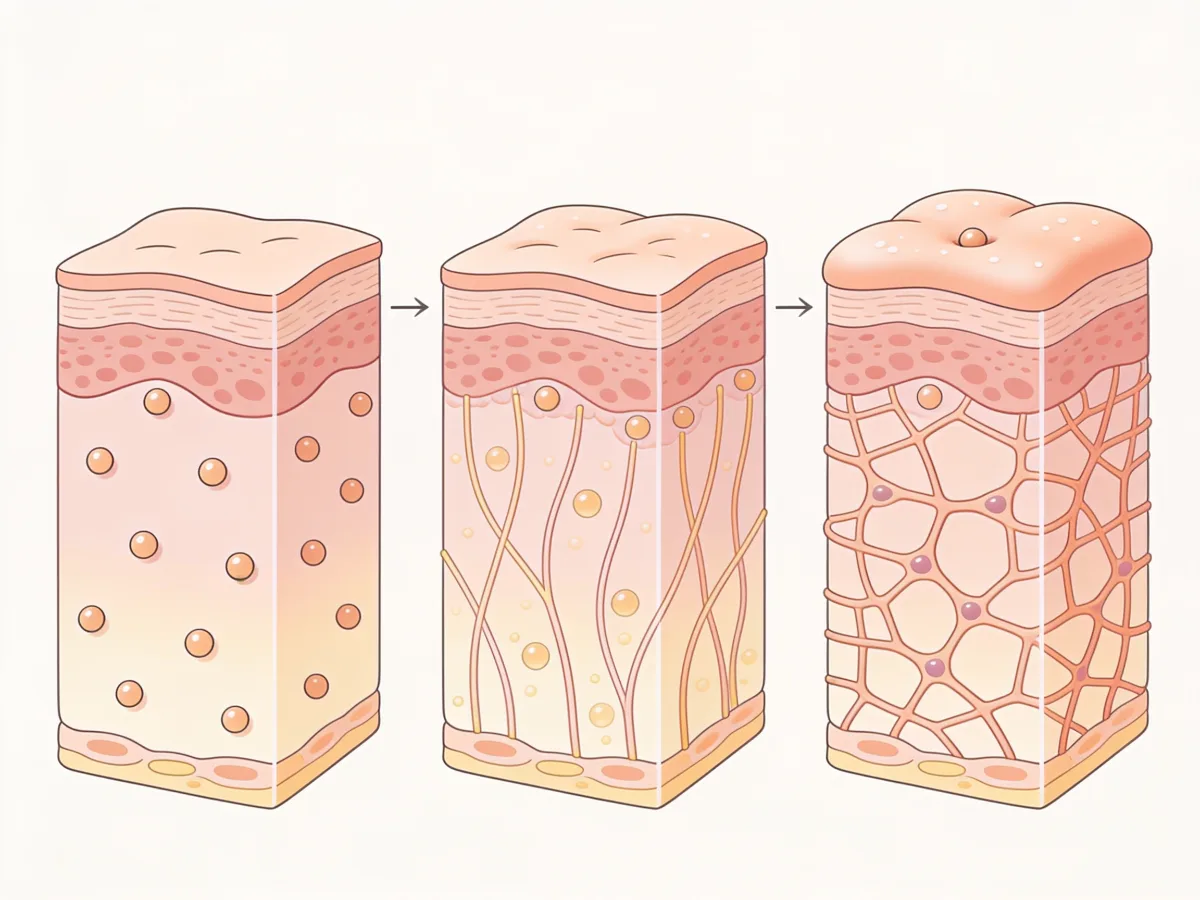
What is Sculptra, and what can go wrong?
Sculptra is an injectable collagen stimulator made of poly-L-lactic acid (PLLA), and most treatments with it go smoothly; when something goes wrong, it is usually a small lump or nodule under the skin. PLLA is a synthetic, slowly absorbed polymer. Sculptra is supplied as a freeze-dried powder of PLLA microparticles with sodium carboxymethylcellulose and a sugar alcohol, which is mixed with sterile water before injection (Galderma, Sculptra instructions for use).
Unlike a hyaluronic acid filler, Sculptra gives little lasting volume on the day. Early fullness is mostly the water used to mix it and fades within days, while the particles prompt the body to build collagen over the following weeks and months, so problems can also show up late.
The problems people ask about most:
- Papules: small bumps that can usually be felt but not seen.
- Nodules: firmer lumps, sometimes visible, often appearing months after treatment.
- Unevenness: one side fuller, or a ridge where product gathered.
- An overfilled look: less common, but it can build over months as collagen forms.
- Rarely: inflamed granulomas months or years later, infection, or a blocked blood vessel, which is an emergency.
This page explains problems after Sculptra and is not a recommendation for any product. For how the treatment itself works, see the Sculptra guide. For how SkinRev Lab approaches filler problems in general, see filler correction at SkinRev Lab.
How common are Sculptra nodules and lumps?
Small lumps are the side effect of Sculptra recorded most often, and reported rates vary widely with technique, from a few in a hundred to more than one in four, while inflamed granulomas are very rare. The figures depend heavily on how the product was mixed and where it was placed.
- The maker's controlled trial: nodules or papules were recorded in 17.2% of people treated with Sculptra (20 of 116), compared with 12.8% given a collagen comparison product. The median time to onset was 160 days for nodules and 55 days for papules, and the median duration was about 100 and 110 days (Galderma, Sculptra instructions for use).
- Longer follow-up: in the maker's three-year follow-up study, 28.4% of people had injection-site nodules or papules by the end of year 3, more often in the marionette lines running down from the corners of the mouth (27.0%) than in the folds beside the nose (19.0%) (Galderma, Sculptra instructions for use).
- Earlier studies: a review reports papule and nodule rates of 6% to 44% in early studies, when mixing and injection methods were less refined, and describes true inflammatory granulomas as very rare, at about 0.01% to 0.1% (Vleggaar and colleagues, 2014).
Two points follow. First, most of these lumps are small and can be felt rather than seen. Second, a lump appearing months after treatment is a recognised pattern with PLLA, not proof that something serious has happened. A lump that is visible, growing or inflamed still needs a doctor's review. Your doctor will advise how this applies to you.
Sculptra nodules: what kind of lump is it, and why did it form?
Most Sculptra lumps are papules or nodules made of product and the tissue that forms around it, and they usually reflect how the product was mixed or placed rather than an infection. A review describes them as typically felt rather than seen, causing no symptoms, and arising several weeks after injection (Vleggaar and colleagues, 2014).
- Papules: small bumps that can be felt, often in a row along an injection line.
- Non-inflamed nodules: firmer, sometimes visible, usually cool and not tender. They tend to stay the same size until the body absorbs them or they are treated.
- Inflammatory granulomas: rare, red or growing lumps from an immune reaction, which may appear months or years after injection. The maker reports that granulomas usually occur several months after injection, occasionally more than a year (Galderma, Sculptra instructions for use).
- Infection: a red, hot, painful swelling, especially from about day 3 to day 14 (King and colleagues, 2016).
Why lumps form:
- Mixing and placement: a review links most papules and nodules to less than ideal mixing or placement of the product (Vleggaar and colleagues, 2014).
- Depth: placement too close to the surface.
- Area: thin or mobile areas show lumps more readily. The maker states that Sculptra should not be injected into the red part of the lips, and that use around the eyes has not been studied, with literature reporting more papules and nodules there.
- Ongoing response: PLLA particles keep provoking a tissue response while they break down, which explains lumps up to 14 months or more after injection (King and colleagues, 2016).
For other lump types, see filler lumps and nodules and fibrotic filler lumps.
What can help a Sculptra lump?
What helps a Sculptra lump depends on whether it can be seen, whether it is inflamed and how long it has been there, and the gentlest effective option is usually tried first. A lump that can be felt but not seen often needs no treatment at all.
Options, depending on the type (your doctor will advise which suits you):
- Time and review: many small papules and nodules are absorbed or become less noticeable over months; the maker's trial recorded a median duration of about 100 days for nodules.
- Massage or manipulation: among the treatments reported to the maker for lumps, but only as directed by your doctor (Galderma, Sculptra instructions for use).
- Dispersion: a doctor injects salt water into a firm, non-inflamed lump to spread the product, sometimes releasing the tissue around it (King and colleagues, 2016).
- Disguising: a review notes that small nodules can be camouflaged with hyaluronic acid filler placed around them (Vleggaar and colleagues, 2014).
- Medicine injected into the lump: for an inflamed nodule or granuloma once infection has been treated or ruled out, used cautiously because it can thin the tissue.
- Antibiotics: where a doctor suspects infection after examining you.
- Removal: rarely, for a persistent, well-defined lump, by referral.
These lumps can be stubborn. In a Brazilian survey of 55 complications after collagen stimulators, most of them after PLLA, almost nine in ten were nodules and only five had resolved completely (Ianhez and colleagues, 2024). That series collected problem cases reported by ultrasound specialists, so it does not show how often lumps happen, but it explains why prevention and patience both matter.
Do not squeeze, pick or have anything injected into a lump by someone who does not know what it is. See filler granuloma for inflamed lumps.
Overfilled or uneven after Sculptra
An overfilled or uneven look after Sculptra is less common than lumps, but it can happen when more product is placed than the area needs, when sessions are too close together, or when product gathers on one side. Because collagen builds gradually, the face can keep changing for months after the last session.
How it can look:
- Cheeks or temples that look fuller than planned, appearing slowly.
- One side fuller than the other, or a ridge along an injection line.
- Fullness that does not change through the day, unlike swelling.
What can look similar: swelling in the first days after each session, which settles as the water is absorbed; older hyaluronic acid filler in the same area; and loose skin, which more volume does not correct.
What may help:
- No further sessions until the result has been reviewed.
- Time, as some fullness softens as the particles are absorbed.
- Dissolving any hyaluronic acid filler also present, which sometimes reduces the overall bulk.
- Where a collagen stimulator has over-responded and left an area too full, Dr Sin Yong may consider Time Freeze Laser LCLR, used for a microliposuction-like effect, after examination. This is Dr Sin Yong's clinical approach; no published trial has tested it for filler, and results vary. Hard, red, painful or growing lumps need medical review, not laser.
For the whole-face pattern, see signs of too much filler and pillow face correction.
Can Sculptra be dissolved with an enzyme (hyaluronidase), or removed?
No. An enzyme (hyaluronidase), the one used to dissolve filler, acts on hyaluronic acid only, and Sculptra is poly-L-lactic acid, so the enzyme does not break it down. That is why lumps after Sculptra are managed by type rather than reversed in a single visit.
What this means for you:
- No quick reversal: there is no injection that removes Sculptra within days.
- Gradual natural breakdown: the body breaks PLLA down slowly, and the tissue can keep responding to it for 14 months or more (King and colleagues, 2016).
- Removal is a last resort: surgery can be considered for a persistent, well-defined lump, but it can leave a scar and is rarely the first step. At SkinRev Lab, surgical removal is by referral.
The enzyme does have a role in two situations: where hyaluronic acid filler is also present in the same area, and where hyaluronic acid was used to disguise a nodule and needs adjusting. Ultrasound can show where material sits and may suggest whether it is hyaluronic acid or something else, though not always with certainty, so that the enzyme is used only where it can work.
In the Brazilian survey above, the dissolving enzyme helped only where calcium-based filler had been mixed with hyaluronic acid, which is consistent with it having no effect on the stimulator itself (Ianhez and colleagues, 2024).
For the wider picture, see non-dissolvable filler removal, and for how dissolving works with hyaluronic acid, see dissolving filler.
Swelling, bruising and other less common problems
Swelling, tenderness, redness and bruising are common for a few days after each Sculptra session, while infection, granulomas and a blocked blood vessel are uncommon or rare but need prompt medical attention. Across dermal fillers in general, most reactions are mild and short-lived, and serious events are rare (Funt and Pavicic, 2013).
- Expected reactions: in the maker's trial diaries, swelling, tenderness and redness were each reported after the first session by about four in five people, and bruising by about two in three; these are short-lived (Galderma, Sculptra instructions for use). See filler swelling and bruising after filler.
- Infection: a red, hot, increasingly painful swelling, especially from about day 3 to day 14, needs same-day review (King and colleagues, 2016). See filler infection.
- Delayed inflamed lumps: lumps that turn red, tender or larger months later need assessment rather than waiting.
- Blocked blood vessel: rare with any injectable. The maker reports visual disturbances, including blindness, after Sculptra injected into the temple area. Pale, white, dusky or mottled skin, or pain that keeps rising, during or after injection is an emergency, and any change in vision needs emergency care at once. See filler vascular occlusion.
Because Sculptra cannot be dissolved, a suspected blocked vessel is managed as a medical emergency, without delay. If you cannot reach the provider who treated you, any doctor or emergency department can assess urgent symptoms.
Warning signs after Sculptra: what is normal and when to get help
Swelling, tenderness, redness and bruising for a few days are normal after Sculptra, and small bumps you can feel but not see are common; a change in skin colour, escalating pain, spreading redness with fever or any change in vision is not. Use the table as a general guide.
| What you notice | Usual timing | What it may mean | What to do |
|---|---|---|---|
| Swelling, tenderness, redness, bruising | First few days | Expected reaction | Follow your aftercare advice |
| Small bumps you can feel but not see | Weeks to months | Papules | Mention at your review; often no treatment needed |
| A firm lump you can see, not tender | Often months after treatment | Non-inflamed nodule | Doctor review; no more product there meanwhile |
| Fuller than planned, or one side fuller | Weeks to months | Overcorrection or uneven spread | Doctor review before any further session |
| Red, hot, increasingly painful swelling | Often days 3 to 14 | Possible infection | Same-day medical review |
| A lump that turns red, tender or grows | Months to years | Possible granuloma or inflamed nodule | Prompt doctor review; do not massage |
| Spreading redness with fever | Any time | Possible spreading infection | Go to an emergency department now |
| Pale, dusky or mottled skin, or severe or escalating pain | During or soon after injection | Possible blocked blood vessel | Go to an emergency department now |
| Any change in vision | During or after injection | Emergency | Call 995 or go to A&E at once |
Do not wait for a routine appointment with any of the last three signs, and do not try to treat them yourself.
How Dr Sin Yong assesses and corrects problems after Sculptra
At SkinRev Lab, Dr Sin Yong, medical adviser, assesses problems after Sculptra by taking a full treatment history, examining the area and scanning it with ultrasound where useful to see how deep a lump sits and what it is made of. Because Sculptra cannot be dissolved, identifying the type of lump comes before any decision to wait, treat or refer.
What helps the assessment:
- The product name, dates, areas and number of sessions, and any notes on how it was mixed.
- Every other filler or stimulator you have had in the same areas.
- Photos from before treatment and since the lump or fullness appeared.
- Any recent illness, dental work, allergy or autoimmune condition, and your current medicines.
What the assessment looks at: whether a lump is visible or only felt, whether it is inflamed, how deep it sits, and whether hyaluronic acid filler or swelling is part of the picture. Ultrasound can suggest the type of material but is not always certain.
What correction may involve, where appropriate:
- Observation and review for small, quiet lumps.
- Medical treatment first for an inflamed or infected lump.
- Dissolving any hyaluronic acid filler found in the same area.
- Time Freeze Laser LCLR in selected areas of over-fullness, with the caveats above.
- Referral for a surgical opinion for a persistent, well-defined lump.
Doing nothing can be the right advice, and correction cannot shorten every problem. Correction is priced at consultation. You can see how mapping works in the ultrasound filler mapping video.
Before any more Sculptra: questions that lower the risk
If you have had a lump or uneven result after Sculptra, the most useful step is to pause further sessions until the area has been assessed, and to ask clear questions before anything more is injected:
- How will it be mixed, and how long before injection? Concentrated or poorly dispersed mixes are linked with more lumps.
- How deep, and where? Ask which areas will be avoided, such as the lips and around the eyes.
- How many sessions, and how far apart? Results build over weeks to months, so a session given too early can overshoot.
- What aftercare is advised? Follow the massage or aftercare instructions you are given, and ask what to do if you feel a bump.
- What is already in the area? Earlier fillers change the plan.
- Who will review the result, and when?
Tell the doctor about: autoimmune conditions, a tendency to thick scars, allergies, recent infections or planned dental work, pregnancy or breastfeeding, and every filler or stimulator you have had.
A doctor who suggests fewer sessions, a different approach or no treatment is often protecting your result. If you are unsure whether you had a filler or a stimulator, see collagen stimulator vs filler; for how it compares with another stimulator, see Juvelook vs Sculptra.
Sources
References & sources
- Galderma. Sculptra (injectable poly-L-lactic acid) instructions for use, United States. Accessed 17 November 2026.
- Vleggaar D, Fitzgerald R, Lorenc ZP. Understanding, avoiding, and treating potential adverse events following the use of injectable poly-L-lactic acid for facial and nonfacial volumization. J Drugs Dermatol. 2014;13(4 Suppl):s35-s39.
- Ianhez M, de Goés e Silva Freire G, Sigrist RMS, et al. Complications of collagen biostimulators in Brazil: description of products, treatments, and evolution of 55 cases. J Cosmet Dermatol. 2024;23(9):2829-2835. doi:10.1111/jocd.16343.
- King M, Bassett S, Davies E, King S. Management of delayed onset nodules. J Clin Aesthet Dermatol. 2016;9(11):E1-E5.
- Funt D, Pavicic T. Dermal fillers in aesthetics: an overview of adverse events and treatment approaches. Clin Cosmet Investig Dermatol. 2013;6:295-316. doi:10.2147/CCID.S50546.
Main guide
Filler correction
filler correction at SkinRev LabRelated questions: How does Sculptra build collagen?What can be done about fillers that cannot be dissolved?What kind of lump is it after filler?
Sculptra pillow face: how it differs from filler pillow face
Pillow face is the puffy, overfilled look usually linked with layers of hyaluronic acid (HA) filler. Sculptra can also leave a face fuller than planned, but the cause and the options are different, so it helps to know which you have.
| Pillow face from HA filler | Fullness after Sculptra | |
|---|---|---|
| What makes the volume | The filler gel itself | Your own collagen, built in response to poly-L-lactic acid (PLLA) |
| When it shows | Soon after treatment, or slowly after many top-ups | Over weeks to months after a course, so it can keep building after the last session |
| Can an enzyme (hyaluronidase) help? | Yes. The enzyme breaks down HA filler, in staged amounts | No. Sculptra cannot be dissolved, and the collagen it builds is your own tissue |
| Usual first step | Ultrasound to see the filler, then dissolve the excess | Stop further sessions, assess, and review over months, as some fullness settles |
Some faces have had both. Dr Sin Yong checks which product is behind the fullness first, because the two are managed in different ways. Options are explained at consultation, including when waiting is wiser than treating and when a surgical opinion elsewhere is worth having. For HA-led fullness, see pillow face correction.
Sources and medical review
Medically reviewed by Dr Sin Yong. Further reading from independent medical sources:
- Vleggaar D, Fitzgerald R, Lorenc ZP. Understanding, avoiding, and treating potential adverse events following the use of injectable poly-L-lactic acid. J Drugs Dermatol. 2014
- King M, Bassett S, Davies E, King S. Management of delayed onset nodules. J Clin Aesthet Dermatol. 2016
- Funt D, Pavicic T. Dermal fillers in aesthetics: an overview of adverse events and treatment approaches. Clin Cosmet Investig Dermatol. 2013
Seeing a doctor about a Sculptra lump: what to bring
A Sculptra lump is easier to assess when the doctor knows what was injected, where and when. Gather what you can before the appointment. It is fine if some details are missing.
- The dates of each Sculptra session, and how many vials were used per area, if you were told
- Where it was injected, and the name of the clinic, in case your records are needed
- When you first felt or saw the lump, and whether it has grown, softened or stayed the same
- Photos from before treatment and from when the lump appeared, in similar light
- The aftercare you were given, such as massage, and how much of it you managed
- Any other filler or threads in the same area, with dates
- Any redness, warmth, pain or fever, and a list of the medicines and supplements you take
At SkinRev Lab, Dr Sin Yong examines the area and may use ultrasound to see how deep the lump sits. Sculptra cannot be dissolved, so the plan depends on the type of lump: some settle with time, others need treatment. Correction is priced at consultation.
Common questions
Your questions,
answered
Can Sculptra be dissolved?
No. Sculptra is poly-L-lactic acid, and an enzyme (hyaluronidase), which is used to dissolve filler, acts on hyaluronic acid only. The body breaks the particles down slowly over many months. Lumps are therefore managed by type, from waiting and dispersion to medical treatment and, rarely, referral for removal.
Do Sculptra nodules go away on their own?
Many do, slowly. In the maker's trial, nodules lasted a median of about 100 days. Small bumps that can be felt but not seen often need no treatment. Some nodules persist much longer, and a lump that is visible, growing, red or tender needs a doctor's assessment.
Why did a Sculptra lump appear months later?
Late lumps are a recognised pattern with PLLA, because the particles keep provoking a tissue response while they break down. In the maker's trial, nodules appeared a median of 160 days after treatment. A late, quiet lump is usually not an emergency, but a red, warm or growing one needs prompt review.
Should I massage a Sculptra lump?
Only as your doctor advises. Massage after treatment is part of some aftercare plans, and massage is among the treatments reported to the maker for lumps, but it does not dissolve the particles. A lump that is red, warm, tender or growing should not be massaged and needs prompt assessment.
Can Sculptra cause an overfilled face?
It can, though lumps are more common. Collagen builds over months, so too much product or sessions too close together can leave an area fuller than planned. It cannot be dissolved, so the response is time, dissolving any hyaluronic acid filler also present and, in selected cases, other treatment after assessment.
When is a problem after Sculptra urgent?
Seek same-day care for a red, hot, increasingly painful swelling. Go to an emergency department now if skin turns pale, dusky or mottled, pain is severe or keeps escalating, or there is spreading redness with fever. For any change in vision, call 995 or go to A&E at once.
Can Dr Sin Yong assess a Sculptra lump?
Yes. Dr Sin Yong can examine the area at SkinRev Lab, wherever you were treated, scan it with ultrasound where useful and explain the options, including waiting. Bring the product name, dates and areas if you have them. Correction is priced at consultation, and realistic expectations are explained first.
How much does it cost to assess lumps after Sculptra?
Assessment and any treatment by Dr Sin Yong at SkinRev Lab are priced at consultation, wherever the original injections were done.
Medical journal references
Peer-reviewed background reading for this page. These papers report research in groups of people and do not predict an individual result.
- Wang H, Wu D, Lo C, et al. Foreign Body Granulomas Reaction Related to Collagen Stimulatory Cosmetic Fillers: A Systematic Review. J Cosmet Dermatol. 2025;24(10):e70459. PubMed
- Flores Rodríguez JC, Porras Zamora BM, Rico Macías NM, et al. The Management of Poly-L-Lactic Acid (PLLA) Nodules: A Scoping Review and Evidence-Mapped Clinical Pathway. Cureus. 2026;18(6):e110742. PubMed
- Haykal D, Haddad A, Cartier H, Avelar L. Poly-L-Lactic Acid in Aesthetic Dermatology: A Decade Beyond Volume Restoration Toward Regenerative Biostimulation. Aesthet Surg J. 2025;45(10):1065-1072. PubMed
- Baranska-Rybak W, Lajo-Plaza JV, Walker L, Alizadeh N. Late-Onset Reactions after Hyaluronic Acid Dermal Fillers: A Consensus Recommendation on Etiology, Prevention and Management. Dermatol Ther (Heidelb). 2024;14(7):1767-1785. PubMed