Guide · After liposuction
Loose skin after liposuction: why skin sags, how long to wait, and skin tightening options
Liposuction removes fat, but it cannot make the skin above it smaller. Here is why some skin does not shrink back, what the timeline looks like, and which tightening options suit which degree of laxity.
In short
- Loose skin after liposuction happens when the skin over a treated area does not shrink to the new, smaller contour, most often on the lower tummy, inner thighs, upper arms and neck.
- Saggy skin after liposuction is more likely after 40, after pregnancy or large weight changes, with sun-damaged skin, and when a large volume was removed.
- Skin keeps tightening for 6 to 12 months after surgery, so the final skin result is judged then; early sagging often improves.
- Skin tightening after liposuction without surgery suits mild to moderate laxity. Dr Sin Yong uses 4K Body Lift (radiofrequency microneedling) and Time Freeze Laser LCLR®, chosen at consultation. Overhanging skin needs a surgeon.

By Dr Sin Yong · Updated 9 November 2026
Dr Sin Yong, Global Key Opinion Leader
MBBS (Singapore) · MRCS (Edinburgh) · MSc Practical Dermatology (Cardiff) · MSc Aesthetic Medicine (University of London) · 15+ years in clinical practice
This guide is prepared for SkinRev Lab. Dr Sin Yong sees patients at SkinRev Lab, CityLink Mall, and IN Eternity Clinic, and has been appointed a Global Key Opinion Leader by device makers including CLASSYS, DEKA and HIRONIC; he trains doctors at their academies in Europe, Asia and South America. General information only, not medical advice. Your own suitability is assessed at consultation.
Global Key Opinion Leader for
- CLASSYS
- DEKA
- HIRONIC
- FOTONA
- ALMA
- LUTRONIC
- ILOODA
 DEKA Academy, Florence 2026
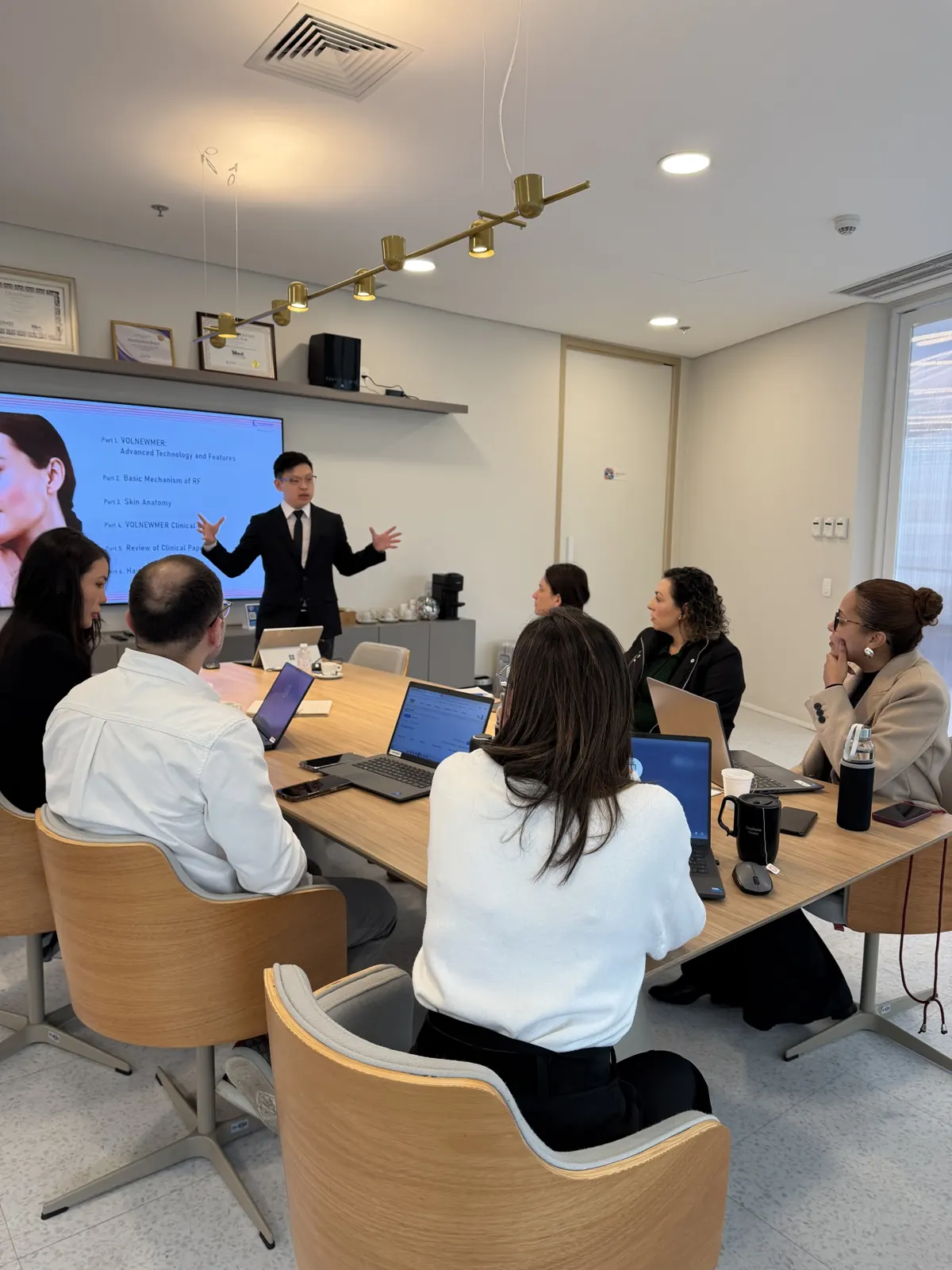 CLASSYS Academy, São Paulo 2026
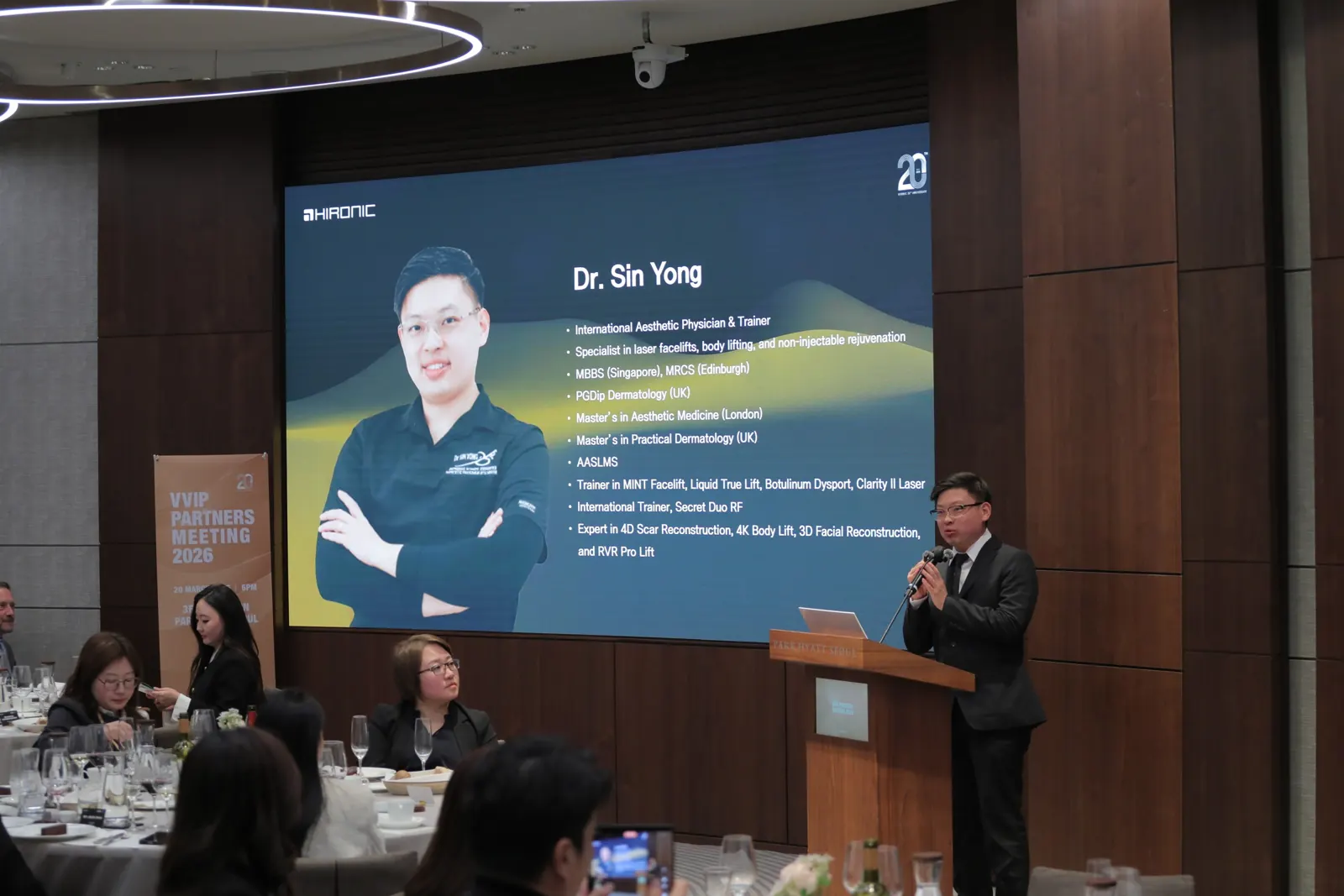 HIRONIC VVIP Partners Meeting, Seoul 2026
 CLASSYS APAC Symposium, Bangkok 2026
His conferences and KOL certificates →More about Dr Sin Yong →
Why it happens
Why skin does not always shrink back after liposuction
Skin shrinks back because of the elastic fibres and collagen in the dermis and the fibrous bands that tie it to the layer underneath. When those are weakened by age, sun, pregnancy, repeated weight change or genetics, the skin has less recoil. Removing a large volume of fat, especially close to the skin, leaves more skin to redrape over less support.
Some surgeons add energy during liposuction, such as radiofrequency-assisted liposuction, to encourage skin contraction; a study of upper arm liposuction reported measurable skin contraction with this approach. It helps some people, but it is not a substitute for skin removal when the skin is very loose.
Grading
Mild, moderate or heavy: matching the skin to the option
| Degree | What it looks like | Usual option |
|---|---|---|
| Mild | Crepey texture or slight softness when you bend or sit | Time, strength training, and non-surgical tightening if it persists |
| Moderate | A visible soft fold or skin that drapes, without overhang | A course of non-surgical tightening such as 4K Body Lift; results are gradual and partial |
| Heavy | Skin that folds over itself or hangs (an "apron" on the tummy) | Skin removal by a plastic surgeon: tummy tuck, arm lift or thigh lift |
Timeline
How long skin takes to settle after liposuction
- Weeks 1 to 6: swelling and firmness; compression garments as your surgeon advises.
- Months 2 to 3: most swelling settles; the skin may look looser before it improves.
- Months 6 to 12: collagen remodelling continues and the skin result becomes clear.
- After 12 months: remaining laxity is unlikely to improve on its own.
Non-surgical tightening is usually planned once the surgeon has confirmed healing is complete. If you are still within the first few months, the most useful step is often to wait.
Options
Skin tightening after liposuction at SkinRev Lab
| Option | How it works | Suits | Performed by |
|---|---|---|---|
| 4K Body Lift | Insulated radiofrequency microneedles heat the deep skin and the fat just beneath it | Moderate laxity on the tummy, waist, thighs and arms | Dr Sin Yong |
| Time Freeze Laser LCLR® | Laser energy to tighten and reduce small pockets of loose fat | Jawline, under the chin and neck after neck or chin liposuction | Dr Sin Yong |
| SKINLIFT® (face and body areas) | Focused ultrasound energy without needles | Mild softness; maintenance | SkinRev Lab therapists |
Tightening is gradual and partial: it can firm and smooth, but it cannot remove a fold of skin. Suitability, the number of sessions and pricing are decided at consultation. If the problem is dents or lumps rather than loose skin, see botched liposuction.
Surgery
When skin removal is the honest answer
If skin folds over itself, overhangs a waistband or forms a crease that traps sweat, no device will solve it. A plastic surgeon can remove it with a tummy tuck, arm lift or thigh lift, with longer scars and recovery. See tummy tuck vs non-surgical options; Dr Sin Yong refers for a surgical opinion when this fits.
Self-care
What helps the skin settle
- Wear compression for as long as your surgeon advises.
- Keep your weight stable; large swings stretch the skin again.
- Strength training builds the muscle under the skin, which improves the contour.
- Eat enough protein, do not smoke, and protect treated skin from the sun.
Loose tummy skin after pregnancy follows the same rules; see loose skin after pregnancy.
Read next
Related guides
Sources
References & sources
- Duncan DI. Improving outcomes in upper arm liposuction: adding radiofrequency-assisted liposuction to induce skin contraction. Aesthet Surg J. 2012;32(1):84-95
- Kaoutzanis C, et al. Cosmetic liposuction: preoperative risk factors, major complication rates, and safety of combined procedures. Aesthet Surg J. 2017;37(6):680-694
- Castello MF, et al. Management of contour irregularities following superficial liposuction. Plast Reconstr Surg. 2011
Common questions
Your questions,
answered
Will loose skin after liposuction tighten on its own?
Often partly. Skin keeps remodelling for 6 to 12 months after liposuction, so early looseness can improve. Laxity that is still present after a year is unlikely to change on its own.
How long after liposuction does skin tighten?
Most improvement happens between three and twelve months, as swelling settles and collagen remodels. The final skin result is usually judged at around a year.
What is the best skin tightening after liposuction?
It depends on the degree of laxity. Mild to moderate looseness can be improved with radiofrequency microneedling or laser tightening over a course. Heavy, folded skin needs surgical removal. A doctor grades the skin before suggesting one.
When can I start skin tightening after liposuction?
Usually once your surgeon confirms that healing is complete, often from about three to six months after surgery. Starting too early makes it hard to judge what is swelling and what is laxity.
Can radiofrequency tighten saggy skin after liposuction?
Radiofrequency can firm mild to moderate laxity by heating the deeper skin and stimulating collagen over months. It does not remove skin, so it will not correct an overhang.
Do compression garments prevent loose skin after liposuction?
Compression helps control swelling and supports the skin while it heals, as your surgeon advises, but it cannot overcome poor skin elasticity.
Do I need a tummy tuck instead?
If the skin hangs or folds, or if the muscles are separated after pregnancy, a tummy tuck is the operation that addresses both. Non-surgical options suit lesser degrees of looseness.
Does SkinRev Lab perform liposuction?
No. SkinRev Lab does not perform liposuction or any surgery. Dr Sin Yong treats suitable loose skin after liposuction without surgery and refers for a surgical opinion when needed.