Guide · Pelvic floor
Emsella in Singapore: how the HIFEM chair works for the pelvic floor, the evidence, and the other options
Emsella is a chair you sit on fully clothed while an electromagnetic field makes the pelvic floor contract. Here is what it does, what the studies show, and how it compares with the other routes.
In short
- Emsella is a brand of chair that uses high-intensity focused electromagnetic (HIFEM) energy to make the pelvic floor muscles contract strongly while you sit, clothed.
- It is marketed for stress and mixed urinary incontinence and pelvic floor weakness; published studies are small and mostly uncontrolled, so the evidence is weaker than for supervised pelvic floor training.
- Emsella is not offered at SkinRev Lab. SkinRev Lab offers SKINGLIFT®, an external energy-based feminine wellness protocol that supports pelvic floor engagement but does not treat urinary incontinence.
- Leakage deserves a proper assessment first; Dr Sin Yong can assess symptoms and refer to a urogynaecologist or pelvic floor physiotherapist.

Prepared by the SkinRev Lab team · Updated 9 November 2026
Dr Sin Yong, Global Key Opinion Leader
MBBS (Singapore) · MRCS (Edinburgh) · MSc Practical Dermatology (Cardiff) · MSc Aesthetic Medicine (University of London) · 15+ years in clinical practice
This guide is prepared for SkinRev Lab. Dr Sin Yong sees patients at SkinRev Lab, CityLink Mall, and IN Eternity Clinic, and has been appointed a Global Key Opinion Leader by device makers including CLASSYS, DEKA and HIRONIC; he trains doctors at their academies in Europe, Asia and South America. General information only, not medical advice. Your own suitability is assessed at consultation.
Global Key Opinion Leader for
- CLASSYS
- DEKA
- HIRONIC
- FOTONA
- ALMA
- LUTRONIC
- ILOODA
 DEKA Academy, Florence 2026
 CLASSYS Academy, São Paulo 2026
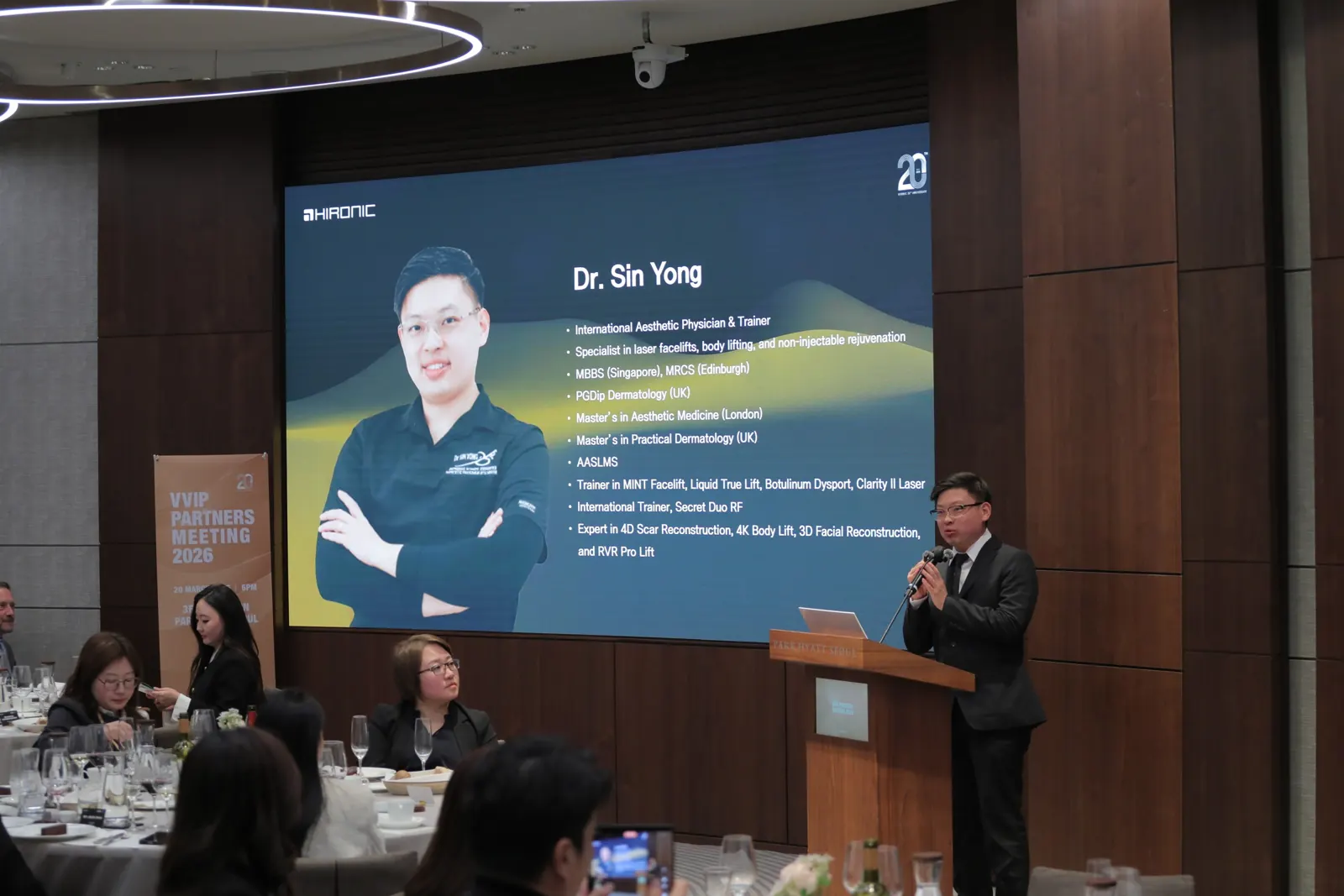 HIRONIC VVIP Partners Meeting, Seoul 2026
 CLASSYS APAC Symposium, Bangkok 2026
His conferences and KOL certificates →More about Dr Sin Yong →
How it works
How a HIFEM chair works
A coil in the seat produces a focused electromagnetic field that triggers rapid, strong contractions of the pelvic floor muscles, many more than you could do voluntarily in the same time. Sessions are usually short, and you stay dressed. The idea is to strengthen the muscles that support the bladder and urethra. For feminine rejuvenation in Singapore at SkinRev Lab, see SKINGLIFT.
Evidence
What the evidence shows
A study of women with urinary incontinence treated on a HIFEM chair reported improved questionnaire scores and quality of life, but it had no control group. Supervised pelvic floor muscle training, by contrast, is supported by a Cochrane review of randomised trials as first-line treatment. HIFEM chairs may suit women who cannot contract the pelvic floor correctly, alongside physiotherapy, rather than instead of it.
Compared
Emsella and the alternatives
| Option | What it is | Evidence for stress leakage | At SkinRev Lab? |
|---|---|---|---|
| Pelvic floor muscle training | Daily exercises, ideally with a physiotherapist | Strong (Cochrane review) | Referral |
| Emsella (HIFEM chair) | Electromagnetic muscle contractions while seated | Small, mostly uncontrolled studies | Not offered |
| SKINGLIFT® | External radiofrequency with muscle stimulation for intimate comfort and tone | Not a treatment for incontinence | Yes |
| G Lift vaginal laser | Fractional CO₂ laser for genitourinary symptoms of menopause | Limited; studied mainly for dryness | Yes, by Dr Sin Yong |
| Surgery (mid-urethral sling) | Operation by a urogynaecologist or urologist | Strong for persistent stress incontinence | Referral |
Not for
Who should not use a HIFEM chair
- Pregnancy.
- Metal implants or electronic implants near the pelvis, or a pacemaker.
- Active infection, unexplained bleeding or pelvic pain that has not been assessed.
- Leakage that has not yet been diagnosed: the type matters.
More on leakage in stress incontinence in Singapore.
Sources
References & sources
- Samuels JB, et al. Safety and efficacy of a non-invasive high-intensity focused electromagnetic field (HIFEM) device for treatment of urinary incontinence and enhancement of quality of life. Lasers Surg Med. 2019;51(9):760-766
- Dumoulin C, Cacciari LP, Hay-Smith EJC. Pelvic floor muscle training versus no treatment, or inactive control treatments, for urinary incontinence in women. Cochrane Database Syst Rev. 2018;10:CD005654
- Li FG, et al. Effect of fractional carbon dioxide laser vs sham treatment on symptom severity in women with postmenopausal vaginal symptoms: a randomized clinical trial. JAMA. 2021;326(14):1381-1389
Common questions
Your questions,
answered
Does Emsella work for incontinence?
Small studies report improvement, but most had no control group. Supervised pelvic floor training has stronger evidence and is the first-line treatment.
How many Emsella sessions are needed?
Clinics offering it commonly use a course of several sessions over a few weeks, following the manufacturer's protocol. Ask what improvement to expect and how it will be measured.
Does SkinRev Lab offer Emsella?
No. Emsella is not offered at SkinRev Lab. SkinRev Lab offers SKINGLIFT®, a feminine wellness protocol, and G Lift, a vaginal laser performed by Dr Sin Yong.
Is SKINGLIFT the same as Emsella?
No. SKINGLIFT® uses external radiofrequency with muscle stimulation for intimate comfort and tone. It does not treat urinary incontinence.
Is Emsella better than Kegel exercises?
Not proven. Pelvic floor exercises, ideally taught by a physiotherapist, have the stronger evidence. A chair may help women who struggle to contract the muscles, alongside exercises.
Who should not use Emsella?
People who are pregnant or have metal or electronic implants near the pelvis or a pacemaker, and anyone with undiagnosed bleeding, infection or pain.