Guide · Sebaceous filaments
Sebaceous filaments why they are not blackheads, and what makes them less visible
Those even grey dots across your nose are probably not blackheads at all. Here is what sebaceous filaments are, why they refill within days of squeezing, and what genuinely makes them less noticeable.
Quick answer
- Sebaceous filaments are the normal lining of oil-rich pores: soft columns of sebum and shed skin cells that show as small, evenly spaced grey, tan or yellowish dots, mostly on the nose, chin and inner cheeks. Everyone has them, and they are not blackheads.
- Blackheads are true plugs that darken at the surface, are usually larger and scattered unevenly, and can become inflamed. Sebaceous filaments sit flat and evenly spaced and refill within days to a few weeks of being squeezed or stripped, because the oil gland keeps working.
- You cannot remove them for good, but you can make them less visible: salicylic acid, a retinoid and niacinamide at home, a light non-comedogenic routine, daily sunscreen and a gentle extraction facial every four to six weeks. Pore strips and squeezing give a brief result and irritate the skin.
- At SkinRev Lab, HydraFacial Syndeo (45 minutes, S$288 to S$438 before GST) lifts congestion with suction rather than squeezing. If you are unsure what the dots are, or also have acne or enlarged pores, see a doctor; prescription retinoids are by Dr Sin Yong at IN Eternity Clinic, priced at consultation.
The basics
What sebaceous filaments are
A pore is the opening of a hair follicle and the oil (sebaceous) gland attached to it. Sebum flows up the follicle, usually along a very fine hair, and mixes with skin cells shed from the follicle wall. That mixture forms a soft column that lines the pore and lets oil reach the surface. When the top of the column is visible, you see a sebaceous filament.
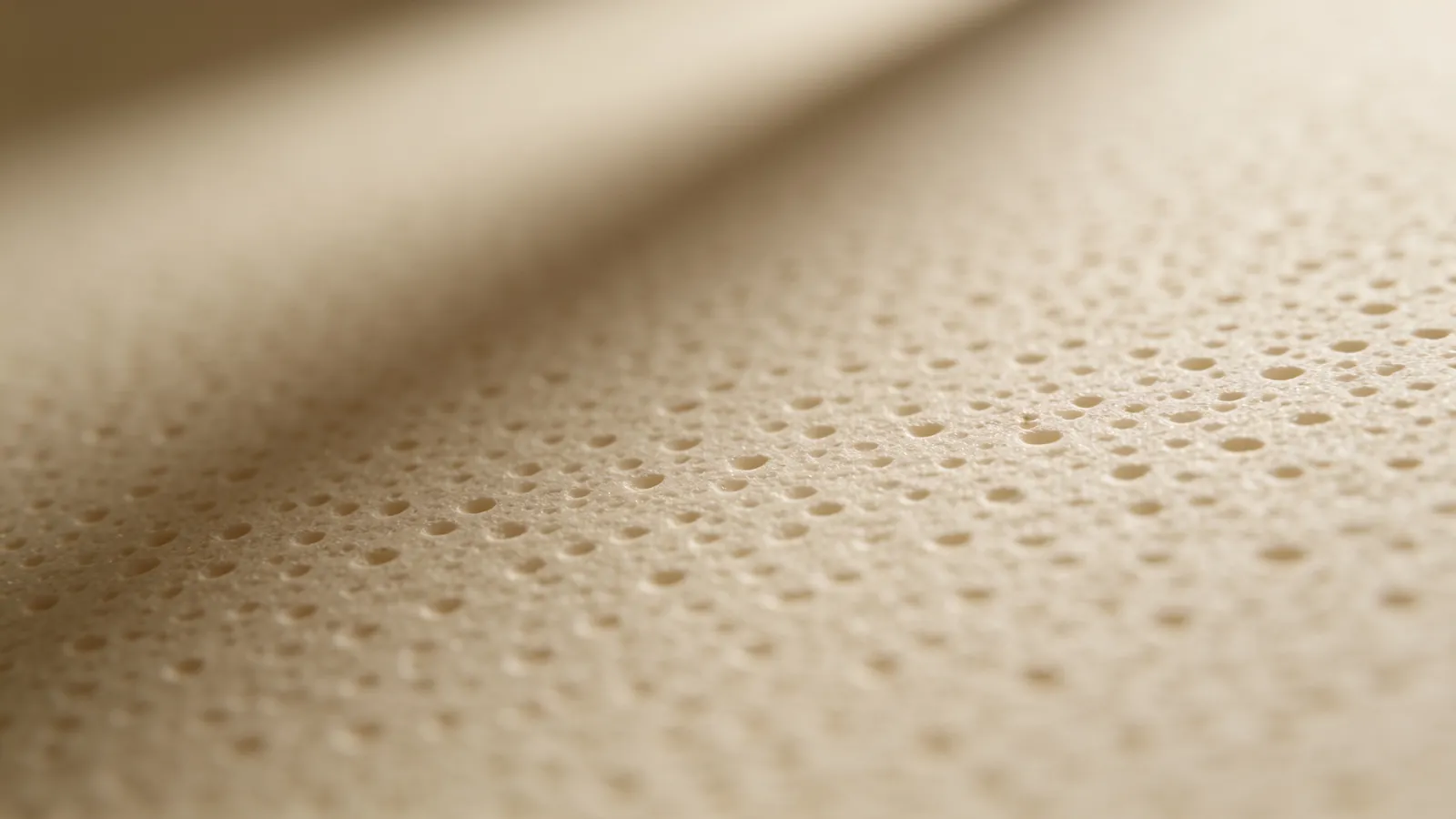
They are most obvious on the nose, where oil glands are large and pore openings wide, and also on the chin, forehead and inner cheeks. They look like small grey, tan or yellowish dots, evenly spaced and roughly the same size. Squeeze one and a thin, pale, waxy thread comes out.
Dermatology references describe sebaceous filaments as collections of sebum and dead cells around the hair follicle that are found in normal, healthy people, mostly on the nose. They are part of how oily skin works, not a sign of dirt or poor cleansing.
Blackheads vs sebaceous filaments
Sebaceous filaments vs blackheads: how to tell
If the dots on your nose are uniform, flat and come back almost as soon as you clear them, they are almost certainly sebaceous filaments. If a few are larger, darker and raised, and you also get whiteheads or spots, you may have both.
A few other conditions can look similar: sebaceous hyperplasia (soft yellowish bumps with a central dip), trichostasis spinulosa (dark, spiky plugs containing many tiny hairs) and Demodex mites (fine scale and roughness around the follicles). A doctor can tell them apart with a close look or a dermatoscope.
| Sebaceous filaments | Blackheads (open comedones) | |
|---|---|---|
| What it is | Normal column of sebum and shed cells lining the pore | A true plug of sebum and dead skin blocking the pore |
| Colour | Grey, tan or yellowish | Dark brown to black at the surface |
| Pattern | Evenly spaced, similar size, often across the whole nose | Scattered, varying size, often a few larger ones |
| Feel | Flat; skin feels smooth | Can be slightly raised or feel bumpy |
| When squeezed | A soft, pale, thread-like strand | A firmer plug with a dark tip |
| Comes back | Within days to a few weeks | More slowly, but new ones form if pores stay blocked |
| Can become inflamed | Rarely | Yes, they can turn into pimples |
Why they refill
Why sebaceous filaments come back within days
The oil gland under each pore keeps producing sebum all the time. Squeezing or stripping removes the visible column, but the gland refills it, so the dots return within days to a few weeks. That is not a failure of the treatment; it is how the skin is meant to work.
How visible they are depends mostly on how oily your skin is and how wide the pore opening is. In a study of 60 adults, larger pores were linked with higher sebum output, older age and male sex, with oil output showing the strongest link; in women, pores were also larger around ovulation. Singapore's heat and humidity keep oil glands busy all year, which is why filaments can look more obvious by mid-afternoon.
Washing more often does not stop them. Over-cleansing strips the skin barrier, and tight, dehydrated skin can look shinier and more congested rather than less.
Pore strips
What pore strips, squeezing and scrubs actually do
Pore strips grip the top of each filament and pull it out, which is why the strip looks so satisfying afterwards. The filaments refill within days, the adhesive can irritate or redden the skin, and strips should not go on skin that is broken, sunburnt or being treated with a retinoid.
Squeezing does the same job less gently. Repeated pressure can inflame the follicle, leave red or dark marks (common in Asian skin) and, over time, make pores look larger, which defeats the purpose.
- Pore strips: a brief, surface-only result; occasional use on healthy skin is unlikely to harm, but they change nothing long term.
- Squeezing with fingers or nails: risks marks and inflammation; leave it.
- At-home suction gadgets: used too strongly, they can bruise the skin or leave red marks.
- Gritty scrubs and brushes: irritate without reaching inside the pore.
- Steam: softens the contents for easier extraction, but pores do not open or close with heat.
At home
What makes sebaceous filaments less visible
The aim is less oil sitting in the pore and smoother shedding at its opening. Few studies look at sebaceous filaments specifically, so most advice is borrowed from research on oily skin, pores and blackheads. Give any change six to eight weeks.
Results with retinoids vary. In one published case, a teenager with very prominent filaments cleared after six weeks of a low-strength tretinoin cream; in another, an adult saw minimal change after six months of tretinoin. Expect a softer look, not disappearance.
| Step | How it helps | Notes |
|---|---|---|
| Gentle cleanser twice a day | Removes surface oil without stripping | Lukewarm water; no harsh soaps |
| Salicylic acid (BHA), 0.5–2% | Dissolves in oil and works inside the pore | Start a few times a week; daily if tolerated |
| Retinoid: retinol, or adapalene or tretinoin | Smooths shedding at the pore opening | Adapalene and tretinoin via a pharmacist or doctor; not in pregnancy |
| Niacinamide, 2–5% | May lower oil output | A 2% moisturiser lowered sebum excretion in Japanese adults over four weeks |
| Light, non-comedogenic moisturiser | Keeps the barrier calm so skin does not overcompensate | Gel textures suit humid weather |
| Daily sunscreen | Protects the collagen that supports each pore | Choose a light, non-comedogenic SPF 30 or higher |
| Clay mask, occasionally | Absorbs surface oil for a day or two | Short-lived; does not change the pore |
Extraction facials
Do extraction facials help sebaceous filaments?
A careful extraction facial clears the visible tops of filaments and any true blackheads among them, so the nose looks clearer for a while. Because filaments refill, the effect on them lasts days to a couple of weeks; the benefit for real blackheads and congestion lasts longer. Extracting filaments more often does not help and can irritate the skin.
HydraFacial Syndeo at SkinRev Lab softens congestion with a mild glycolic and salicylic acid step, then lifts it out with vortex suction while infusing hydrating serum, without squeezing. Signature is S$288, Deluxe S$388 and Platinum S$438 before GST, each about 45 minutes, and the first-timer rate is given at the counter. Every four to six weeks is a common rhythm; more often than every two weeks adds nothing.
Think of extraction as maintenance alongside a home routine, not a fix on its own.
Pores
When the real issue is enlarged pores
Filaments look bigger in bigger pores. A review in Dermatologic Surgery identified three main reasons pores look enlarged: high sebum output, loss of elasticity around the pore, and larger hair follicles. Ageing and sun damage weaken the collagen around each opening, so pores on the cheeks can start to look oval or teardrop-shaped.
If texture around the pores is the concern, SKINTIGHT microplasma at SkinRev Lab works on the skin surface (about 30 minutes, S$588 per zone before GST). For stretched or acne-stretched pores, collagen-building treatments such as RF microneedling and the 675 nm 少女光 laser are performed by Dr Sin Yong at IN Eternity Clinic and priced at consultation. These change how pores look; they do not stop sebaceous filaments forming.
Lasers aimed at the oil glands themselves are being studied. A 2026 case report described one man whose nasal filaments looked better four weeks after a single 1726 nm laser session, but that is one patient with short follow-up, not established treatment.
Every day
Keeping the nose less shiny through a Singapore day
Oil, sweat and make-up make filaments more visible as the day goes on. None of these habits changes the pore, but together they change how much it shows.
Men often notice filaments more, because male skin tends to produce more oil; the same routine applies, with shaving done carefully around the nose and upper lip.
- Blot shine with oil-absorbing papers instead of piling on powder, which settles into pores.
- Use a light gel moisturiser and sunscreen in the morning rather than rich creams.
- Wash your face after a sweaty commute or workout, and change pillowcases regularly.
- Keep heavy balms and oils off the nose and chin.
- Hands off: picking is the quickest way to make pores look worse.
Where to go
Pore care and doctor advice in our network
SkinRev Lab is a non-invasive aesthetic centre at #B1-28 CityLink Mall, on the underground link between City Hall and Esplanade MRT, open daily 11am to 8pm. Our team can look at your pores, tell you honestly whether the dots are filaments or blackheads, and suggest a realistic rhythm of HydraFacial Syndeo alongside home care. WhatsApp +65 8266 9585.
SkinRev Lab itself does not prescribe or inject. If you would like a prescription retinoid, have acne as well, or are unsure what the bumps are, Dr Sin Yong, SkinRev Lab's Medical Adviser, sees patients at IN Eternity Clinic, 9 Scotts Road, #12-01 Pacific Plaza, beside Orchard MRT; treatment is priced at consultation by the clinic (WhatsApp +65 8815 3008). See a doctor promptly about any bump on the nose that is growing, shiny, bleeding or not healing.
Sources
References & sources
- Singh Y, Neema S, Bahuguna A, Dabbas D. Sebaceous filaments. Dermatol Pract Concept. 2021;11(1):e2021148.
- Roh M, Han M, Kim D, Chung K. Sebum output as a factor contributing to the size of facial pores. Br J Dermatol. 2006;155(5):890-894.
- Lee SJ, Seok J, Jeong SY, Park KY, Li K, Seo SJ. Facial pores: definition, causes, and treatment options. Dermatol Surg. 2016;42(3):277-285.
- Draelos ZD, Matsubara A, Smiles K. The effect of 2% niacinamide on facial sebum production. J Cosmet Laser Ther. 2006;8(2):96-101.
- Arif T. Salicylic acid as a peeling agent: a comprehensive review. Clin Cosmet Investig Dermatol. 2015;8:455-461.
- Mineroff JP, Hyde JT, Hsu S. A case report of sebaceous filaments. Cureus. 2023;15(11):e48656.
- Almufadhi A, Alosaimi M. Sebaceous filaments of the nose treated with a 1726-nm diode laser: a case report and description of the "Lunar crater sign". JAAD Case Rep. 2026;69:85-87.
Common questions
Your questions,
answered
What are sebaceous filaments?
They are soft columns of sebum and shed skin cells that line oil-rich pores, seen as small, even grey, tan or yellowish dots, mostly on the nose. They are a normal part of skin, found in healthy people, and not a sign of dirt.
Sebaceous filaments vs blackheads: how can I tell the difference?
Sebaceous filaments are flat, evenly spaced and similar in size, and squeeze out as a pale, waxy thread. Blackheads are darker, often larger and raised, scattered unevenly, and can turn into pimples. Many people have both on the nose.
Can you get rid of sebaceous filaments permanently?
No. Every oil-producing pore has one, and the gland keeps refilling it. You can make them less visible with salicylic acid, a retinoid, niacinamide, sunscreen and occasional extraction, but they will not disappear for good.
Should I squeeze sebaceous filaments?
It is better not to. They refill within days, and repeated squeezing can inflame the follicle, leave dark marks and make pores look larger over time.
Do pore strips remove sebaceous filaments?
They pull out the top of the filaments, which is why the strip looks full, but the pores refill within days. Strips can irritate the skin and should not be used on broken or sunburnt skin or alongside a retinoid.
Does salicylic acid (BHA) help sebaceous filaments?
Yes, for many people. Salicylic acid dissolves in oil and works inside the pore, so used regularly it can make filaments and blackheads look less obvious. Start a few times a week and build up if your skin tolerates it.
Why do sebaceous filaments come back so fast?
Because the oil gland under each pore keeps producing sebum. Clearing the column does not switch off the gland, so it refills within days to a few weeks, faster in hot, humid weather.
Does HydraFacial remove sebaceous filaments?
It clears the visible tops and any true blackheads with suction, so the nose looks clearer for a while. Filaments refill, so it works as maintenance every four to six weeks alongside home care; at SkinRev Lab it is S$288 to S$438 before GST.
Can retinol or tretinoin reduce sebaceous filaments?
They may soften their look by smoothing how skin sheds at the pore opening, but results vary: published cases range from clear improvement in weeks to little change after months. Tretinoin is prescription-only; ask a doctor.