Guide · Folliculitis
Folliculitis the four common types, what sets them off, and when to see a doctor
Folliculitis means inflamed hair follicles, and in Singapore's heat it is common. Here is how to tell the bacterial, fungal, shaving-related and hot-tub types apart, what helps at home, when you need a doctor, and how changing your hair removal can stop it coming back.
Quick answer
- Folliculitis is inflammation of the hair follicles: small red bumps or white-headed spots, each centred on a hair, that may itch or feel tender. The four common types are bacterial folliculitis (usually Staphylococcus aureus), Malassezia or 'fungal' folliculitis, shaving-related razor bumps (pseudofolliculitis), and hot-tub folliculitis from poorly cleaned warm water.
- Heat, sweat, tight gym wear, heavy creams and frequent shaving all make it more likely. Mild cases often settle within one to two weeks with gentle washing, warm compresses, loose clothing and a pause from shaving or waxing on that patch.
- See a GP or dermatologist if bumps turn into painful boils, redness spreads, you have a fever, it keeps returning, or the bumps are itchy and uniform and do not respond to acne products. Antibiotics are for bacterial folliculitis that needs them and antifungals for the Malassezia type; both are prescribed by a doctor.
- When hair removal is the trigger, changing method can prevent repeats: waxing at SkinRev Lab from S$18 per area (GST included) for skin that tolerates it, or laser hair reduction by Dr Sin Yong at IN Eternity Clinic, priced at consultation. SkinRev Lab does not diagnose or treat folliculitis.
The basics
What folliculitis is, and what it looks like
Folliculitis is inflammation of the hair follicles, the tiny pockets each hair grows from. It shows up as small red bumps or white-headed pustules, each centred on a hair, that may itch, sting or feel sore. It can appear anywhere hair grows, most often on the scalp, beard area, chest, back, buttocks, thighs, armpits and legs.
Most folliculitis is superficial and heals without a scar. When infection goes deeper, a follicle can become a boil, a painful, hot, firm lump, and several boils joined together form a carbuncle. These deeper forms need a doctor.
Folliculitis describes what is happening, not why. Bacteria, yeast, regrowing hairs after shaving or waxing, friction, heavy ointments, steroid use and some medicines can all inflame follicles, and the right treatment depends on which one is behind it. That is why an antibiotic cream clears it for one person and does nothing for the next.
Types
Four common types of folliculitis, side by side
Rarer causes include viral infections such as herpes, Demodex mites, steroid creams, some medicines, and eosinophilic folliculitis in people with weakened immunity. Keratosis pilaris, acne and ingrown hairs can look similar. A doctor tells them apart by examining the skin and, when needed, taking a swab or a skin scraping.
| Type | What it looks like | Common triggers | Usual medical treatment |
|---|---|---|---|
| Bacterial folliculitis | Red bumps and white-headed pustules around hairs; can deepen into boils | Shaving, waxing, tight clothing, occlusive ointments, diabetes, long antibiotic courses | Antiseptic wash; a short course of topical antibiotic; oral antibiotics if extensive |
| Malassezia ('fungal') folliculitis | Small, itchy bumps of the same size on the upper back, chest, shoulders, upper arms or forehead; no blackheads | Heat, humidity, sweating, occlusive sunscreens or lotions, antibiotics, steroids | Topical antifungals; oral antifungals if widespread or stubborn |
| Razor bumps (pseudofolliculitis) | Bumps where regrowing hairs curl back into the skin; beard, neck, bikini line, underarms | Close or frequent shaving; coarse or curly hair | Change shaving habits; topical treatment; laser hair reduction for repeat cases |
| Hot-tub folliculitis | Itchy or burning red bumps, worst under swimwear, starting hours to days after a soak | Poorly maintained jacuzzis, spa pools and warm pools | Usually settles by itself within about two weeks; antiseptic or antibiotics occasionally |
Bacterial
Bacterial folliculitis and boils
Bacterial folliculitis is most often caused by Staphylococcus aureus, a bacterium many people carry harmlessly on the skin and in the nose. It gets into follicles damaged by shaving, waxing, friction or tight clothing, and is more likely with diabetes, long courses of antibiotics, steroid creams and occlusive ointments or plasters.
Mild, superficial cases often settle with an antiseptic wash such as chlorhexidine, warm compresses and a break from hair removal. When a doctor prescribes a topical antibiotic, such as mupirocin or fusidic acid, it is usually for a week or less, to limit resistance. Extensive or deep infection needs oral antibiotics chosen by the doctor, sometimes after a swab, and a soft, fluid-filled boil may need to be drained.
For repeated episodes, a doctor may check for Staphylococcus carried in the nose and treat it, and may suggest laser hair reduction for an area that keeps flaring after hair removal. Do not squeeze boils: it can push infection deeper and leave a scar or a dark mark.
Fungal
Malassezia ('fungal') folliculitis in Singapore's heat
Malassezia is a yeast that lives on everyone's skin. In some people it overgrows inside the follicles and causes an itchy rash of small, uniform bumps and pustules, mainly on the upper back and chest, and sometimes the shoulders, outer upper arms, forehead and hairline. Unlike acne, there are no blackheads, and the bumps all look about the same size.
A 2020 systematic review names high ambient temperature, humidity and clothing as outside factors that help it develop, alongside weakened immunity. In Singapore that means sweaty commutes, gym sessions in tight synthetic wear and thick sunscreens or body lotions. A recent course of antibiotics, for acne or anything else, can also tip the balance.
It is often treated as acne for months without improvement, because acne medicines and antibiotics do not target yeast. A doctor can usually recognise it from the pattern and may confirm it with a skin scraping under the microscope. Treatment is a topical antifungal, such as ketoconazole or selenium sulfide used as a wash, or an oral antifungal such as fluconazole or itraconazole for widespread or stubborn cases. It often comes back, so a weekly antifungal wash is commonly used to keep it away.
Hair removal
Razor bumps and folliculitis after shaving or waxing
Hair removal is one of the commonest triggers. Shaving cuts each hair to a sharp tip, and coarse or curly hairs can curl back and pierce the skin as they regrow, causing razor bumps (pseudofolliculitis). Shaving also leaves tiny nicks that bacteria can enter. In men this is classically the beard and neck; in women, the bikini line, underarms and legs.
Waxing and plucking pull the hair out from the root, so there is no cut tip, but follicles can still become inflamed as hairs regrow. Bumps that appear a week or two after a wax can be ingrown hairs or a reaction to hair fragments rather than infection. Some people react to one method and not another.
A 2023 review of treatments for razor bumps found that preventive shaving habits and topical treatments remain the mainstay, and that laser hair removal has become a potential long-term option, though more research on how long its results last is needed.
Hot tubs
Hot-tub folliculitis: the rash after a jacuzzi or warm pool
Hot-tub folliculitis is caused by Pseudomonas aeruginosa, a bacterium that thrives in warm water that is not properly cleaned and disinfected. Spa pools, jacuzzis, whirlpools and warm swimming pools are the usual sources, including condominium and hotel jacuzzis. It appears between about eight hours and five days after exposure as itchy or burning red bumps and pustules, worst on skin covered by swimwear, such as the buttocks and hips.
In one reported outbreak, 33 children at a pool party with a hot tub developed lesions 6 to 48 hours afterwards, and two were admitted to hospital with fever and painful lumps on the palms and soles. Most cases are milder and usually settle on their own within about two weeks.
Shower and change out of swimwear soon after a soak, and wash swimwear before wearing it again. See a doctor if you feel unwell or feverish, if painful lumps appear on the palms or soles (especially in children), or if the rash is not settling. Let the operator or condo management know, so the water can be treated.
Home care
What helps mild folliculitis at home
Do not put a steroid cream on folliculitis unless a doctor has prescribed it: steroids can make both bacterial and yeast folliculitis worse. An antibiotic cream left over from an earlier episode will not help the fungal type, which is one reason a diagnosis matters.
- Hold a warm, damp cloth on the area for 10 to 15 minutes a few times a day to ease itch and soreness.
- Wash once or twice a day with a gentle antiseptic wash and pat dry with a clean towel. Do not share towels or razors.
- Do not squeeze, pick or scratch the bumps; it spreads inflammation and leaves dark marks, especially on Asian skin.
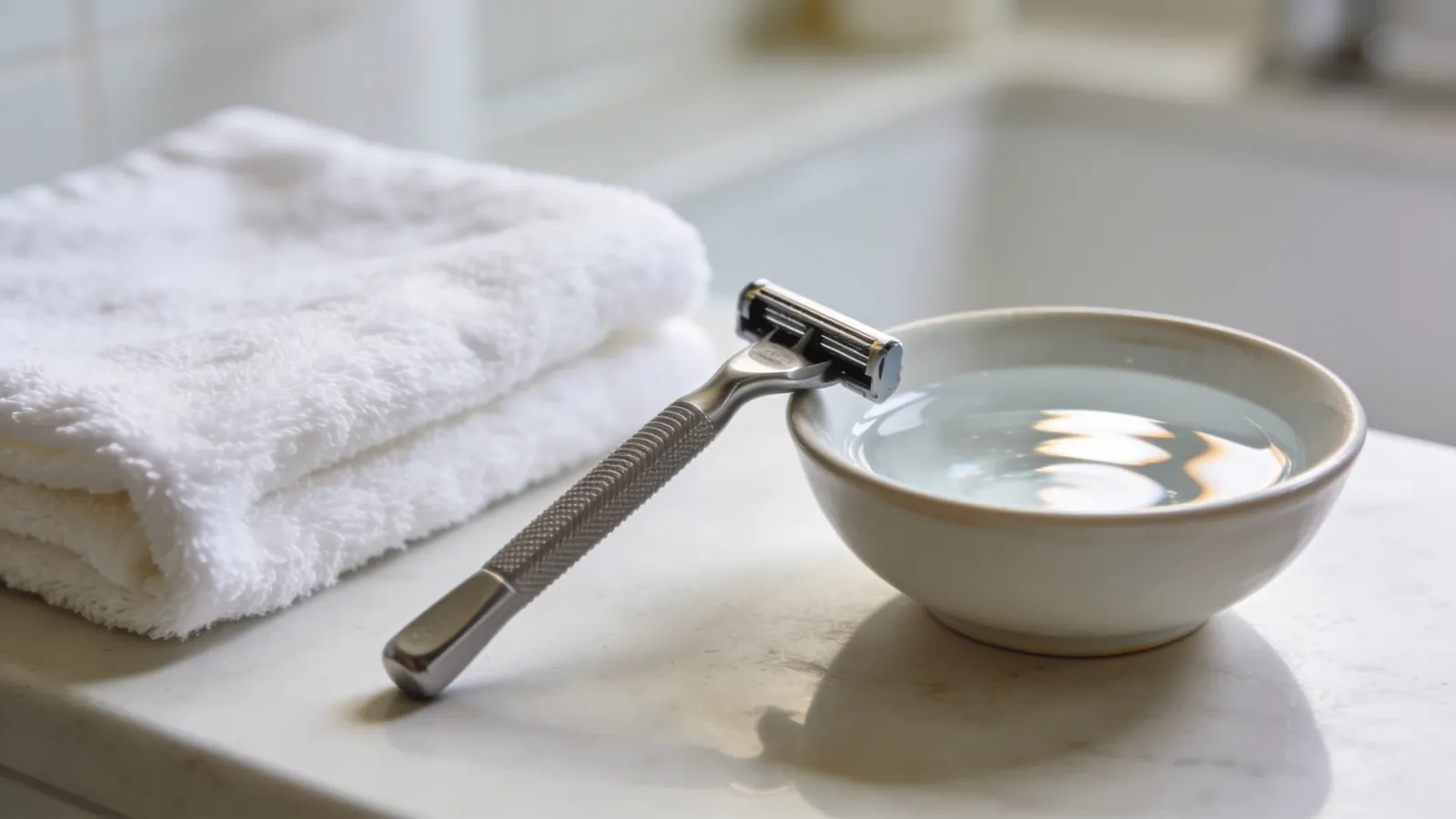
- Pause shaving and waxing on that patch until it has cleared. When you restart, use a new blade and plenty of shaving gel, or try an electric shaver.
- Shower and change soon after sweating, wear loose, breathable fabrics, and wash gym wear, towels and pillowcases regularly.
- Keep heavy ointments, oils and thick body lotions off the area; they block follicles.
- Give it one to two weeks. If it is spreading, painful or keeps returning, stop self-treating and see a doctor.
See a doctor
When folliculitis needs a GP or dermatologist
SkinRev Lab is a non-invasive aesthetic centre, not a clinic, so we do not diagnose or treat folliculitis, and we will not wax over inflamed or infected skin. See a GP, a dermatologist or Dr Sin Yong at IN Eternity Clinic if any of the following apply.
At IN Eternity Clinic, 9 Scotts Road, #12-01 Pacific Plaza, beside Orchard MRT, Dr Sin Yong assesses body breakouts, separates bacterial, yeast-related and other causes, and prescribes treatment where appropriate, priced at consultation (WhatsApp +65 8815 3008). Prescription medicines come from a doctor; SkinRev Lab does not prescribe.
- A bump becomes a hot, painful, swollen lump or boil, leaks pus, or redness spreads around it.
- You have a fever or chills, feel unwell, or notice red streaks or tender glands nearby.
- It is on the face, especially around the nose or eyes, and is spreading or painful.
- It has not improved after about two weeks of good home care, or it keeps coming back.
- The bumps are itchy and uniform and have not responded to weeks of acne products.
- You have diabetes or weakened immunity, or take long-term steroids or cancer medicines.
- There are patches of hair loss or scarring on the scalp, or painful lumps that keep returning in the armpits, groin or buttocks.
Prevention
When hair removal is the trigger: waxing or laser
If your folliculitis follows shaving, the simplest change is to remove hair less often. Some people do better with waxing every four to six weeks than with shaving every day or two; others find waxing sets off bumps too. Laser hair reduction tackles the cause more directly by reducing the number of hairs that regrow through inflamed follicles, and dermatology references list it among the options for chronic folliculitis in hair-bearing areas such as the buttocks.
Waxing at SkinRev Lab, CityLink Mall #B1-28, is done in a private room and priced in four bands, GST included: from S$18 for small areas (S$28 for men), S$38 for the bikini line or underarms (S$48 for men), and S$98 for full legs or a Brazilian (S$118 for men), with first-visit rates from S$12. Let the area settle completely first; we will reschedule rather than wax over inflamed bumps. Afterwards, skip hot showers, sauna, pool and gym for 24 hours, and restart gentle exfoliation from day three.
Laser hair removal is a medical treatment performed by Dr Sin Yong at IN Eternity Clinic on the Lutronic Clarity II, with 755 nm alexandrite and 1064 nm Nd:YAG wavelengths chosen for your skin tone. It aims for long-term reduction rather than removal of every hair, works poorly on white, grey or very light hair, needs a course of sessions, and is priced at consultation. Stop waxing and plucking about four weeks before (shaving is fine), and any active folliculitis needs to be treated first.
Sources
References & sources
- Oakley A. Folliculitis. DermNet (dermnetnz.org).
- Oakley A, Gomez J. Bacterial folliculitis. DermNet (dermnetnz.org).
- Oakley A, Stewart T. Malassezia folliculitis. DermNet (dermnetnz.org).
- Alani Z, Jarrett P. Spa pool folliculitis. DermNet (dermnetnz.org). 2021.
- Vlachos C, Henning MAS, Gaitanis G, Faergemann J, Saunte DM. Critical synthesis of available data in Malassezia folliculitis and a systematic review of treatments. J Eur Acad Dermatol Venereol. 2020;34(8):1672-1683.
- Yu Y, Cheng AS, Wang L, Dunne WM, Bayliss SJ. Hot tub folliculitis or hot hand-foot syndrome caused by Pseudomonas aeruginosa. J Am Acad Dermatol. 2007;57(4):596-600.
- Dalia Y, Khatib J, Odens H, Patel T. Review of treatments for pseudofolliculitis barbae. Clin Exp Dermatol. 2023;48(6):591-598.
Common questions
Your questions,
answered
What causes folliculitis?
Most often bacteria (usually Staphylococcus aureus), an overgrowth of Malassezia yeast, hairs regrowing after shaving or waxing, or contaminated hot-tub water. Friction, tight clothing, heavy creams, sweating and steroid use make it more likely, and Singapore's heat adds to that.
Is folliculitis contagious?
The bacterial and hot-tub types involve germs, so avoid sharing razors and towels, avoid poorly kept hot tubs, and wash your hands after touching the bumps. Fungal folliculitis and razor bumps are not caught from other people. If several people at home have boils, see a doctor.
How long does folliculitis last?
Mild superficial folliculitis often settles within one to two weeks once the trigger stops. Hot-tub folliculitis usually clears within about two weeks. Fungal folliculitis and razor bumps tend to return unless the cause is dealt with, and boils need a doctor.
Is it folliculitis or acne?
Acne usually mixes blackheads, whiteheads and red spots of different sizes, mostly on the face. Folliculitis bumps are centred on hairs, and fungal folliculitis looks like many itchy bumps of the same size on the chest and back, with no blackheads. They can occur together, so see a doctor if acne treatment is not working.
How is fungal folliculitis treated?
With antifungals rather than acne medicines: a topical antifungal such as ketoconazole or selenium sulfide used as a wash, or an oral antifungal such as fluconazole or itraconazole prescribed by a doctor for widespread or stubborn cases. It often returns, so a weekly antifungal wash is commonly used for maintenance.
What cream is good for folliculitis?
It depends on the type. An antiseptic wash suits mild bacterial folliculitis, prescription antibiotic creams such as mupirocin or fusidic acid are used in short courses, and antifungal creams or washes treat the fungal type. Avoid steroid creams unless prescribed, and heavy ointments, which can make it worse.
Can waxing cause folliculitis?
Yes, in some people. Bumps can appear as hairs regrow after any hair removal, including waxing. Waxing only calm skin, following the aftercare and restarting gentle exfoliation from day three all help. If bumps keep returning after waxing, laser hair reduction is the longer-term route.
Does laser hair removal stop folliculitis?
It can help when hair removal or hair growth is the trigger, because fewer hairs means fewer follicles to inflame, and dermatology references list it for chronic folliculitis. It does not treat an active infection, works poorly on light hair and needs a course. At IN Eternity Clinic it is performed by Dr Sin Yong and priced at consultation.
When should I see a doctor for folliculitis?
If bumps become painful boils, redness spreads, you have a fever, it is on the face and spreading, it lasts more than about two weeks or keeps returning, or you have diabetes or weakened immunity. A GP, a dermatologist or Dr Sin Yong at IN Eternity Clinic can work out the type and prescribe.