Guide · Rolling vs boxcar scars
Rolling vs boxcar scars how to tell your atrophic scars apart, and what treats each
Most faces with acne scarring have more than one scar type, and each type needs a different tool. Here is how to tell rolling, boxcar and ice pick scars apart at home, which treatments match each, and how to protect Asian skin from pigment problems along the way.
Quick answer
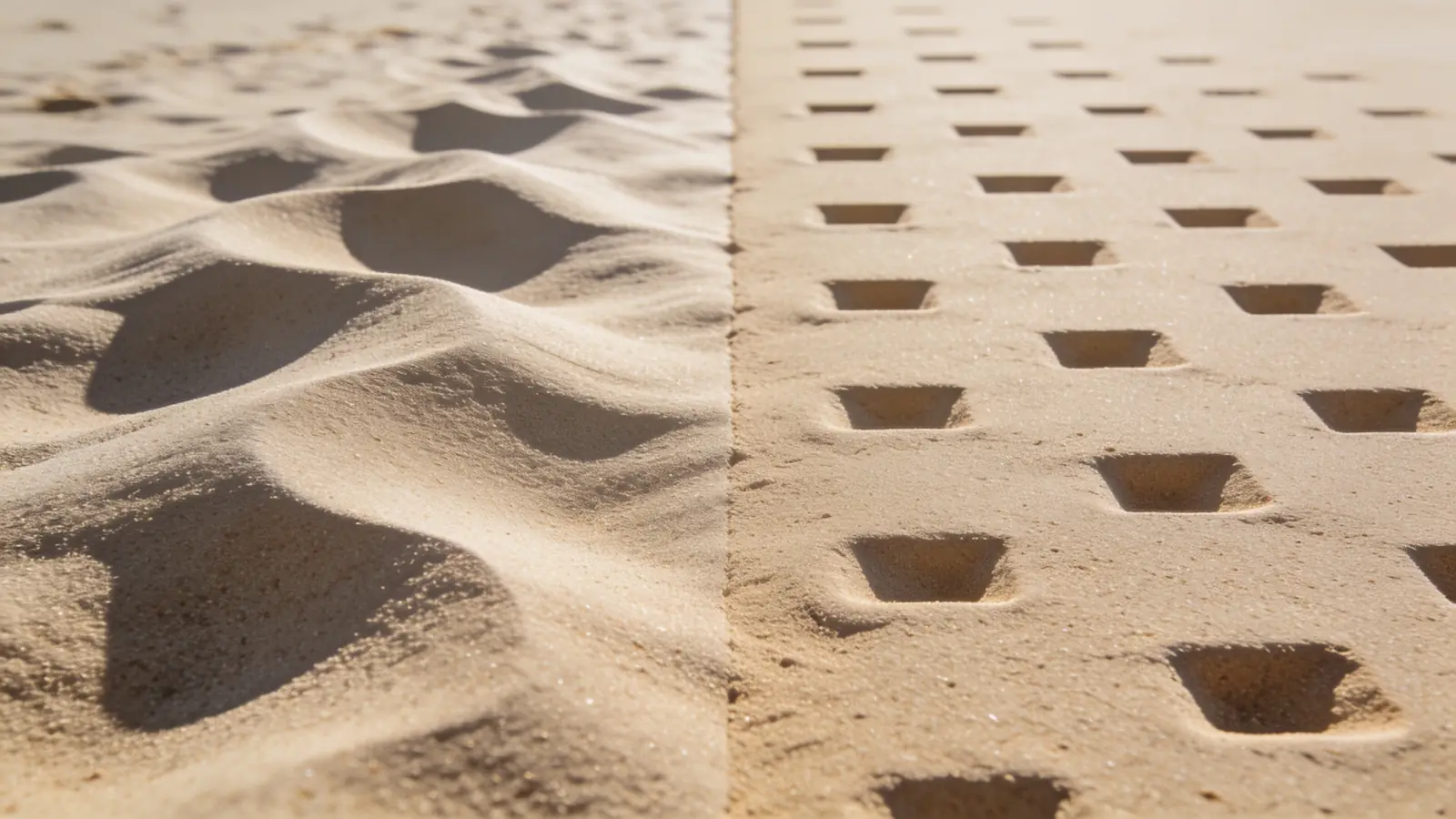
- Rolling scars are broad, soft dips with sloping edges, pulled down by fibrous bands under the skin, while boxcar scars are round or oval dips with sharp, vertical edges and a flat floor. Both are atrophic (depressed) acne scars, along with narrow, deep ice pick scars.
- To tell them apart, shine a light from the side of your face: rolling scars cast soft, wave-like shadows and flatten when the skin is stretched; boxcar scars cast crisp-edged shadows and stay; ice pick scars look like dark dots.
- Treatment follows the type. Rolling scars usually need subcision, often with filler and then laser or RF microneedling; shallow boxcar scars respond to fractional CO2 laser or RF microneedling; deep boxcar and ice pick scars need focused methods such as TCA CROSS. Most people need several sessions over months, with softening rather than erasure.
- In Asian skin, post-inflammatory hyperpigmentation (PIH) is the main risk, so settings are cautious and sun protection strict. These are medical treatments: Dr Sin Yong performs them at IN Eternity Clinic, Pacific Plaza, priced at consultation; SkinRev Lab does not treat atrophic scars.
The basics
What atrophic scars are
Atrophic scars are depressed scars: the skin sits lower than the skin around it because collagen was lost during healing. Acne is the commonest cause on the face, and chickenpox and injuries can leave them too. They are the opposite of raised scars (hypertrophic scars and keloids), where the body makes too much scar tissue.
Acne-related atrophic scars are grouped into three shapes: ice pick, boxcar and rolling. The grouping, set out by Jacob, Dover and Kaminer in 2001, exists because each shape responds to a different procedure. Most people have more than one type, which is why the first step is to identify which scars you have.
Flat brown or red marks after acne are not scars. They are colour, not structure, and usually fade over months. If the skin is level when you run a finger over it, it is a mark.
Side by side
Rolling vs boxcar vs ice pick scars
These are typical patterns. Scars can sit between types, and a doctor confirms the type by examining the skin under angled light.
| Rolling scars | Boxcar scars | Ice pick scars | |
|---|---|---|---|
| Shape | Broad, soft dips with sloping edges; skin looks wavy | Round or oval dips with sharp, vertical edges and a flat floor | Narrow, deep pits, like large open pores |
| Typical width | Usually over 4 to 5 mm | About 1.5 to 4 mm | Under 2 mm |
| Depth | Shallow to moderate | Shallow or deep | Deep, often V-shaped |
| Main cause of the dip | Fibrous bands tethering skin to deeper tissue | Loss of collagen with a defined wall | A narrow column of lost collagen |
| Stretch test | Softens or flattens | Mostly stays | Stays |
| In side lighting | Rolling shadows across the cheek | Crisp-edged shadows, like small craters | Dark dots |
| Usually matched with | Subcision, then filler or energy device | Fractional laser or RF microneedling; TCA CROSS or punch elevation for deep ones | TCA CROSS; punch excision |
At home
How to tell them apart: the side-light test
Overhead light in a bathroom flattens scars; light from the side reveals them. That is why scars can look worse in lift mirrors and car mirrors than at home. You can use this to sort your scars before a consultation.
- Side-light test: in a dim room, hold your phone torch at the side of your face, almost parallel to the skin. Scars cast shadows; flat marks do not.
- Look at the shadow's edge: a soft, sloping shadow suggests rolling scars; a crisp, sharp-edged shadow suggests boxcar scars; tiny dark dots suggest ice pick scars.
- Stretch test: gently stretch the skin with two fingers. Rolling scars soften or flatten; boxcar and ice pick scars mostly stay.
- Touch test: run a fingertip across. A level surface means a mark, not a scar.
- Take photos from both sides with the torch in the same position, so you can compare later.
- Note any raised or firm scars separately; they need a different plan.
Rolling scars
Rolling scars: the problem is tethering
Rolling scars are pulled down from underneath by fibrous strands that connect the skin to deeper tissue. The skin surface itself is fairly intact, so treatments that only work on the surface tend to disappoint. The bands need to be released first.
Subcision does that: a doctor passes a fine needle or cannula under the scar to cut the bands. In a study of 40 patients with rolling scars, people reported about 50% improvement at six months. Because released scars can re-attach, subcision is often combined with a filler or collagen stimulator under the scar, and later with fractional laser or RF microneedling to refine texture.
Rolling scars also look deeper as the face loses volume with age, so some people find they become more noticeable in their thirties and forties even though the scars have not changed.
Boxcar scars
Boxcar scars: shallow or deep changes the plan
Boxcar scars have defined walls and a flat floor. Shallow boxcar scars, roughly under half a millimetre deep, respond well to treatments that soften the edges and build collagen: fractional CO2 laser, other fractional lasers and RF microneedling.
Deep boxcar scars are harder. Resurfacing smooths their rims but may not raise the floor, so doctors add focused methods: TCA CROSS placed into each scar, or punch elevation, where the scar floor is lifted to the surface. In a study of 53 patients treated with 70% TCA CROSS, patients with mainly boxcar scars had better outcomes.
Some boxcar scars are also tethered at the base, so subcision can help them too. That overlap is one reason a scar map, rather than one device, decides the plan.
Matched treatments
Matched treatments for each atrophic scar type
Sequence matters: tethered scars are usually released before resurfacing, and active acne is controlled before any of it. Combining methods for mixed scarring is the idea behind Dr Sin Yong's 4D Scar Reconstruction, which uses subcision, TCA CROSS, fractional CO2 and, where needed, an injectable.
| Scar type | Usually first | Often combined with | Typical course | Usual downtime |
|---|---|---|---|---|
| Rolling | Subcision | Filler or collagen stimulator; fractional laser or RF microneedling | One to three subcision sessions, then energy sessions | Bruising one to two weeks |
| Shallow boxcar | Fractional CO2 laser or RF microneedling | Each other, or a gentler fractional laser | Several sessions, often a month or more apart | CO2: about a week of crusts; RF: one to three days of redness |
| Deep boxcar | TCA CROSS or punch elevation | Fractional CO2 laser for edges | Several sessions over months | Small crusts for about a week |
| Ice pick | TCA CROSS or punch excision | Fractional laser for surrounding texture | Often three to six TCA CROSS sessions | Small crusts for about a week |
| Mixed (most faces) | A combined plan, mapped scar by scar | All of the above, in sequence | Staged over several months | Depends on the steps |
Sessions
How many sessions, and how long results take
Collagen remodelling is slow. After subcision, laser, RF microneedling or TCA CROSS, change continues for three to six months, so most plans space sessions weeks to months apart and review progress before adding more. Swelling in the first days can make scars look better than they will settle, so early photos mislead.
Most people with moderate scarring need several sessions in total, often across six months to a year. A systematic review of energy-based treatments noted an overall lack of high-quality evidence and no standard scar scale, so published percentages vary widely and are hard to compare. Expect softening and better texture, not erased scars.
Asian skin
PIH precautions for Asian skin
Post-inflammatory hyperpigmentation (PIH), temporary darkening after skin injury, is the most common setback when treating scars in Asian skin. A study of fractional resurfacing in Chinese patients found that both laser energy and density affected PIH, and that suitable settings and cooling lowered it. PIH usually fades over weeks to months, but it can be frustrating.
- Do not treat while tanned or sunburnt; Singapore's UV is high all year.
- Expect cautious settings, and sometimes a test area, at the first session.
- Your doctor may prescribe skin priming, such as a lightening cream and a retinoid, for a few weeks before TCA CROSS or laser.
- Use broad-spectrum sunscreen every day during the course, and reapply when outdoors.
- Avoid picking crusts; let them shed on their own.
- If you have recently taken isotretinoin, a 2017 consensus found insufficient evidence to routinely delay fractional lasers or superficial peels, but timing is decided with your doctor.
- Report new darkening early so the plan can be adjusted.
In Singapore
Where rolling and boxcar scars are treated in our network
Treatments that change the structure of rolling, boxcar or ice pick scars are medical procedures. Dr Sin Yong performs them at IN Eternity Clinic, 9 Scotts Road, #12-01 Pacific Plaza, beside Orchard MRT: 4D Scar Reconstruction for mixed scarring, S3 Resurfacing with fractional CO2, and RF microneedling. He maps scars by type before planning. All are priced at consultation by the clinic; WhatsApp +65 8815 3008.
SkinRev Lab, at CityLink Mall #B1-28 by City Hall MRT, is a non-invasive centre. It does not treat atrophic scars, but it can calm breakout-prone skin and refine surface texture, and it passes scar enquiries to the clinic.
Sources
References & sources
- Jacob CI, Dover JS, Kaminer MS. Acne scarring: a classification system and review of treatment options. J Am Acad Dermatol. 2001;45(1):109-117.
- Alam M, Omura N, Kaminer MS. Subcision for acne scarring: technique and outcomes in 40 patients. Dermatol Surg. 2005;31(3):310-317.
- Agarwal N, Gupta LK, Khare AK, Kuldeep CM, Mittal A. Therapeutic response of 70% trichloroacetic acid CROSS in atrophic acne scars. Dermatol Surg. 2015;41(5):597-604.
- Kravvas G, Al-Niaimi F. A systematic review of treatments for acne scarring. Part 2: Energy-based techniques. Scars Burn Heal. 2018;4:2059513118793420.
- Chan HH, Manstein D, Yu CS, et al. The prevalence and risk factors of post-inflammatory hyperpigmentation after fractional resurfacing in Asians. Lasers Surg Med. 2007;39(5):381-385.
- Spring LK, Krakowski AC, Alam M, et al. Isotretinoin and timing of procedural interventions: a systematic review with consensus recommendations. JAMA Dermatol. 2017;153(8):802-809.
Common questions
Your questions,
answered
What is the difference between rolling and boxcar scars?
Rolling scars are broad, soft dips with sloping edges, pulled down by fibrous bands under the skin. Boxcar scars are round or oval with sharp, vertical edges and a flat floor. Rolling scars usually need subcision; boxcar scars respond more to fractional laser, RF microneedling or TCA CROSS.
How do I know if I have rolling scars?
Shine a light from the side of your face. Rolling scars cast soft, wave-like shadows, and they soften or flatten when you gently stretch the skin. Boxcar and ice pick scars mostly stay when stretched.
Can boxcar scars be fixed?
They can be improved, often considerably. Shallow boxcar scars respond to fractional CO2 laser or RF microneedling; deep ones may need TCA CROSS or punch elevation as well. Complete removal is unusual.
What treats rolling scars?
Subcision is the key step, because it releases the bands holding the scar down. It is often followed by a filler or collagen stimulator and by fractional laser or RF microneedling for texture.
Are atrophic scars permanent?
They do not fade on their own the way flat acne marks do. Treatment can make them shallower and less noticeable, but some trace usually remains.
Does microneedling work on rolling scars?
It can help texture, but tethered rolling scars usually need subcision first. Microneedling and RF microneedling work better after the bands have been released.
Can fillers help rolling or boxcar scars?
Fillers can lift soft rolling scars, especially after subcision, and support areas that have lost volume. They do little for sharp-edged boxcar or ice pick scars.
Why do my scars look worse in some lighting?
Overhead or side lighting casts shadows into depressed scars, so they look deeper in lifts and car mirrors than in soft, front-facing light. Compare progress photos in the same lighting.
Can I treat acne scars while I still have acne?
It is usually better to control active acne first, or new scars keep forming. A doctor can treat acne and plan scar treatment so they overlap safely.